
The 3+ on a Toy Box Is a Choking Rule, Not a Measure of How Clever the Child Is
A 3+ label is a federal small-parts safety rule, not a hint about how advanced a child is. How the choke-test cylinder works and what warning labels require.

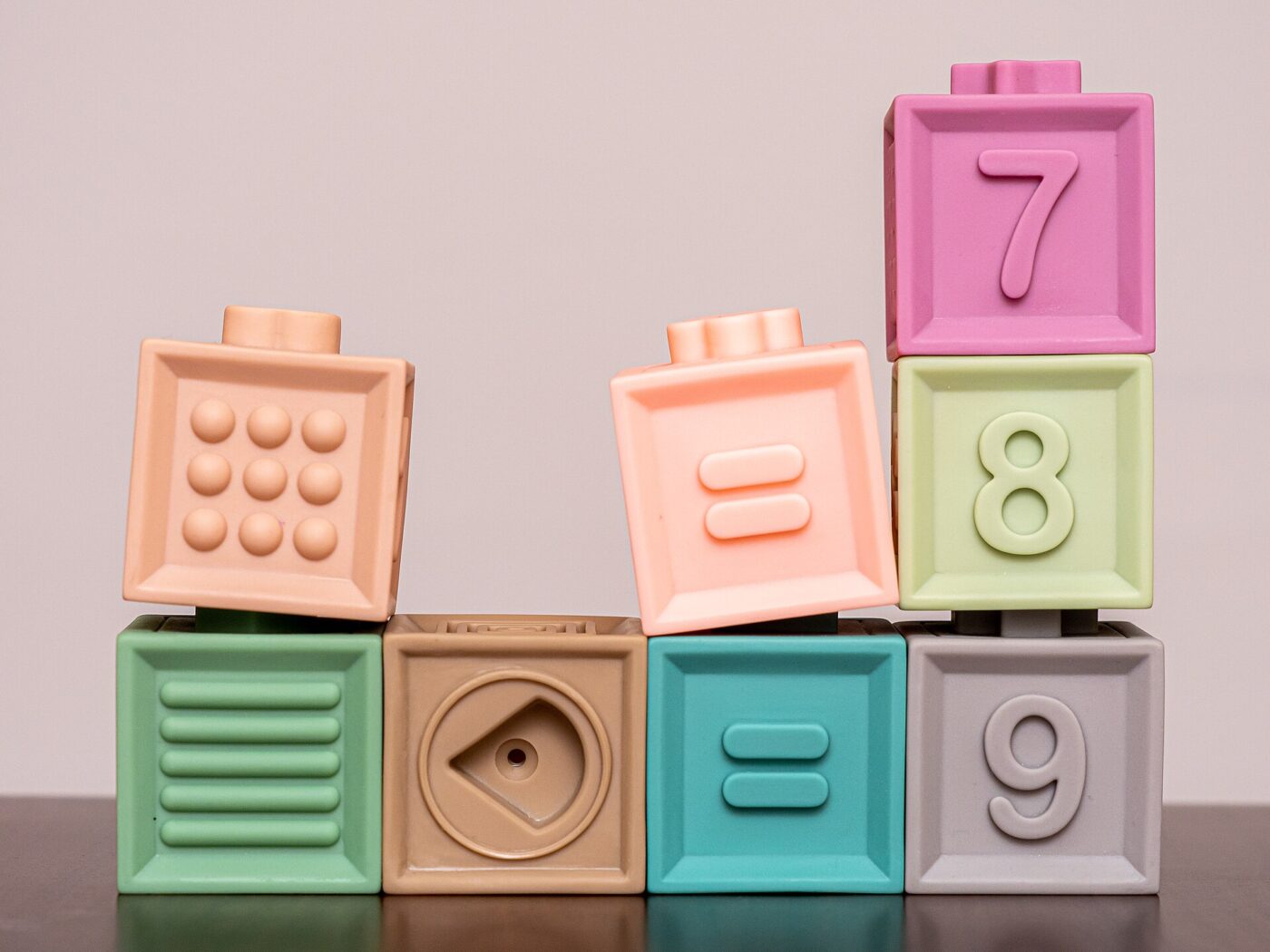
A box that says 3+ looks like a hint about how advanced the toy is, and some shoppers read it that way — picking a 3+ set for a bright two-year-old, or skipping it for an older child who seems past it. That is not what the number measures.
Federal regulations treat the age on a toy’s label as a safety determination, not an intelligence test. Below a certain age, a toy legally cannot contain a piece small enough to choke a child; above that age, a warning label has to say so instead. Reading the two rules is more useful than reading the box art.
Fear Index · Think twice
A label read as a compliment, not a warning
CPSC staff counted 54 reported toy-related deaths among children 14 and younger from 2022 through 2024, with balloons, balls, crayons and game parts among the choking and asphyxia cases, and an estimated 175,400 toy-related ER injuries to children 12 and younger in 2024.
What the age grade legally means

CPSC’s small-parts rule applies to any product intended for use by children under 3, and the agency does not leave the “intended for” question to guesswork. It weighs the age stated on the label, how the product is advertised and marketed, and whether the toy is commonly recognized as meant for that age group. A manufacturer that quietly aims a rattle at toddlers while printing “3+” on the box has not solved anything; the rule looks past the label to how the product is actually sold.
That is also why an age grade is not a proxy for how smart or coordinated a child is. A toy labeled 3+ was tested against one specific hazard — small parts that fit a child’s throat — not against how quickly a two-year-old can stack rings or name her colors. A child who is advanced for her age still has the same size throat as any other two-year-old.
ASTM F963, the industry’s Standard Consumer Safety Specification on Toy Safety, became a mandatory federal standard when Congress passed the Consumer Product Safety Improvement Act of 2008. It layers additional checks — sharp edges, sharp points, flammability — on top of the small-parts ban, and CPSC business guidance says toys for children under 8 must not have hazardous sharp edges or points, apart from functional ones that are properly labeled.
A 3+ label is the manufacturer saying the small-parts ban no longer applies, not that the toy is somehow more advanced.
The small-parts cylinder, and how to test at home
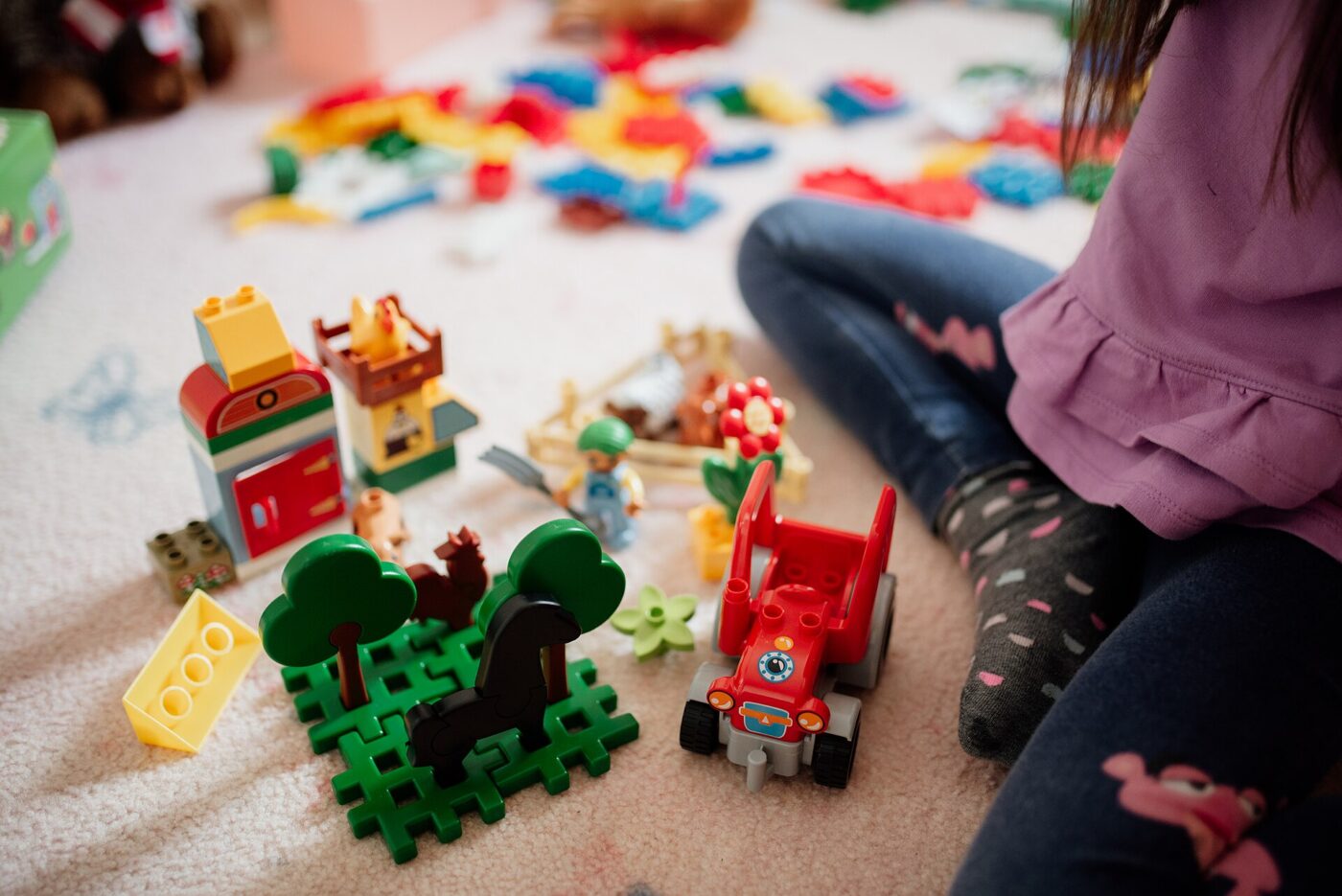
CPSC defines a small part as anything that fits completely inside a specially built test cylinder 2.25 inches long by 1.25 inches wide, sized to approximate the fully expanded throat of a child under three years old. If a whole toy, a piece that snaps off, or a piece that comes loose during testing fits inside that cylinder, the product is banned for children under 3.
The testing is not gentle. Federal rules use two separate abuse simulations — one modeled on how children 0 to 18 months old handle objects, another for 18 to 36 months — to see what breaks off under realistic force before anything reaches the cylinder test. A part that survives a toddler’s determined effort to pull, twist or bite it is judged differently than one that snaps at the first tug.
A small-parts tester, sometimes sold as a choke tube, is a cheap plastic copy of that cylinder. Any loose part of a toy, a coin, a button, a marble or a piece of a broken crayon that drops all the way through is a choking risk for a child under 3, whatever the box says.
Warning labels for balls, marbles and balloons
Above age 3, small parts are not banned; they are labeled. Federal regulations require a choking-hazard warning on any toy or game that is or contains small parts and is intended for children from 3 up to 6 years old, so a household shopping for a preschooler is told directly that the product is not for a younger sibling.
Balls and marbles get their own version of the same rule, and balloons get the strictest one. A warning is required on any small ball or marble intended for children 3 and older, and on any toy or game containing one intended for the 3-to-8 range. Latex balloons carry a choking warning regardless of the age they are sold for, because an uninflated or burst balloon behaves like a small part no cylinder test can catch in advance.
| Product | Age that triggers a warning | What the label must do |
|---|---|---|
| Toy or game with small parts | 3 up to 6 years old | Warn against buying for children under 3 |
| Small balls or marbles | 3 and older; 3 up to 8 in a toy or game | Carry the same choking-hazard warning |
| Latex balloons | Any age | Choking warning required regardless of age |
The warning label on a 3-to-6 toy is written for the household, not just the child holding the box, because someone younger is usually nearby.
Where mixed-age households actually lose the thread
CPSC created the small-parts rule specifically to prevent children under 3 from choking on, inhaling or swallowing objects they mouth, and the 3-to-6 warning label exists for the same reason: a toy correctly sized for a five-year-old can still choke a toddler who finds it on the floor. Neither rule assumes the small parts will stay with the child they were bought for.
A toy bought with a warning label read and respected does its job. The same toy handed down, borrowed from an older sibling’s room, or left within reach in a shared play space has left the household’s only working safeguard behind: the person who opened the box.
A listing with no manufacturer name, no age information and no warning language has not shown its work on any of the questions above, and secondhand or marketplace toys are where that gap can hide.
A gift checklist by age band
None of this requires memorizing the regulation. It requires checking the box against the youngest child likely to be in the room, not just the child whose name is on the gift tag.
The same checklist works for a single-child household and a house full of cousins at a holiday gathering; only the storage habits change.
- Under 3: nothing that fits a 2.25-by-1.25-inch cylinder — test loose parts, not just the whole toy.
- 3 to 6: small parts are allowed if the box carries the choking warning; keep these sets out of a toddler’s reach.
- 3 to 8: the same warning applies to balls and marbles specifically — read the label, not just the age on the front.
- Any age: latex balloons carry a choking warning and belong under supervision, not in a toddler’s hands.
- Mixed-age household: buy and store for the youngest child likely to be in the room, not the child the gift is for.
- No label, no manufacturer name: treat the listing itself as the warning.
The safest toy for a mixed-age household is not the one with the highest age on the box. It is the one stored where the youngest child cannot reach it.
The shortlist
Paid links: we earn a commission if you buy through the buttons below, at no extra cost to you. As an Amazon Associate I earn from qualifying purchases.
Compared on keeping small parts away from toddlers
| Product type | Best for | Risk estimate | Where to buy |
|---|---|---|---|
| Small-Parts Tester (Choke Tube) | Testing loose parts before gifting | 12/100 | See listings on Amazon |
| Large Building Blocks for Toddlers | A safe starter set for toddlers | 15/100 | See listings on Amazon |
| Lidded Toy Storage Bins | Keeping age bands separated | 10/100 | See listings on Amazon |
Risk estimate is our editorial Fear Index for the product type (lower is safer), not a customer rating. How it is scored. The buttons open Amazon search results rather than one listing, so check the model on the product page.
Small-Parts Tester (Choke Tube)
A small-parts tester approximates the federal test cylinder, so anything that fits inside is a choking risk for a child under three.
- Copies the federal test cylinder size
- Checks loose parts before gifting
- Works on loose parts and small toys
- Skips the lab use-and-abuse tests
- Does not replace supervision
Lidded Toy Storage Bins
The safest small-parts toy is one a toddler never reaches. A lidded bin for the older child’s sets does more than a label ever will.
- Keeps 3-to-6 sets out of a crawler’s reach
- Stackable and easy to label by age
- Lets an older child keep their own bin
- A lid alone will not stop every toddler
- One more thing to remember to close
More: Toys and Games analyses and how the Fear Index is scored.
Sources
- Small Parts for Toys and Children’s Products Business Guidance — CPSC
- Small Parts Regulations: Toys and Products Intended for Use by Children Under 3 — CPSC
- Toy Safety Business Guidance — CPSC
- 16 CFR 1500.19, Cautionary Labeling for Toys, Games and Balloons — Cornell Law School
- Toy-Related Deaths and Injuries, Calendar Year 2024 (April 2026) — CPSC
Questions people actually ask
What does the 3+ label on a toy actually mean?
It means the toy is not banned under the federal small-parts rule, which applies to products intended for children under 3. It is a safety cutoff, not a measure of how advanced a child is.
How can I test if a toy is a choking hazard at home?
A small-parts tester copies the federal test cylinder, 2.25 inches long by 1.25 inches wide. Any loose part that fits completely inside is a choking risk for a child under 3.
Do balls, marbles and balloons need their own warning labels?
Yes. Federal rules require a choking-hazard warning on balls and marbles intended for children 3 and older, or in toys for the 3-to-8 range, and on all latex balloons regardless of age.
Is ASTM F963 the same as the small-parts rule?
Not quite. ASTM F963 is the broad mandatory toy standard, codified at 16 CFR part 1250. Its small-parts section points to the federal small-parts rule, 16 CFR part 1501, which is what bans small parts in products for children under 3.
What should I do about an older sibling’s toys with small parts?
Store them separately, ideally in a lidded bin out of a toddler’s reach, and treat the 3-to-6 warning label as written for the whole household, not just the older child.