
Running Shoes Die From the Inside. Here Is How to Tell When.
A running shoe that still looks fine can be finished. How midsole foam actually fails, how to test yours, and how to cut the cost of replacing them.

Ask most runners how they know it is time for new shoes and the answer involves the tread. It looks worn, so it must be finished.
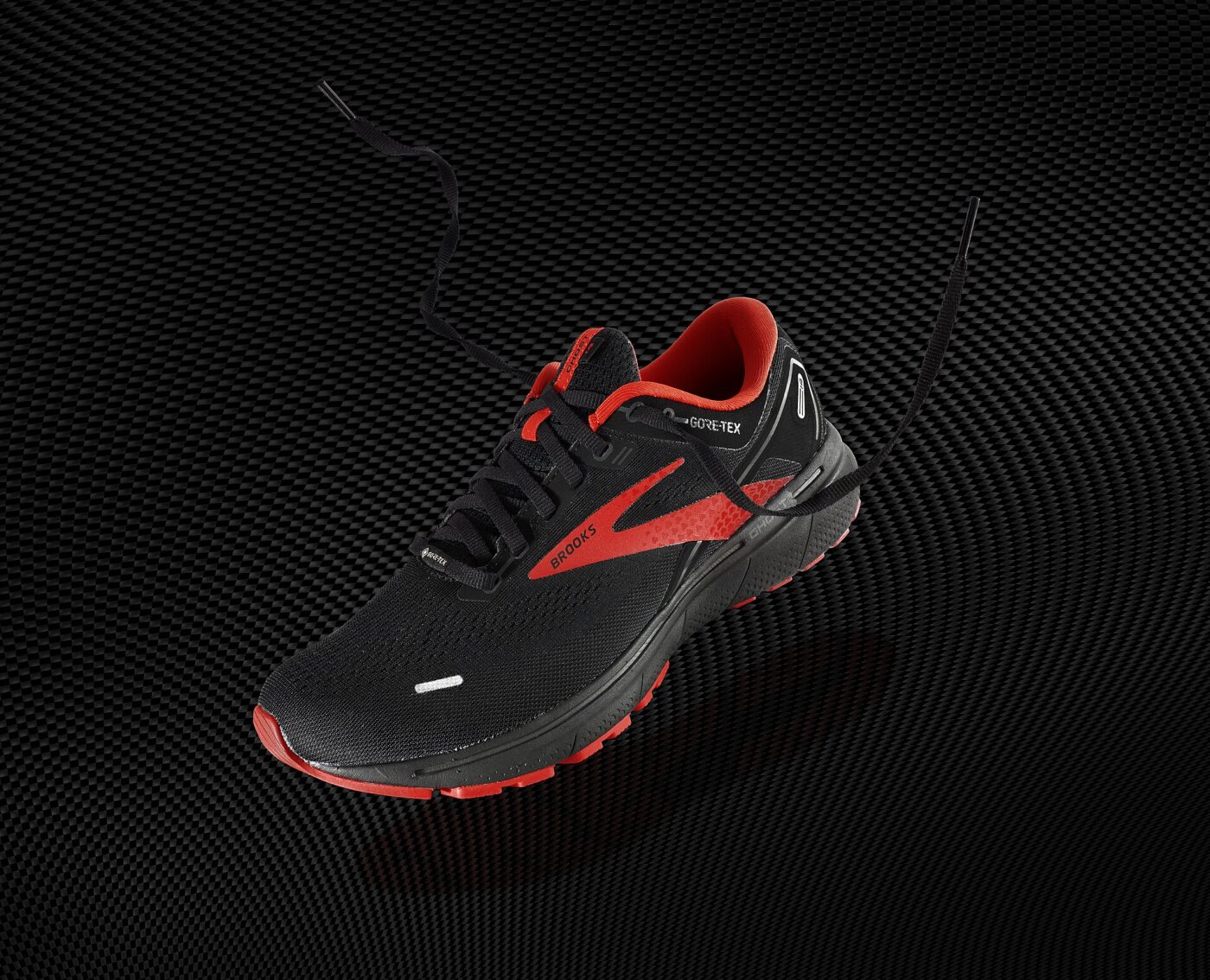
The outsole rubber is the most visible part of a running shoe and close to the least important one. The part doing the actual work is the midsole — the foam block between your foot and the ground — and it fails largely out of sight, from the inside, usually well before the shoe looks tired.
Fear Index · Think twice
You cannot see the part that fails
The failure is gradual and invisible, so the usual outcome is not a bad purchase — it is a good pair worn months past the point of doing anything.
What the midsole actually does, and how it dies
Midsole foam is a closed-cell material — a solid matrix full of tiny gas-filled cells. When your foot lands, those cells compress and the gas resists; that resistance is the cushioning, and the foam springing back is the energy return everyone talks about.
Repeated compression slowly damages the cell walls, and the damage accumulates. In a 2004 Journal of Biomechanics study, microscope images of EVA midsole foam showed wrinkled cell faces and holes after about 470 miles (750 km) of running, and the authors note that foam fatigue reduces heel-strike cushioning. The American Academy of Orthopaedic Surgeons gives figures: EVA starts to show structural damage after 120 miles, and at 500 miles a shoe has lost 45% of its initial shock absorption.
Little of that process is visible from outside, beyond perhaps some creasing along the midsole sidewall. The upper is intact, the tread may be barely worn, and the shoe is done.
Mileage guidance, and why it is only guidance
The commonly quoted range is 300 to 500 miles (Brooks and Nike both use it; the American Academy of Podiatric Sports Medicine says 350 to 500). It is a reasonable starting point and a poor rule, because the variables that move it are large. The AAOS offers a rough adjustment for body weight: divide 75,000 by your weight in pounds, so a 150 lb runner gets about 500 miles.
| Factor | Effect on midsole life |
|---|---|
| Heavier runner or hard foot striker | Shorter — toward 350 miles rather than 500 |
| Softer, plusher foam | Often shorter — softer midsoles can compress faster |
| Firmer training foam | Probably longer, though published data are thin |
| Also worn for walking or work | Shorter — sustained pressure breaks the materials down faster |
Makers describe the same trade: Nike notes that maximum-cushion shoes often use softer foam, and that softer midsoles can compress faster under heavy mileage or higher body weight. That is not a defect. It is a trade, and it is worth knowing before you pay a premium for a ride that may not last as long.
Two tests that beat counting miles

The twist test
Hold the shoe at heel and toe and twist in opposite directions, and compare it against a newer pair of the same model. A shoe that has become noticeably floppier has lost structure. Many modern running shoes twist easily right out of the box, so on its own this test proves little — use it as a comparison, not a pass/fail check.
The press test
Press hard into the midsole with your thumb, at the heel and again at the forefoot. New foam yields and springs back. Dead foam feels dense and stays dented for a moment. Compare against a newer pair and the difference is usually clear.
Another signal is your own body. New soreness in the knees, hips or ankles without any change in your routine can be the shoes: Brooks says it likely means the cushioning and support have broken down. If pain is sharp, sits on one spot of bone, or lasts beyond a week of easier running, see a doctor or physical therapist rather than assuming it is the shoes.
Rotation, which is cheaper than it sounds
Alternating two pairs gives each one at least a day off between runs. Shoe brands say that stretches each pair further (Nike claims switching between two pairs can effectively double the lifespan of both), though there is little published data behind it; the stronger evidence is about injury risk, not mileage.
The secondary benefit is more interesting. In a 22-week study of 264 recreational runners, those who used more than one pair in parallel had about a 39% lower risk of running injury. The researchers’ suggested explanation is that different shoes vary the load on your legs, spreading repetitive stress rather than concentrating it in exactly the same tissue every run. It is an association, not proof.
The shortlist: daily trainers that last
These are neutral daily trainers — the shoe most runners should own most of, and the category where foam durability matters most. Fit is individual, so treat this as a starting point rather than a prescription.
Paid links: we earn a commission if you buy through the buttons below, at no extra cost to you. As an Amazon Associate I earn from qualifying purchases.
Daily trainers compared by cushioning type
| Product type | Best for | Risk estimate | Where to buy |
|---|---|---|---|
| Brooks Ghost (neutral daily trainer) | Neutral daily trainer | 30/100 | See listings on AmazonOpens Amazon search results, not one listing: check the model on the product page. |
| Saucony Ride (neutral daily trainer) | Neutral daily trainer, second fit to try | 32/100 | See listings on AmazonOpens Amazon search results, not one listing: check the model on the product page. |
| Hoka Clifton (max-cushion daily trainer) | Max-cushion daily trainer | 38/100 | See listings on AmazonOpens Amazon search results, not one listing: check the model on the product page. |
Risk estimate is our editorial Fear Index for the product type (lower is safer), not a customer rating. How it is scored.
Brooks Ghost (neutral daily trainer)
A long-running neutral trainer. When a new version arrives the previous one is often discounted; check that the fit has not changed before buying two.
- Neutral daily trainer
- Offered in wide widths
- Updates can change the foam, so check the version
- Heavier than race-oriented trainers
Saucony Ride (neutral daily trainer)
Another neutral daily trainer. Try both on: fit decides more than any spec sheet.
- Neutral daily trainer
- Previous versions are often discounted after an update
- Fit varies between runners
- Annual updates can change the ride, so check the version
Hoka Clifton (max-cushion daily trainer)
Buy it for the cushioning, and price in replacing it earlier. Maximum-cushion shoes often use softer foam, and softer foam can compress faster. That is the deal.
- Cushioning-first design
- Tall cushioning stack
- Previous versions are often discounted
- Softer foam compresses sooner
- Tall stack takes adjustment
How to spend less on this
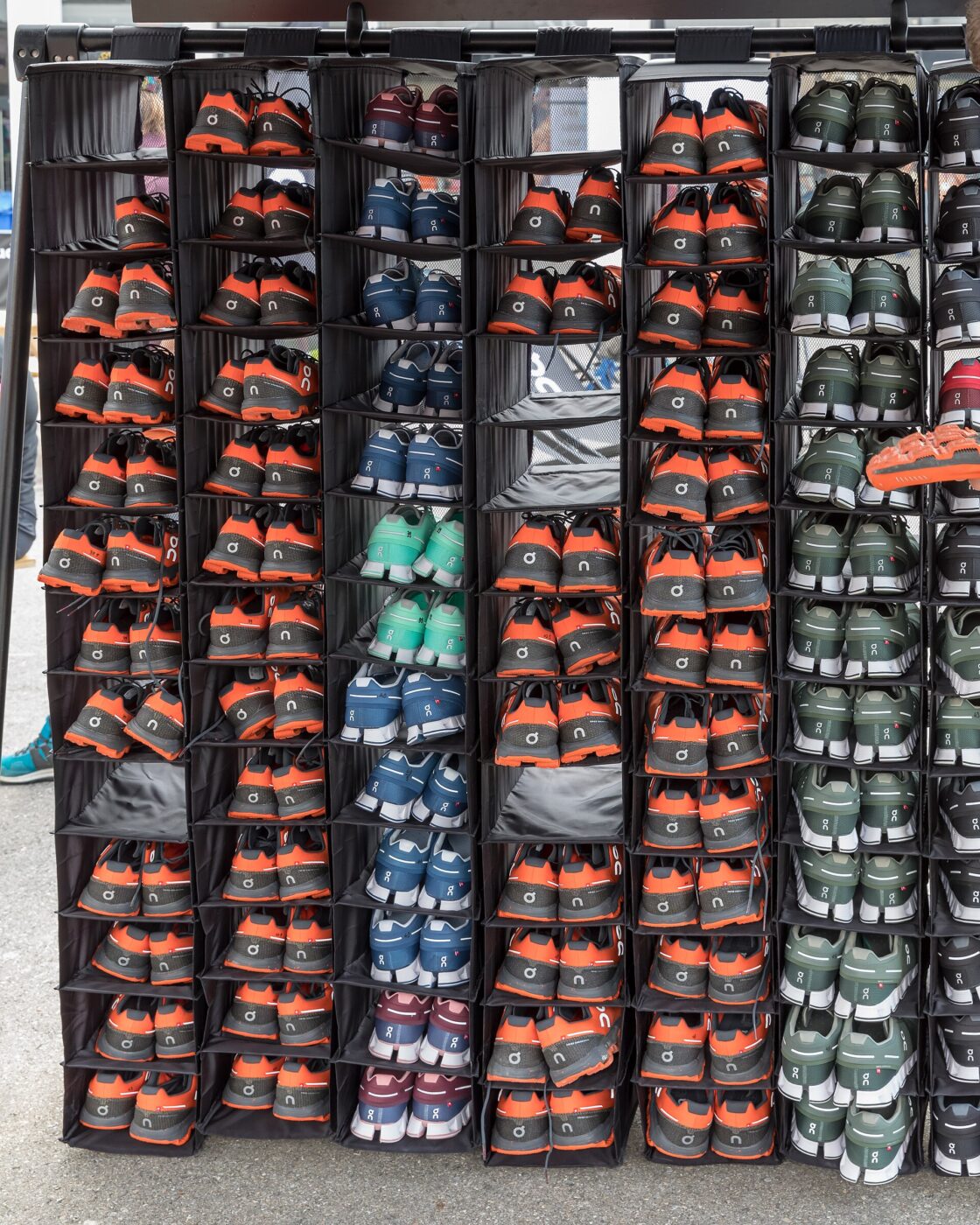
- Buy the previous version. Many daily trainers change little between annual updates, and the outgoing model is often discounted once the new one arrives.
- Buy two pairs of the previous version when you find a shoe that fits. Rotation plus discount is the cheapest way to run.
- Ignore racing shoes for training. They are built and priced for race day, and running easy miles in them is expensive.
- Log the date, not the miles. Write the purchase date inside the tongue. It is the easiest method to keep up, and running apps such as Strava or Garmin Connect can log shoe mileage automatically.
More: Outdoors and Fitness analyses.
Sources
- Athletic Shoes — OrthoInfo, American Academy of Orthopaedic Surgeons
- When Is the Right Time to Replace Your Shoes? — American Academy of Podiatric Sports Medicine
- Heel-Shoe Interactions and the Durability of EVA Foam Running-Shoe Midsoles — Verdejo and Mills, Journal of Biomechanics (2004)
- Can Parallel Use of Different Running Shoes Decrease Running-Related Injury Risk? — Malisoux et al., Scandinavian Journal of Medicine and Science in Sports (2015)
- When Is It Time to Replace My Shoes? — Brooks Running
- How Often Should I Replace My Running Shoes? — Nike
Questions people actually ask
How many miles should running shoes last?
300 to 500 miles is the usual range, but it moves with body weight and foam type. The AAOS rule of thumb is 75,000 divided by your weight in pounds, and softer, plusher foams can compress sooner.
Can you tell a running shoe is worn out by looking at it?
Not reliably. The midsole foam does the work and fails largely out of sight, while the outsole and upper often look fine; creasing along the midsole sidewall is one of the few visible clues. Twist the shoe and press into the foam, ideally against a newer pair.
Does rotating two pairs of running shoes make them last longer?
Brands say so, but the evidence on shoe lifespan itself is thin. The better evidence is on injuries: a 2015 study of 264 recreational runners (Malisoux et al.) found those who used more than one pair in parallel had about a 39% lower injury risk, possibly because different shoes vary the load on the legs.
Is it worth buying last year’s running shoe model?
For most daily trainers, yes. Annual updates are often minor, and the outgoing version sells at a large discount. Buying two pairs of an outgoing model you know fits is the cheapest way to run.