
Trekking Poles Fail at the Lock, Halfway Down a Descent
A pole that collapses under load on a descent is a fall risk. External lever locks hold where internal twist locks slip. How each lock type fails.

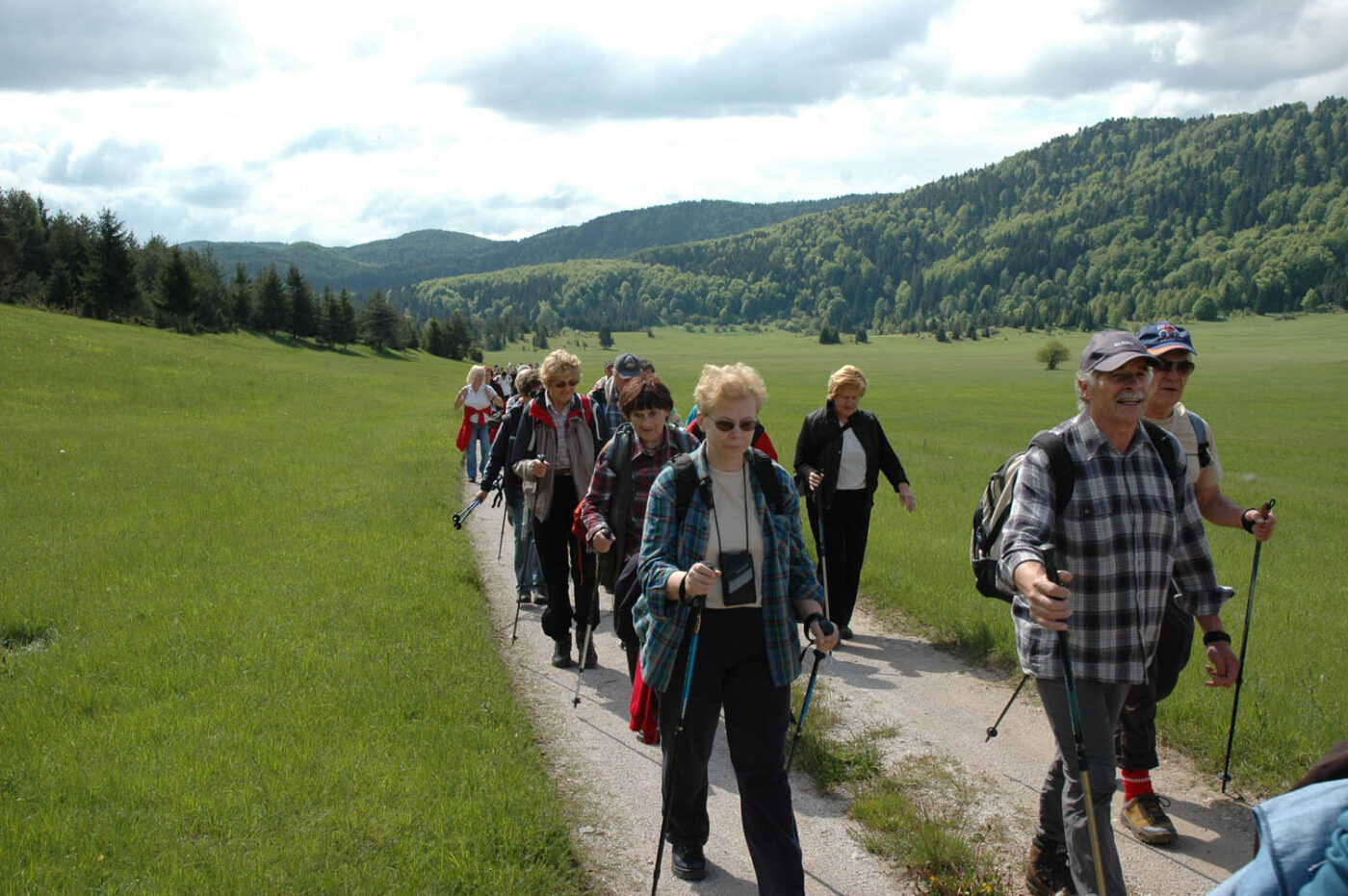
Trekking poles are simple objects with one moving part that matters. That part is the lock, and it is the reason poles are chosen well or badly.
A pole that slips a few centimeters under load on a descent throws your balance at the worst possible moment.
Fear Index · Think twice
A support that stops supporting under load
A pole collapsing on a steep descent is a fall risk at exactly the moment you were relying on it.
Two locking systems
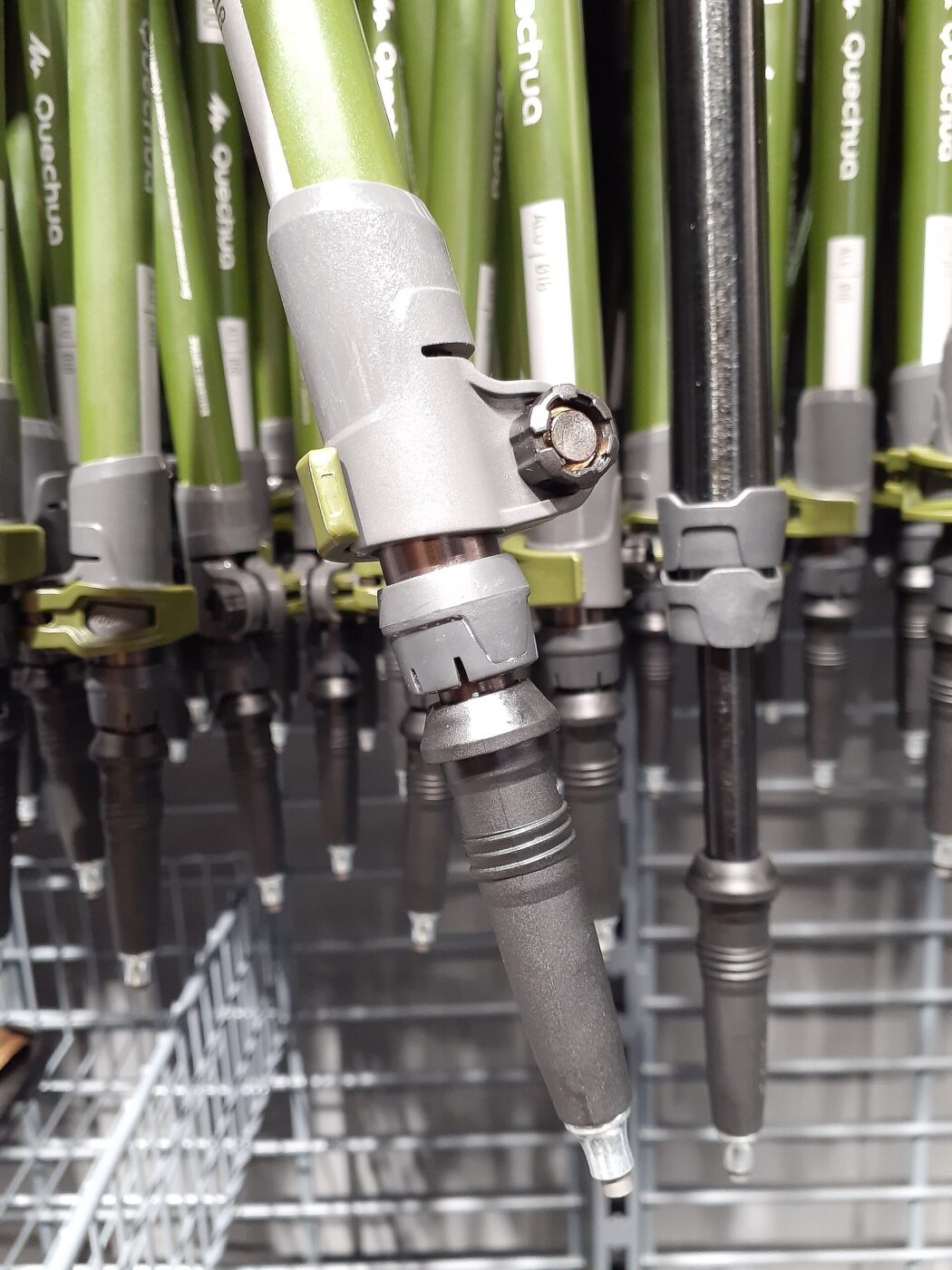
External lever locks clamp the outer tube onto the inner one with a cam. Tension is adjustable with a small screw, they work with gloves on, and you can see whether they are closed.
Internal twist locks use an expanding plug inside the tube. They are lighter and cleaner-looking, and they fail in a specific way: grit, water or ice inside the tube reduces the friction, and the expander wears. Once a twist lock starts slipping, forcing it tighter can split the expander or damage the tube; separating the sections, drying them and cleaning out the grit often restores grip.
For anything involving load, mud or winter, lever locks are the sounder choice by a clear margin.
Lever locks can be adjusted in the field with a coin or a small screwdriver. A twist lock that keeps slipping after cleaning is hard to fix on the trail.
Carbon or aluminum

Carbon poles are lighter, which over thousands of arm swings genuinely matters on long days, and they damp vibration better.
They also fail differently. Carbon fails suddenly and completely — a scratched or impacted shaft can snap without warning, often when wedged between rocks. Aluminum bends first, and a bent pole still works.
For remote trips where a broken pole is a real problem, aluminum is the more conservative choice. For fast-and-light days on maintained trails, carbon is a reasonable trade, since a snapped pole there is an inconvenience rather than the kind of setback it would be a day’s walk from a trailhead.
What poles actually do

The benefit is largest on descents, where the poles take a share of the load that would otherwise go through the knee. Biomechanics research on downhill walking, including work published in the Journal of Sports Sciences, has found reduced knee joint loading when poles are used.
Setting them correctly is most of the value, and it costs nothing beyond a minute of adjustment before you set off.
- On flat ground, elbow at about 90 degrees with the tip on the floor.
- Shorten on ascents by roughly 2–4 inches (5–10 cm), lengthen on descents by the same.
- Use the straps correctly: hand up through the loop, then down onto the grip, so the strap takes the weight rather than your grip.
- Match the tip to the surface. Rubber tips grip better on pavement and smooth rock; bare carbide bites into dirt, ice and rough rock but can skate on smooth stone.
Folding poles with push-button locks
A third design is common enough to need its own mention. Folding poles collapse into short sections joined by an internal cord, and a spring-loaded button locks each joint once the pole is extended — the same mechanism tent poles use.
They pack down small enough for airline luggage and are popular for travel and ultralight kits, but the button joint is a third failure point beyond the main shaft lock, and a worn button can let a section slip under hard load. For anything beyond light day use, treat the packed size as the main advantage and the main compromise both.
Check that the button engages fully and audibly at each joint before setting off, and give a folding pole a firm downward push on flat ground before trusting it on a descent.
The shortlist
Paid links: we earn a commission if you buy through the buttons below, at no extra cost to you. As an Amazon Associate I earn from qualifying purchases.
Compared on locking and weight
| Product type | Best for | Risk estimate | Where to buy |
|---|---|---|---|
| Lever-Lock Trekking Poles | Reliable under load | 20/100 | See listings on AmazonOpens Amazon search results, not one listing: check the model on the product page. |
| Carbon Trekking Poles | Lightest for distance | 33/100 | See listings on AmazonOpens Amazon search results, not one listing: check the model on the product page. |
| Replacement Tips and Baskets | Restoring grip on worn poles | 10/100 | See listings on AmazonOpens Amazon search results, not one listing: check the model on the product page. |
Risk estimate is our editorial Fear Index for the product type (lower is safer), not a customer rating. How it is scored.
Lever-Lock Trekking Poles
The locking system is the whole decision. Levers can be tightened on the hill; a twist lock that keeps slipping after cleaning is harder to fix there.
- Lever locks hold under load and in the wet
- Adjustable tension with a coin
- Operable with gloves on
- Slightly heavier than twist locks
- Levers can snag on vegetation
Replacement Tips and Baskets
Worn carbide skates on rock. Replacing tips, and swapping to rubber on pavement, restores the grip that made the poles useful in the first place.
- Carbide tips wear down and are replaceable
- Rubber tips swap in for pavement
- Costs very little
- Must match the pole brand
- Easy to lose in deep ground
More: Outdoors & Fitness analyses and how the Fear Index is scored.
Questions people actually ask
Are flick locks better than twist locks?
For reliability, yes. External lever locks clamp mechanically, are adjustable with a coin and work in the wet. Twist locks slip once grit or wear reduces the internal friction, though cleaning and drying the sections often restores them.
Are carbon trekking poles worth it?
They are lighter and damp vibration better, which matters on long days. They also snap suddenly where aluminum bends and keeps working. For remote trips, aluminum is safer.
How long should trekking poles be?
On flat ground, set so your elbow is at about 90 degrees with the tip on the floor. Shorten 2–4 inches (5–10 cm) for climbs and lengthen the same for descents.
Do trekking poles actually help your knees?
Yes, particularly on descents, where they take a share of the load that would otherwise pass through the knee. Biomechanics studies of downhill walking have found reduced knee joint loading with pole use.