
Climbing Ropes and Harnesses Age Out Even Unused, and Secondhand Gear Hides That History
Climbing makers cap textile gear at 10 years unused, and shorten that after a hard fall or chemical exposure. Retirement rules and what UIAA marks certify.

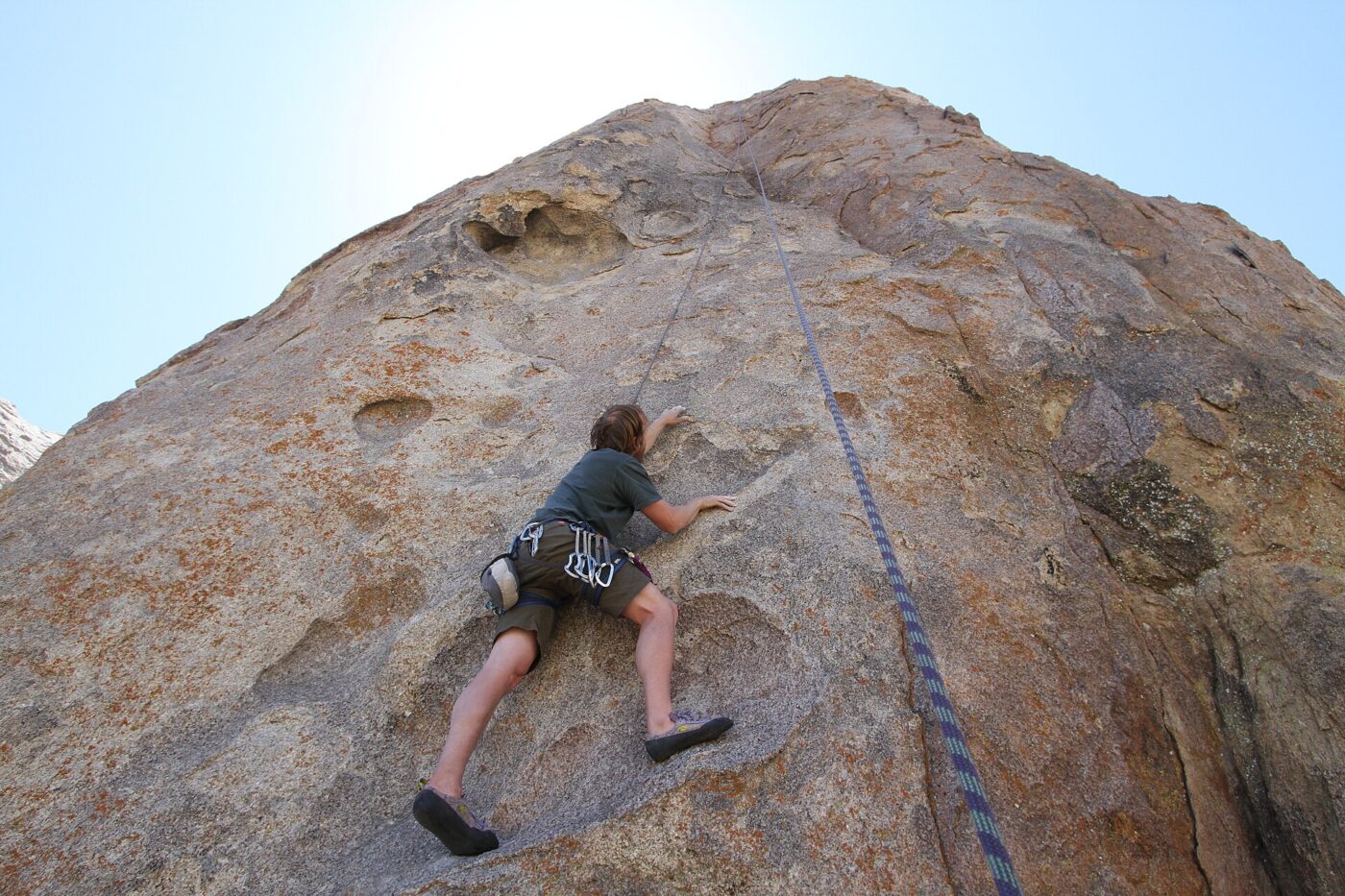
A rope coiled in a closet for eight years looks the same as one bought last month. Nothing about its appearance changes with age, which is exactly why manufacturers set a hard calendar limit instead of leaving the decision to how the gear looks.
The same is true in the other direction. A rope or harness that has taken one bad fall, dragged over a sharp edge, or been splashed with battery acid can be retired the same day it happened, no matter how new it is or how clean it still looks.
Fear Index · High risk
Gear that looks fine and is already unsafe
CPSC recalled about 1,580 Black Diamond climbing harnesses sold from January 2018 through February 2025 after the webbing was found to degrade and fail to support a climber’s weight — a defect that was not visible from the outside.
Manufacturer lifespan limits for textile gear
Petzl’s guidance for its own products is specific: for plastic or textile products, the maximum lifetime is ten years from the date of manufacture. Metal products, by contrast, carry no lifespan limit at all — a carabiner’s aluminum or steel does not degrade the way nylon webbing and rope fibers do.
The date that matters is manufacture, not purchase, and the two are not the same. Gear can sit on a shop shelf for a year or more before it is bought, which is why Petzl ties its lifespan rule to a serial number rather than a receipt.
Ten years is a ceiling, not a target. Storage conditions, sunlight, humidity and how often the gear is actually loaded all shorten that number in practice, and a rope or harness used hard for several seasons a year rarely needs to test the calendar limit before wear retires it first.
An event that retires gear after a single use
Petzl’s guidance draws a separate line for what it calls an exceptional event: aggressive environments, sharp aretes, extreme temperatures, chemicals or a particularly intense fall can force gear out of service after one use, regardless of how many years are left on the ten-year clock.
A hard fall loads a rope’s fibers well past normal climbing forces, and the damage is not always visible from the sheath. A rope dragged over a sharp edge under load can cut fibers inside the core without the outer sheath showing an obvious mark. Chemical exposure, most commonly battery acid from a pack or a car, degrades nylon without necessarily changing how it looks or feels.
None of these events comes with a warning label. The honest response to any of them is to retire the item, not to inspect it more carefully and hope it passes.
A ten-year clock and a one-event rule are separate limits. Either one alone can retire a piece of gear.
What two real recalls show about hidden defects
Even new gear from an established manufacturer has failed in ways a climber could not see. CPSC recalled about 1,580 Black Diamond BD Vision climbing harnesses, sold from January 2018 through February 2025, after finding the harnesses can degrade over time and fail to support the climber, posing a fall hazard resulting in serious injury or death.
In 2016, CPSC recalled roughly 1.16 million Black Diamond carabiners across 16 models, covering manufacturing date codes between 4350 and 6018, because the carabiner can unexpectedly open and allow the rope to become detached, posing a risk of injury or death.
Neither defect was something a climber could catch by looking. Both recalls depended on the manufacturer identifying a problem after the fact and reaching owners who could be found — a separate argument for buying gear traceable to you, not handed down or bought with no record of who owned it first.
Buying secondhand: what a used rope cannot tell you

A secondhand rope or harness cannot disclose the one thing that matters most: what has already happened to it. A seller who does not know whether a rope has taken a hard fall, or who is not fully forthcoming about it, is not necessarily being deceptive — the gap was often already there before the sale.
Recalls make the problem concrete. Black Diamond’s harness and carabiner recalls both depended on reaching registered or traceable owners; gear bought used, at a swap meet or through an online marketplace with no purchase record, is exactly the gear most likely to miss a recall notice entirely.
None of this makes secondhand gear automatically dangerous. It means the ten-year clock and the single-event rule both depend on information a stranger’s rope cannot reliably provide, which is why the safer default is buying new, from an authorized dealer, with the manufacture date and a service record starting on day one.
Reading UIAA and CE marks
A UIAA Safety Label means a sample of that product was tested by an accredited, independent third party and shown to satisfy a specific UIAA standard — separate standards exist for dynamic rope, harnesses, slings and connectors, and the UIAA maintains a public database of more than 2,000 certified products from over 70 manufacturers.
The label is also a registered trademark, and the UIAA is explicit that it may only be used for products that have actually been certified by the UIAA and registered as such — a mark on a product only means something if it corresponds to real testing on file, not just printed text.
A certification mark is a baseline, not a lifetime guarantee. The UIAA itself notes that no lab testing can ever truly reflect the range of situations encountered in practice, which is exactly why the lifespan and single-event retirement rules exist on top of certification, not instead of it.
A certification mark says a sample passed a specific lab test once. It says nothing about what has happened to the item in your hand since.
The shortlist
Paid links: we earn a commission if you buy through the buttons below, at no extra cost to you. As an Amazon Associate I earn from qualifying purchases.
Compared on starting a climb with a known history
| Product type | Best for | Risk estimate | Where to buy |
|---|---|---|---|
| Dynamic Climbing Rope, 9.8mm, UIAA Certified | A rope with a manufacture date and no fall history | 25/100 | See listings on AmazonOpens Amazon search results, not one listing: check the model on the product page. |
| UIAA-Certified Climbing Harness | A harness sized and inspected before every season | 22/100 | See listings on AmazonOpens Amazon search results, not one listing: check the model on the product page. |
| Locking Carabiner, EN 12275 | A locking carabiner tested to a connector standard | 18/100 | See listings on AmazonOpens Amazon search results, not one listing: check the model on the product page. |
Risk estimate is our editorial Fear Index for the product type (lower is safer), not a customer rating. How it is scored.
UIAA-Certified Climbing Harness
A harness bought new is the only version of it where the buyer actually knows what has happened to it since it left the factory.
- UIAA and CE tested to a published standard
- Full service history starts at purchase
- Sizing chart matched to a new harness
- Costs more than a used harness
- Still needs annual inspection and a 10-year clock
Dynamic Climbing Rope, 9.8mm, UIAA Certified
A rope’s UIAA listing confirms the design was tested; only a known ownership history confirms what has happened to this specific one.
- Listed in the UIAA certified-equipment database
- 9.8mm diameter suits most single-rope belay devices
- Manufacture date printed on the end tag
- Retire after any hard fall, edge load or chemical contact
- Ten-year cap from manufacture even if unused
More: Outdoors and Fitness analyses and how the Fear Index is scored.
Questions people actually ask
How long can I keep an unused climbing rope before retiring it?
Petzl caps plastic and textile products, including rope, at ten years from the date of manufacture, whether or not it was ever used. Storage conditions and any hard use shorten that further.
Does one hard fall retire a climbing rope?
It can. Petzl’s guidance treats an aggressive fall, a sharp-edge load, extreme temperatures or chemical exposure as events that can force retirement after a single use, separate from the ten-year calendar limit.
Is secondhand climbing gear safe to use?
It carries a real gap: a used rope or harness cannot disclose what has already happened to it, and gear bought without a purchase record is also the gear most likely to miss a manufacturer recall notice.
What does a UIAA or CE mark actually guarantee?
That a sample of the product was tested by an accredited lab against a published standard. It does not guarantee the specific item in your hand has not been damaged, and the UIAA itself notes lab testing cannot reflect every real-world situation.
Are there recalls on climbing gear?
Yes. CPSC recalled Black Diamond climbing harnesses for a webbing defect, and about 1.16 million Black Diamond carabiners in 2016, both for defects not visible in normal use. Check current recalls at cpsc.gov/Recalls before trusting older gear.