
10x Binoculars Show More Detail and More Shake; 8x Often Finds the Bird You Would Miss
Audubon says most birders prefer 7- or 8-power binoculars for their wide field of view. How 8x42 and 10x42 trade off on field of view, shake and exit pupil.

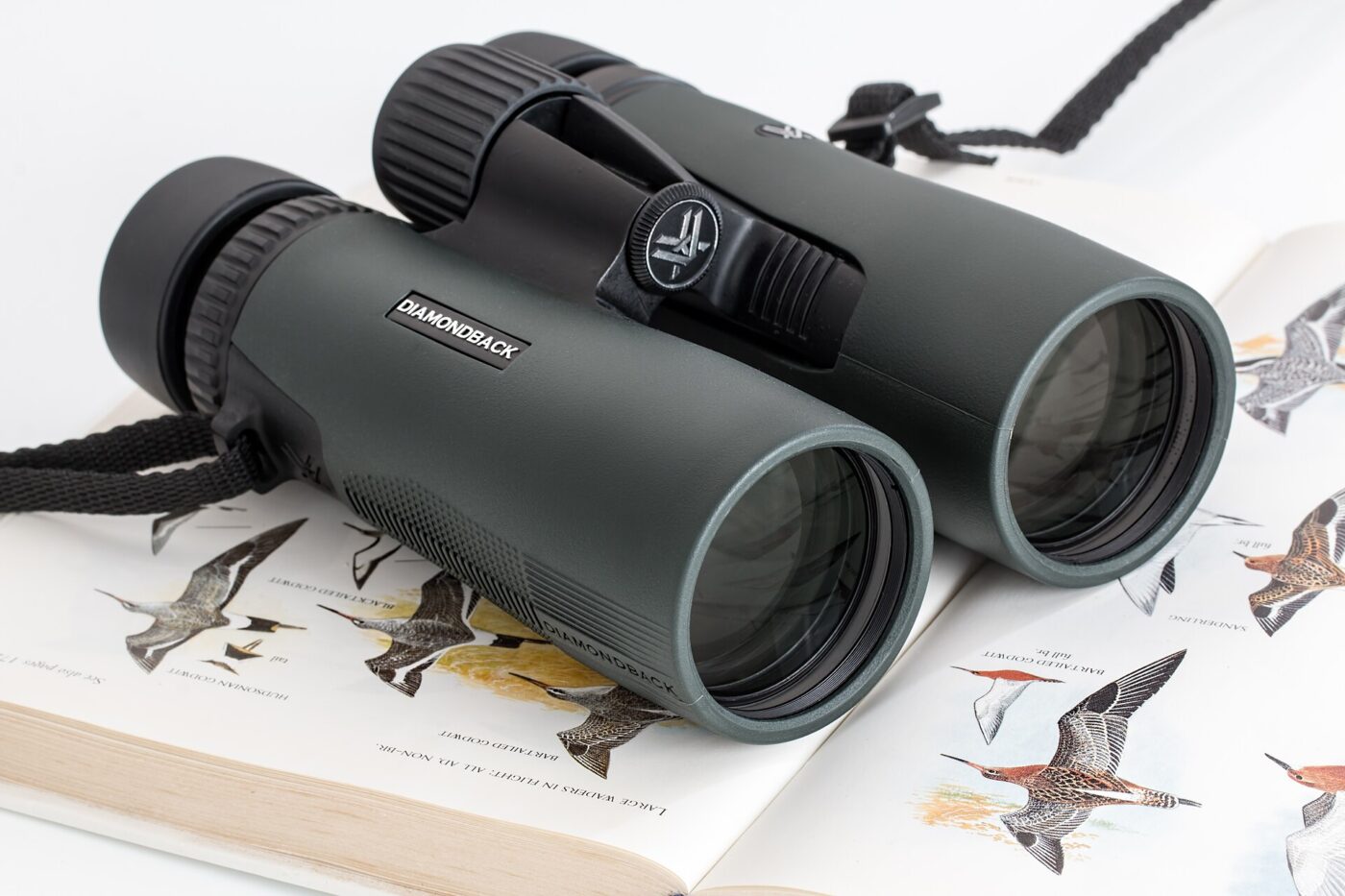
Two binoculars with the same 42mm objective lens and roughly the same price can produce noticeably different birding experiences, and the number printed before the “x” is most of why. The National Audubon Society’s own binocular guide states a preference plainly: “Most birders prefer 7- or 8-power binoculars because they’re bright and have a wide field of view, making it easier to find birds and to follow them in flight.”
10x binoculars trade that wider view for more detail on a distant or perched bird, at a cost Audubon also names directly: magnified hand movement and a harder time locating anything that moves fast. Neither number is universally right; which one earns its price depends on where the birding happens and how steady the person holding them can stay.
Fear Index · Low risk
A tradeoff, not a wrong answer
Audubon’s own guidance favors 7- or 8-power binoculars for their brightness and wide field of view, while 10x shows more detail at the cost of magnified hand shake — neither choice is a safety issue, and picking the wrong one for a given birder mostly means a shakier or narrower view, not wasted money on a broken product.
Magnification, field of view and exit pupil
Field of view is the first place 8x and 10x diverge at the same objective size. Birdwatching.com’s optics guide states the pattern directly: “You usually get a wider field of view with an 8-power binocular than you do with the same model in 10 power.” Audubon’s own guidance sets a floor worth checking on a spec sheet regardless of magnification: at least 6.5° angle of view, roughly 341 feet at 1,000 yards, for binoculars meant for birding.
Exit pupil is the second number the magnification choice changes, and it is simple arithmetic once the formula is known. Nikon’s sport optics guide defines it as the objective lens diameter divided by magnification, and notes that a human pupil opens to roughly 2mm in daylight and up to about 7mm in the dark. Applied to a 42mm objective, that works out to a 5.25mm exit pupil at 8x and 4.2mm at 10x — a wider beam of light reaching the eye at 8x, which shows up as a brighter image in low light.
Field of view and exit pupil both shrink going from 8x to 10x at the same 42mm objective; more magnification is not a free upgrade.
Handshake and finding moving birds

Higher magnification does not just enlarge the bird; it enlarges everything, including the binoculars’ own movement. Audubon’s guidance is specific about the mechanism: “binoculars that magnify an image eight times also magnify the small movements of your hand eight times. Ten-power binoculars magnify those movements ten times.” The wobble is not just visually distracting — Audubon adds that “since your brain must work harder to interpret a shaky image, higher-power binoculars will be tiring to use.”
That shake matters most on a bird that is already hard to hold in frame. A wider field of view at 8x, discussed above, makes a fast-moving warbler or a flushing sparrow easier to find and track in the first place; once found, a steadier 8x image is also easier to keep centered without the tremor a 10x view is more prone to showing.
A shakier image at 10x is not a defect in the binoculars; it is the same hand tremor magnified further, and it gets more tiring over a long day in the field.
Close focus, eye relief and eyeglasses
Magnification is the spec every listing leads with, but two others on the same sheet decide whether a specific pair works for a specific birder. Close focus distance sets how near an object can be and still come into sharp focus — relevant for anyone who also watches butterflies, dragonflies or feeder activity at close range, where a binocular built only for distant birds may not focus at all.
Eye relief is the second: the distance the exit pupil sits behind the eyepiece, and the spec that matters most to anyone who wears eyeglasses. Glasses hold the eye farther from the eyepiece than a bare eye would sit, and a pair with short eye relief can crop the edges of the field of view or force the glasses off entirely to see the full image. Neither spec tracks neatly with 8x versus 10x; both are worth checking on the specific model rather than assumed from the magnification alone.
ED glass, coatings and waterproofing

Extra-low dispersion, ED, glass addresses a different problem than magnification or field of view: color fringing at high-contrast edges, such as a dark branch against bright sky. Nikon describes ED glass as glass engineered to correct that chromatic aberration, which otherwise shows up as a subtle colored fringe around edges in an image.
Waterproof, fog-proof construction is a separate, physical build feature rather than an optical one: internal seals and gas purging keep moisture out of a binocular’s internal air gaps, which is what stops fogging from a sudden temperature swing or a morning in the rain. It is worth confirming on the spec sheet the same way ED glass and eye relief are, rather than assumed from price alone.
Which to buy for woods, shorelines and hawk watches
Woodland and brushy-edge birding favors everything 8x does well: a wider field of view for finding a bird that just moved, a steadier image for tracking it through leaves, and a brighter view in the low light common under a canopy. Open country, shorelines and hawk watches flip the calculation — birds are often farther away and comparatively still, so the extra reach of 10x matters more than the field of view or steadiness it trades away.
Age is a real variable in that tradeoff, not just preference. Birdwatching.com’s guidance notes that “the older a person is, the less the pupil dilates in dark conditions,” which means an older birder’s eye may never open past the 4.2mm a 10×42 already delivers, let alone the 5.25mm an 8×42 offers — narrowing the practical, in-the-field benefit of the wider exit pupil at dawn or dusk specifically.
The 8x-versus-10x choice is really a question of what is being watched and how far away it usually is, not which number sounds more powerful on the box.
The shortlist
Paid links: we earn a commission if you buy through the buttons below, at no extra cost to you. As an Amazon Associate I earn from qualifying purchases.
Compared on view, steadiness and low light
| Product type | Best for | Risk estimate | Where to buy |
|---|---|---|---|
| 8×42 Waterproof Roof-Prism Binoculars with ED Glass | Wider field of view at 8x | 10/100 | See listings on AmazonOpens Amazon search results, not one listing: check the model on the product page. |
| 10×42 Waterproof Roof-Prism Binoculars with ED Glass | More detail at distance | 14/100 | See listings on AmazonOpens Amazon search results, not one listing: check the model on the product page. |
| Binocular Harness Strap | Keeps binoculars steady and secure | 6/100 | See listings on AmazonOpens Amazon search results, not one listing: check the model on the product page. |
Risk estimate is our editorial Fear Index for the product type (lower is safer), not a customer rating. How it is scored.
8×42 Waterproof Roof-Prism Binoculars with ED Glass
At the same 42mm objective, the wider field of view Audubon describes at 8x makes a moving bird easier to find and keep in frame.
- Wider field of view than a 10x at the same objective
- Larger 5.25mm exit pupil by Nikon’s formula
- Steadier image, per Audubon’s guidance
- Less magnified detail on distant birds
- Smaller image on far, stationary targets
10×42 Waterproof Roof-Prism Binoculars with ED Glass
The extra reach of 10x pays off most on birds that are already far away and comparatively still, where the added detail outweighs the shakier view.
- More magnification for distant or perched birds
- Same 42mm objective as the 8x version
- Useful for open country and hawk watches
- Smaller 4.2mm exit pupil, by Nikon’s formula
- Magnifies hand shake more, per Audubon’s guidance
More: Cameras, Drones and Optics analyses and how the Fear Index is scored.
Questions people actually ask
Are 8×42 or 10×42 binoculars better for birding?
Neither is universally better. Audubon’s guide says most birders prefer 7- or 8-power for their brightness and wide field of view, while 10x shows more detail on distant or perched birds at the cost of more magnified hand shake.
What is exit pupil and why does it matter?
Nikon defines it as the objective lens diameter divided by magnification. An 8×42 works out to a 5.25mm exit pupil and a 10×42 to 4.2mm, so the 8x version sends more light to the eye in low light, per that formula.
Does ED glass matter for birding binoculars?
Nikon describes ED glass as correcting chromatic aberration, the colored fringing that can appear around high-contrast edges like a branch against bright sky, in binoculars that do not use it.
Do older birders need a larger exit pupil?
Not as much in practice. Birdwatching.com’s guidance notes that pupils dilate less in the dark as people age, which narrows the real-world benefit of an 8×42’s larger exit pupil over a 10×42’s at dawn or dusk.