
A “675x” Telescope Box Promises Magnification Its Small Lens Cannot Use; Aperture Decides
Useful magnification is capped by a telescope’s aperture, not the number on the box. Dobsonian vs GoTo mounts, and the solar filter rule to know first.

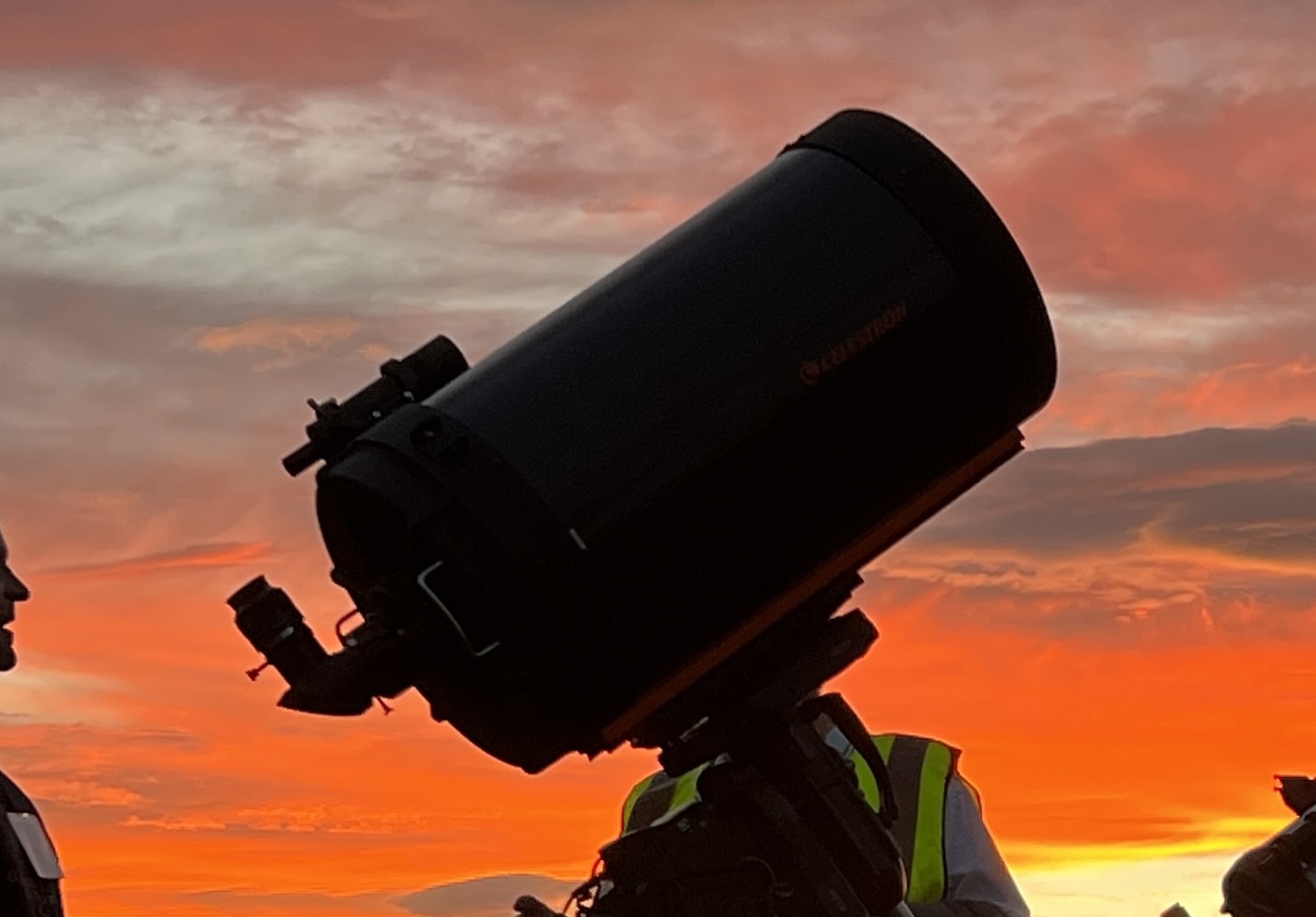
A department-store telescope box that promises hundreds of times magnification is not lying about the number so much as making it useless. A small lens or mirror runs out of light and resolution long before it runs out of magnification, and the view at that setting is a dim, shaking blur rather than a sharper Saturn.
What actually decides how much a beginner can see is aperture — the diameter of the main mirror or lens — and how that aperture’s cost gets spent. A Dobsonian reflector puts almost the whole budget into a bigger mirror on a simple mount; a computerized GoTo telescope spends part of the same budget on a motorized mount and a database of objects to find automatically.
Fear Index · Think twice
A number on the box nobody can actually use
Celestron’s own guidance caps useful magnification at about 60x per inch of aperture — well below the 300x or more printed on some beginner scope boxes — and NASA warns that viewing the Sun through any optic without a proper solar filter instantly causes severe eye injury.
Aperture and the real limit on magnification
Celestron’s own knowledge base explains why aperture, not eyepiece power, sets the ceiling: the larger the lens or mirror diameter, the more light a scope gathers and the higher its resolution, meaning its ability to show fine detail. A small aperture can be pushed to a high magnification number, but there is no detail left to enlarge, so the image just gets bigger, dimmer and blurrier.
Celestron puts a number on that ceiling: maximum useful magnification is about 60x for every inch (25.4mm) of aperture. Push past it and the image loses brightness and sharpness faster than it gains size.
A department-store refractor with a 60mm lens has roughly 2.4 inches of aperture, putting its real ceiling near 140x by that formula — nowhere close to the 300x or more sometimes printed on the box. The number on the box describes what the eyepiece and a matching lens could theoretically magnify, not what that specific aperture can actually resolve.
A magnification number on the box is only as real as the aperture behind it; multiply the aperture in inches by about 60 to find the real ceiling.
Dobsonian reflectors: more mirror per dollar
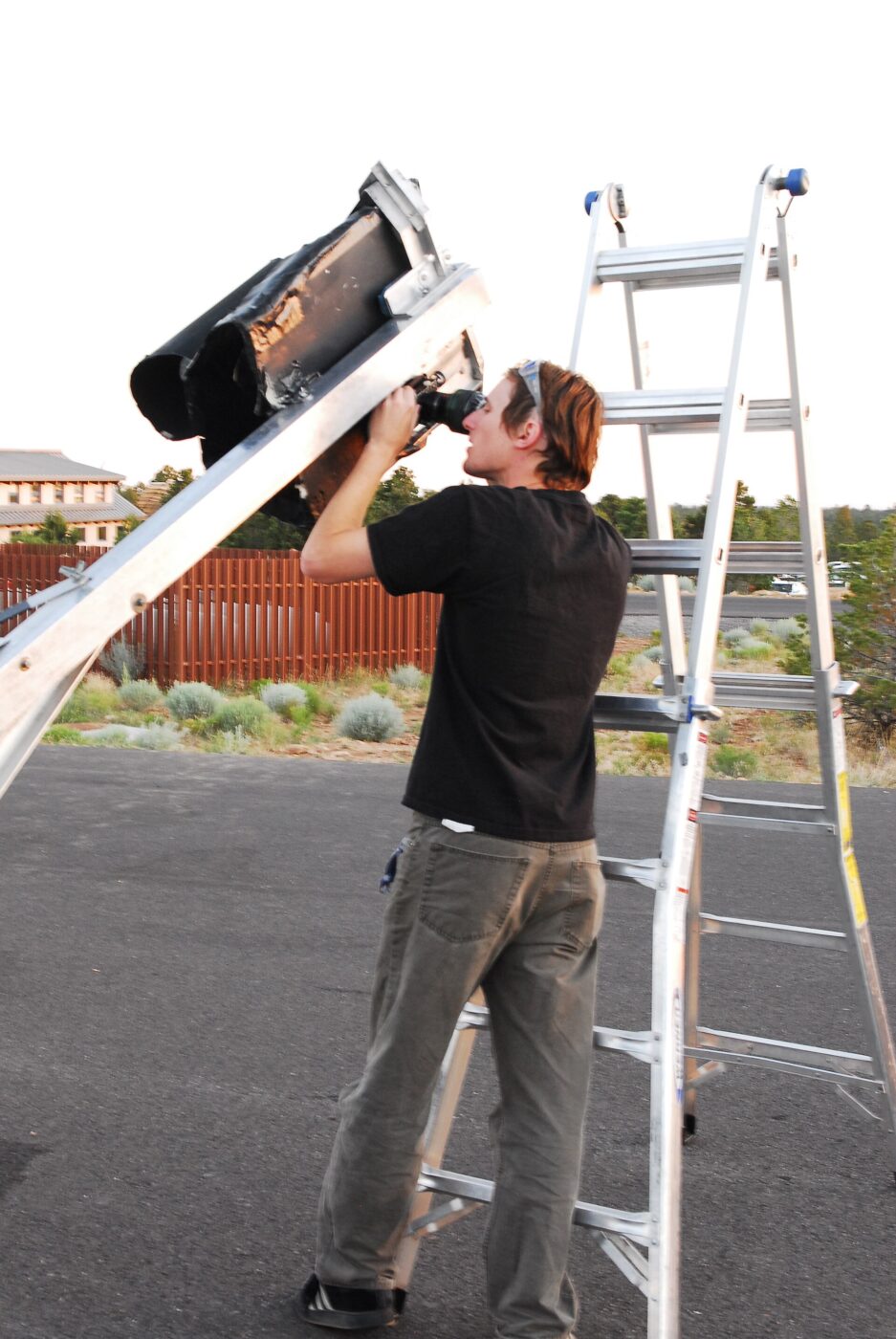
A Dobsonian is a Newtonian reflector — a mirror-based telescope — set on a simple altazimuth base with no motors, clock drive or electronics. Moving it is a matter of nudging the tube by hand, up and down or side to side. That mechanical simplicity is what lets more of a Dobsonian’s price go into the mirror itself rather than into a motorized mount.
Aperture is also where the payoff shows up fastest. Celestron’s aperture guidance recommends at least 5 inches (125mm) for a good view of open star clusters, and 5 to 8 inches (125–200mm) for bright nebulae, ranges a Dobsonian reaches at a lower price than most other designs because the mount itself costs so little to build.
GoTo mounts: finding objects vs seeing them well

A GoTo telescope pairs the optics with a motorized mount and a stored database of stars, planets and deep-sky objects. After an alignment routine — centering a handful of known reference stars so the mount can calculate where everything else is — a handheld controller can slew the scope to a chosen target automatically, which is useful for a beginner who does not yet recognize the night sky by eye.
That convenience is part of the same budget as the optics. At a similar price point to a Dobsonian, a GoTo telescope typically carries a smaller aperture, because part of the cost goes to the motors, controller and database rather than to the mirror or lens. It also needs a power source, a level and stable base, and a clear view of the alignment stars before it can find anything accurately.
A GoTo mount is solving where to look, not what you can see once you get there; the aperture is still what determines the view.
Eyepieces, collimation and setup time
The eyepiece in use, not the telescope alone, sets the actual magnification at any given moment: it is the telescope’s focal length divided by the eyepiece’s focal length. A small set of eyepieces lets a beginner stay comfortably under the useful-magnification ceiling for a given aperture rather than reaching for the highest number available.
A Newtonian mirror, the kind inside a Dobsonian, can drift out of alignment after transport or a bump, a process called collimation that is checked and adjusted by hand with the mirror’s own adjustment screws. It is routine maintenance rather than a sign anything is broken, and most owners learn to check it in a couple of minutes before a session.
Never at the Sun without a proper solar filter
NASA is unambiguous on this point: it is not safe to look directly at the Sun without specialized eye protection, and viewing any part of the bright Sun through a camera lens, binoculars or a telescope without a special-purpose solar filter secured over the front of the optics will instantly cause severe eye injury. Eclipse glasses are not a substitute when looking through an eyepiece; the concentrated sunlight a telescope collects can burn through a filter made only for naked-eye viewing.
The American Astronomical Society maintains a list of specialty vendors familiar with solar filters for telescopes, cameras and binoculars, and recommends buying from them rather than an unfamiliar general listing. Its guidance notes that a filter goes over the front, or aperture, of the telescope — never over the eyepiece, where concentrated sunlight could crack or burn through it and cause injury before anyone notices.
A solar filter goes over the front of the telescope, not the eyepiece — concentrated sunlight can crack or burn through anything mounted where the eye looks.
The shortlist
Paid links: we earn a commission if you buy through the buttons below, at no extra cost to you. As an Amazon Associate I earn from qualifying purchases.
Compared on getting a clear view, safely
| Product type | Best for | Risk estimate | Where to buy |
|---|---|---|---|
| 8-Inch Dobsonian Reflector Telescope | More aperture for the money | 18/100 | See listings on AmazonOpens Amazon search results, not one listing: check the model on the product page. |
| Computerized GoTo Telescope (130mm Class) | Finding objects automatically | 22/100 | See listings on AmazonOpens Amazon search results, not one listing: check the model on the product page. |
| Full-Aperture White-Light Solar Filter | Viewing the Sun without injury | 12/100 | See listings on AmazonOpens Amazon search results, not one listing: check the model on the product page. |
Risk estimate is our editorial Fear Index for the product type (lower is safer), not a customer rating. How it is scored.
8-Inch Dobsonian Reflector Telescope
A Dobsonian’s mount is a simple box with no motors, so more of the price goes into the mirror that actually gathers light.
- Larger mirror at a given price point
- No batteries or electronics to fail
- Simple mount needs little setup time
- No automatic object-finding
- Manual mirror collimation needed
Computerized GoTo Telescope (130mm Class)
A GoTo mount solves where to point the scope; the aperture, usually smaller than a Dobsonian at the same price, still decides what the view looks like.
- Motorized mount locates catalog objects
- Useful for unfamiliar night skies
- Tracks an object once found
- Smaller aperture at a similar price
- Needs batteries and star alignment first
More: Cameras, Drones and Optics analyses and how the Fear Index is scored.
Questions people actually ask
What does a telescope’s magnification number actually mean?
It is capped by aperture. Celestron’s guidance puts the practical ceiling at about 60x per inch of aperture; beyond that, the image gets bigger but dimmer and blurrier, not more detailed.
Is a Dobsonian or a GoTo telescope better for a beginner?
Neither is universally better. A Dobsonian trades automatic object-finding for a larger mirror at the same price; a GoTo mount finds catalog objects automatically but usually comes with less aperture for the money.
Do I need special eyepieces for a beginner telescope?
The eyepieces used set the actual magnification at any moment. Staying within the aperture’s useful-magnification ceiling matters more than buying the highest-power eyepiece available.
Can I ever look at the Sun through a telescope?
Only with a solar filter rated for the purpose secured over the front of the telescope, never over the eyepiece. NASA warns that viewing the Sun through any optic without one causes instant, severe eye injury.
Where should I buy a solar filter?
The American Astronomical Society maintains a list of specialty vendors familiar with solar filters for telescopes, cameras and binoculars, and recommends buying from them rather than an unfamiliar general marketplace listing.