
At-Home IPL Needs Contrast Between Hair and Skin, and Getting That Wrong Is How It Burns
IPL and at-home laser devices heat pigment in the hair, so skin tone and hair color decide both results and burn risk. What to check before buying.

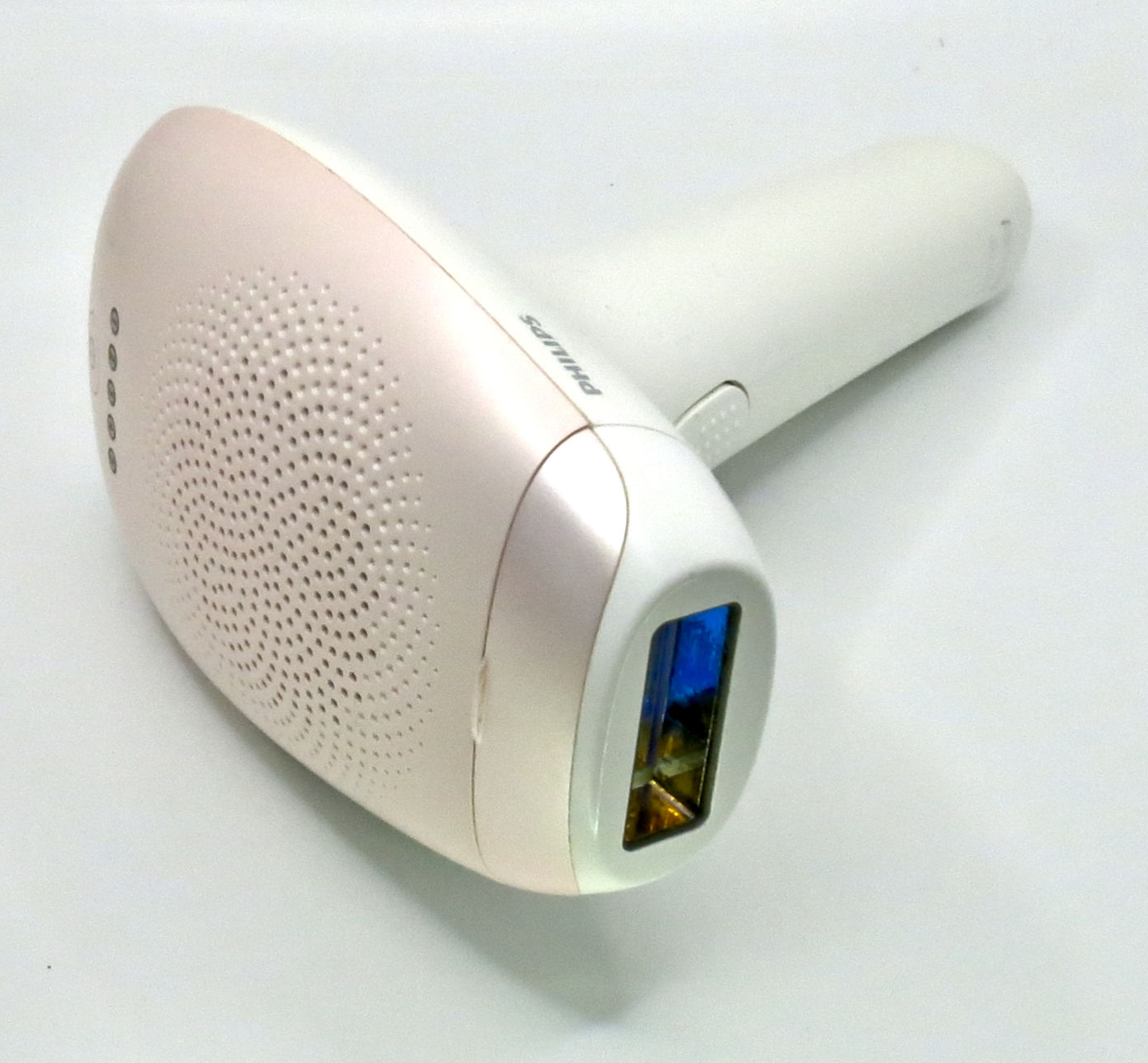
Many devices sold as at-home laser hair removal are actually intense pulsed light, or IPL, and both IPL and true lasers work on the same principle: a pulse of light is absorbed in the hair follicle, where melanin, the pigment in hair, turns it into heat that damages the follicle. That mechanism is also why skin tone matters as much as the device’s settings.
AAD says laser hair removal works best for people with light-colored skin and dark-colored hair. Treating darker skin or lighter hair is now possible in a dermatologist’s office, AAD says, but has to be done very carefully, and burns and changes in skin color are among the risks it and ASDS list.
Fear Index · Think twice
A device that targets pigment, on purpose
FDA filings describe at-home laser light as selectively absorbed by melanin in the hair follicle, and ASDS lists burns and skin pigmentation problems among the risks of light-based hair removal.
What counts as an at-home laser device
Many devices marketed to consumers as laser hair removal are intense pulsed light devices, not lasers. A laser produces a single wavelength of light; ASDS says IPL can deliver hundreds of wavelengths in each burst, filtered to work like a laser. FDA filings for at-home devices describe the same principle: the light is selectively absorbed in the hair follicle, heating it and reducing regrowth. Some at-home devices use an actual diode laser rather than IPL, and the FDA clears both through the same 510(k) process, under the same device regulation, 21 CFR 878.4810, which requires a new device to be shown substantially equivalent to one already legally on the market rather than to prove it works better.
A 510(k) clearance is not a claim that a specific device outperforms another cleared device; it is a safety and equivalence review. Checking that a specific model has a 510(k) clearance on file, rather than relying on marketing language alone, is the more useful comparison before buying.
FDA-cleared means a device met a baseline for safety and equivalence, not that it is the strongest or most effective option on the shelf.
Hair color, skin tone and why contrast matters
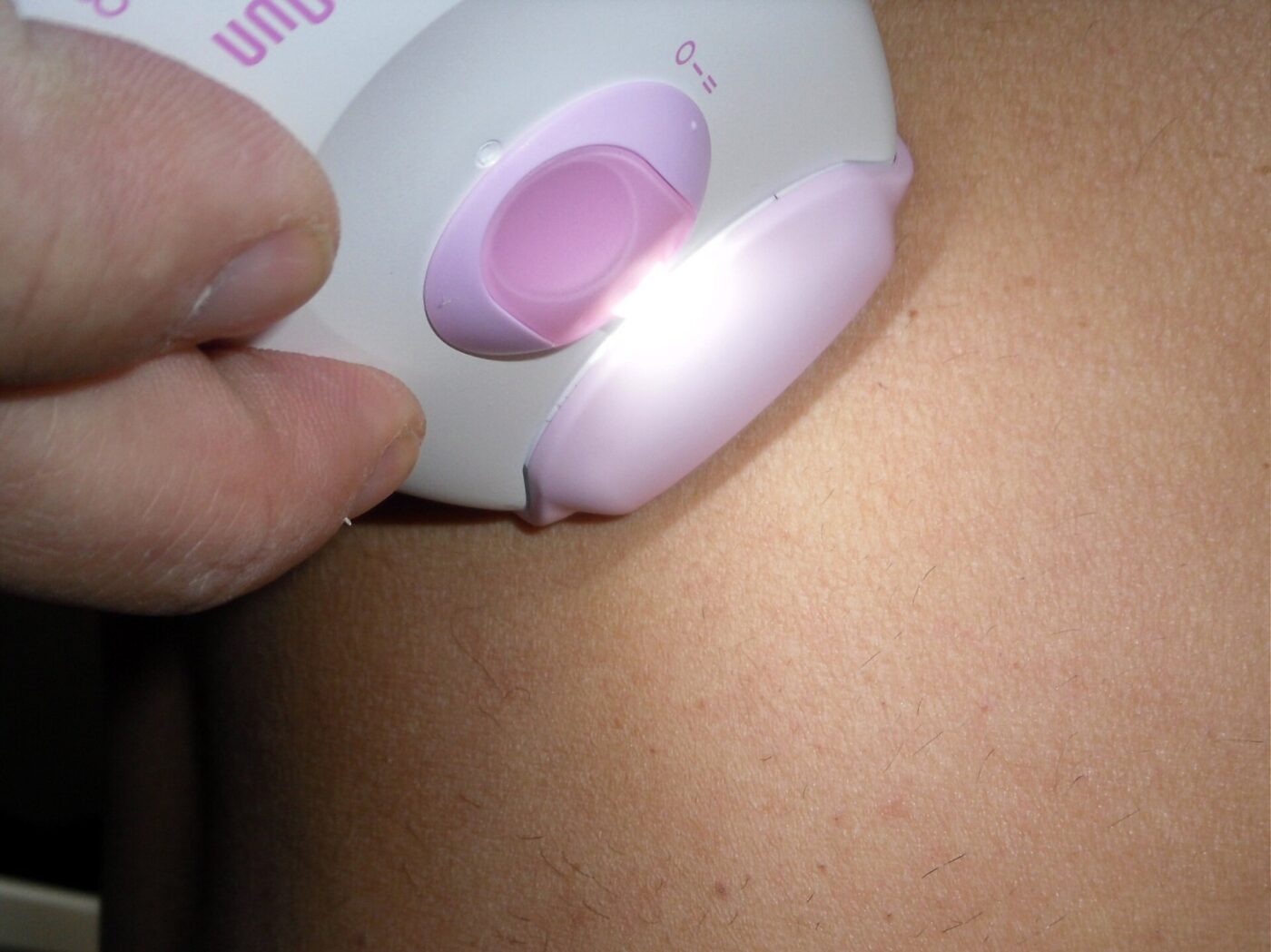
Because the light targets pigment in the hair, the hair’s own color matters. AAD says laser hair removal works best for patients with light-colored skin and dark-colored hair, and that in the past only that combination could be treated safely; dermatologists can now treat light-colored hair and dark skin, but AAD says those treatments must be performed very carefully.
That care is the part an at-home device cannot supply on its own. The American Society for Dermatologic Surgery lists skin pigmentation problems and burns among the risks of laser and light-based hair removal and says those risks are minimized in the hands of a qualified dermatologist, and AAD warns that laser hair removal can be dangerous in inexperienced hands, with burns, permanent changes to skin color and scars possible.
Some at-home devices include a skin-tone sensor; one FDA 510(k) summary describes a skin color detection system that will not emit pulses on skin outside the range suitable for treatment. That sensor is a safety feature worth checking for specifically, not an assumption to make about any device labeled for hair removal.
Permanent reduction, not permanent removal
Where an at-home device’s FDA clearance mentions permanence, the wording is “permanent reduction in hair regrowth,” defined as a long-term, stable reduction in the number of hairs regrowing 6, 9 and 12 months after a treatment regime; some clearances cover only the removal of unwanted hair. The distinction is not just wording. The American Academy of Dermatology says laser hair removal is permanent on most areas of the body but, because of hormones, not permanent on a woman’s face.
AAD also says removing hair this way can take 6 sessions or more, and that treatment can be repeated when hair regrows. Those figures describe treatment by dermatologists; a single at-home session, or even a few, should not be expected to do more.
Eye protection and areas to avoid
Follow the device’s manual on keeping the light away from the eyes and on which areas to avoid; FDA filings for at-home devices list photobiological safety testing to IEC 62471 and describe skin-contact sensors that stop the device from firing unless it is pressed against skin. ASDS tells patients to avoid sunbathing and tanning beds for two weeks before treatment, and AAD says to keep treated skin out of direct sunlight afterward.
Following the specific device’s manual on placement, patch testing and pulse settings matters more here than following a general routine copied from a different model, since IPL and diode devices vary in how their sensors and safety cutoffs are built.
Session schedules, results and when to see a dermatologist

At-home devices are built around repeat sessions too: one FDA-cleared at-home laser is intended for “hair removal sustained with periodic treatments,” and AAD says most dermatology patients are treated once every 4 to 6 weeks. A device that shows no visible reduction in hair after several sessions performed as directed, or that causes blistering, lasting discoloration or a burn, is a reason to stop using it rather than to keep going on a stronger setting.
This guide describes what these devices are cleared to do and the risks tied to skin tone and hair color; it is not medical advice for any specific person’s skin. Anyone with a skin condition, a tendency to scar or discolor, or a skin tone or hair color outside a device’s stated range is better served by a board-certified dermatologist, which is what AAD recommends for laser treatments; ASDS says a dermatologist will usually review medical history before treatment.
The shortlist
Paid links: we earn a commission if you buy through the buttons below, at no extra cost to you. As an Amazon Associate I earn from qualifying purchases.
Compared on skin tone and hair color fit
| Product type | Best for | Risk estimate | Where to buy |
|---|---|---|---|
| IPL Hair Removal Device With Skin-Tone Sensor (FDA-Cleared) | Dark hair on lighter skin | 35/100 | See listings on Amazon |
| At-Home Diode Laser Hair Removal Device (FDA-Cleared) | A diode laser instead of IPL | 33/100 | See listings on Amazon |
| Waterproof Electric Body Groomer | For light hair or unsuitable skin tones | 8/100 | See listings on Amazon |
Risk estimate is our editorial Fear Index for the product type (lower is safer), not a customer rating. How it is scored. The buttons open Amazon search results rather than one listing, so check the model on the product page.
IPL Hair Removal Device With Skin-Tone Sensor (FDA-Cleared)
Look for the skin-tone sensor specifically and confirm the model’s 510(k) clearance rather than relying on the box copy.
- Skin-tone sensor blocks out-of-range skin
- FDA 510(k) clearance on file
- Skin-contact sensor stops off-skin flashes
- Still needs dark hair for good contrast
- Multiple sessions over weeks
Waterproof Electric Body Groomer
The option when hair color or skin tone puts someone outside what IPL or laser devices are built to treat.
- Works on blond, red and gray hair
- No light-based burn risk
- No skin-tone restriction
- Cuts hair rather than reducing it
- Hair regrows at its normal rate
More: Beauty and Personal Care analyses and how the Fear Index is scored.
Sources
- Laser Hair Removal — American Academy of Dermatology
- Laser Therapy for Unwanted Hair — American Society for Dermatologic Surgery
- 510(k) Premarket Notification Database — FDA
- Laser Hair Removal: FAQs — American Academy of Dermatology
- 510(k) Summary K221466, Over-the-Counter IPL Hair Removal Device — FDA
- 510(k) Summary K230090, Over-the-Counter Diode Laser Hair Removal — FDA
Questions people actually ask
Does IPL hair removal work on dark skin?
It depends on the device’s cleared range. FDA filings show some at-home devices use a skin-color sensor that refuses to fire outside their range, and AAD says dark skin can be treated in a dermatologist’s office, but very carefully. For a skin tone outside a device’s stated range, see a board-certified dermatologist.
Is at-home IPL hair removal permanent?
AAD describes laser hair removal as permanent on most areas of the body, but not permanent on a woman’s face, and says treatment can be repeated as hair regrows. Where an at-home device’s FDA clearance mentions permanence, it is for permanent reduction in hair regrowth, not total permanent removal.
How many sessions does laser or IPL hair removal take?
AAD says removing hair can take 6 sessions or more, and that most patients are treated once every 4 to 6 weeks; those figures describe treatment by dermatologists.
Does IPL work on blond or gray hair?
AAD says laser hair removal works best on dark hair and light skin, and that treating light-colored hair must be done very carefully by a dermatologist. Check which hair colors an at-home device’s own instructions list before buying.