
You Are Getting About a Third of the SPF on the Bottle
SPF is measured at a thickness almost nobody applies. Use a quarter of it and the protection falls far more than a quarter.

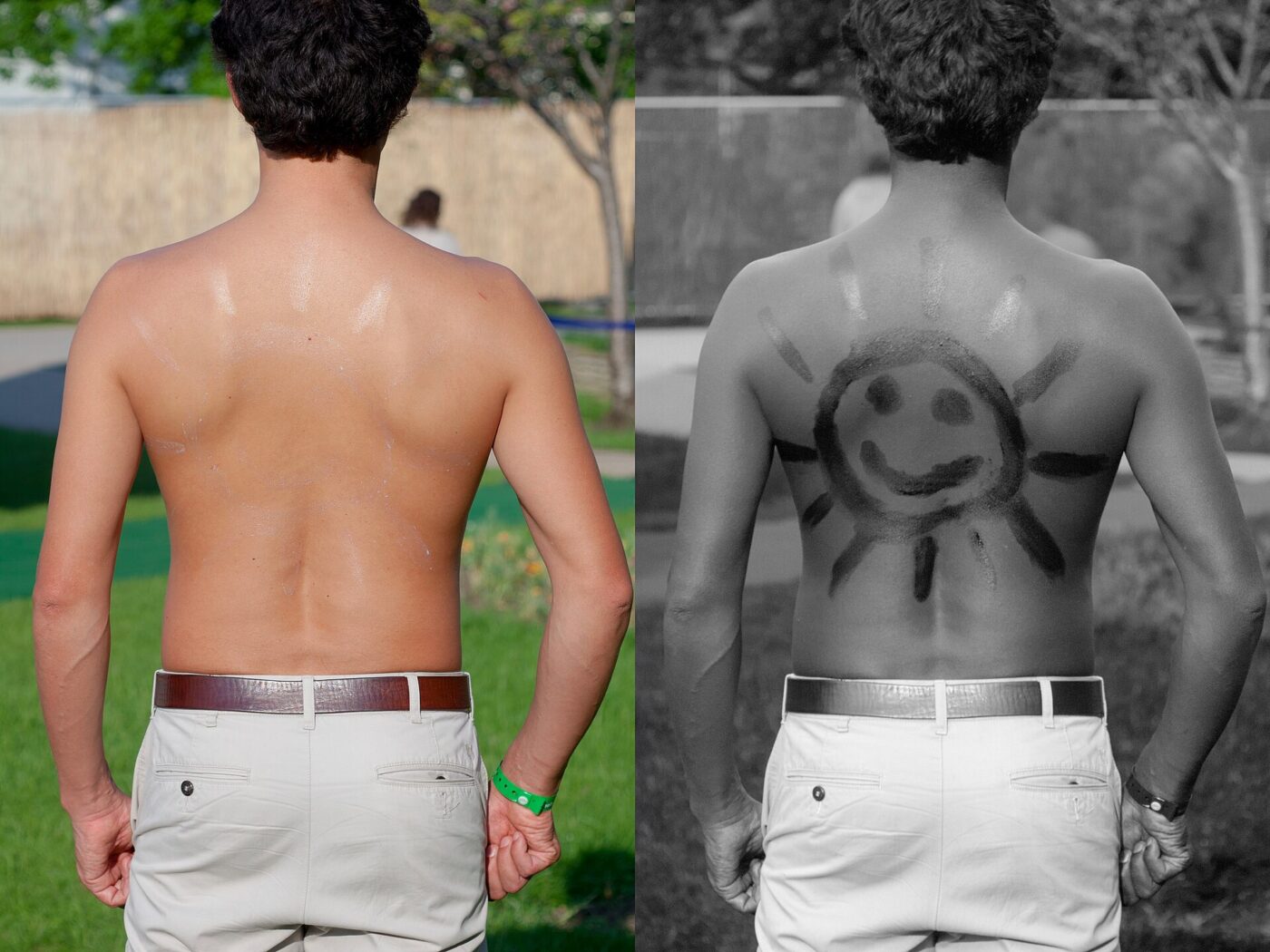
SPF is a ratio measured under a standard, and it describes sunburn protection (mostly UVB) only. Skin is coated at 2 milligrams per square centimeter, exposed to a lamp, and the time to redness is compared against bare skin. Look for “Broad Spectrum” on the label for UVA protection too — the FDA requires that claim to be earned with a separate test.
That thickness is much heavier than it sounds — about a shot glass for an adult body, and roughly a third of a teaspoon for the face and neck alone. Studies of how people actually apply sunscreen consistently find a fraction of it.
Fear Index · High risk
The label is accurate and your protection is not
Nothing is mislabeled. SPF is measured under laboratory conditions that almost nobody reproduces, and the shortfall is invisible until it is sunburn.
The number assumes a thickness you are not using
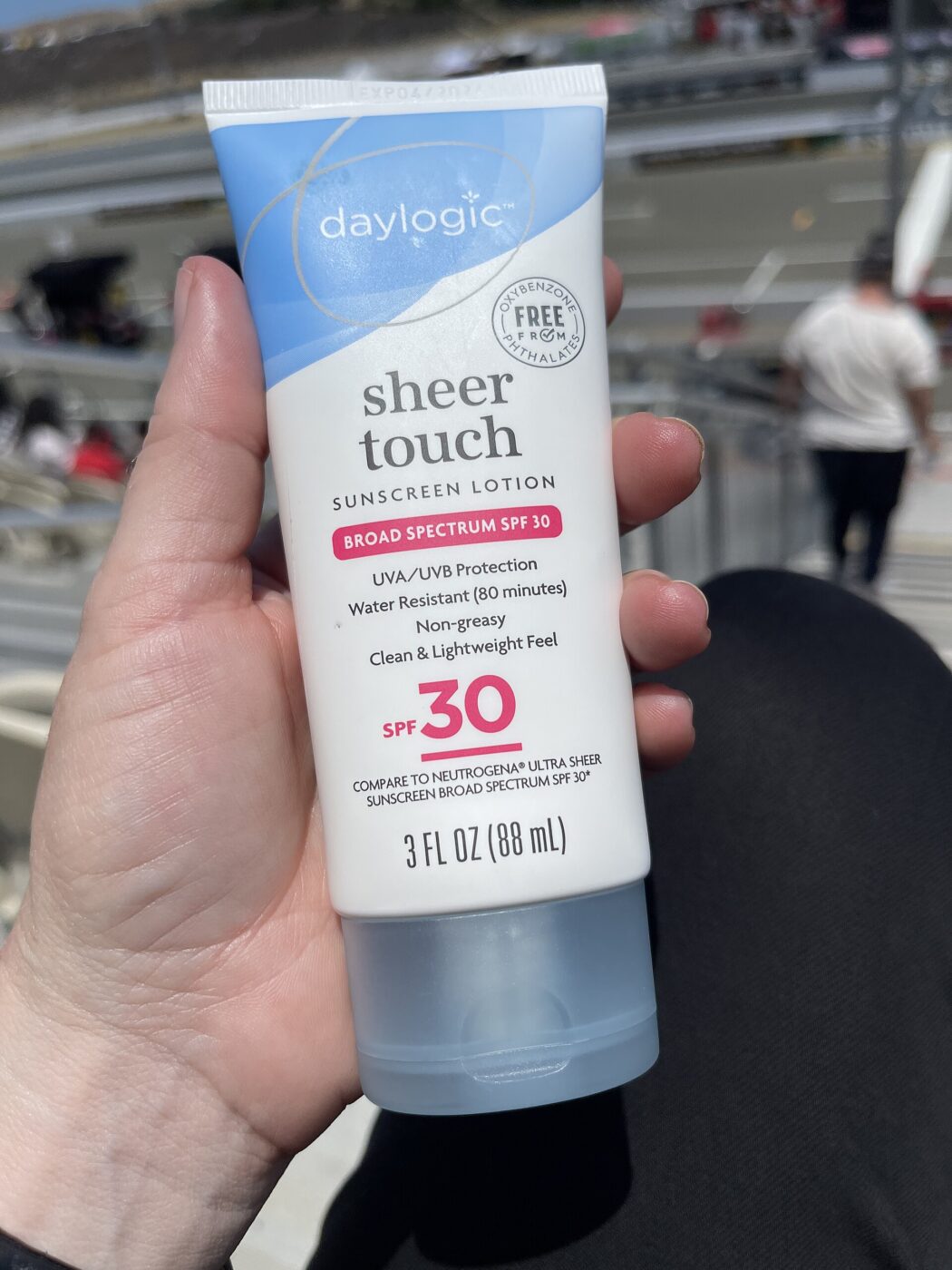
The relationship between thickness and protection is debated but never favorable to a thin layer. Studies disagree on the exact curve: one found SPF falling roughly in proportion to the amount applied, while others found it falling faster — exponentially or logarithmically — especially for high-SPF products. Either way, a thin layer delivers only a fraction of the number on the label, because protection depends on the film’s optical density, not a simple ratio.
The practical consequence: SPF 50 applied thinly can behave like a low-teens SPF. The bottle is accurate; the application is not.
A well-applied SPF 30 outperforms a thinly-smeared SPF 50, every time. Amount beats number.
How much is actually enough

Two rules of thumb dermatologists use because they are memorable rather than precise, plus the timing rules that go with them.
- The two-finger rule. Squeeze a line of sunscreen along the full length of your index and middle fingers. That is a face-and-neck dose.
- The shot-glass rule. About 30 ml for a whole adult body in swimwear.
- Reapply every two hours, and immediately after swimming or toweling — “water resistant” is tested for 40 or 80 minutes, not all day.
- Apply before you go out, not on the beach. Chemical filters need roughly 15 minutes to form an even film.
Mineral and chemical, briefly
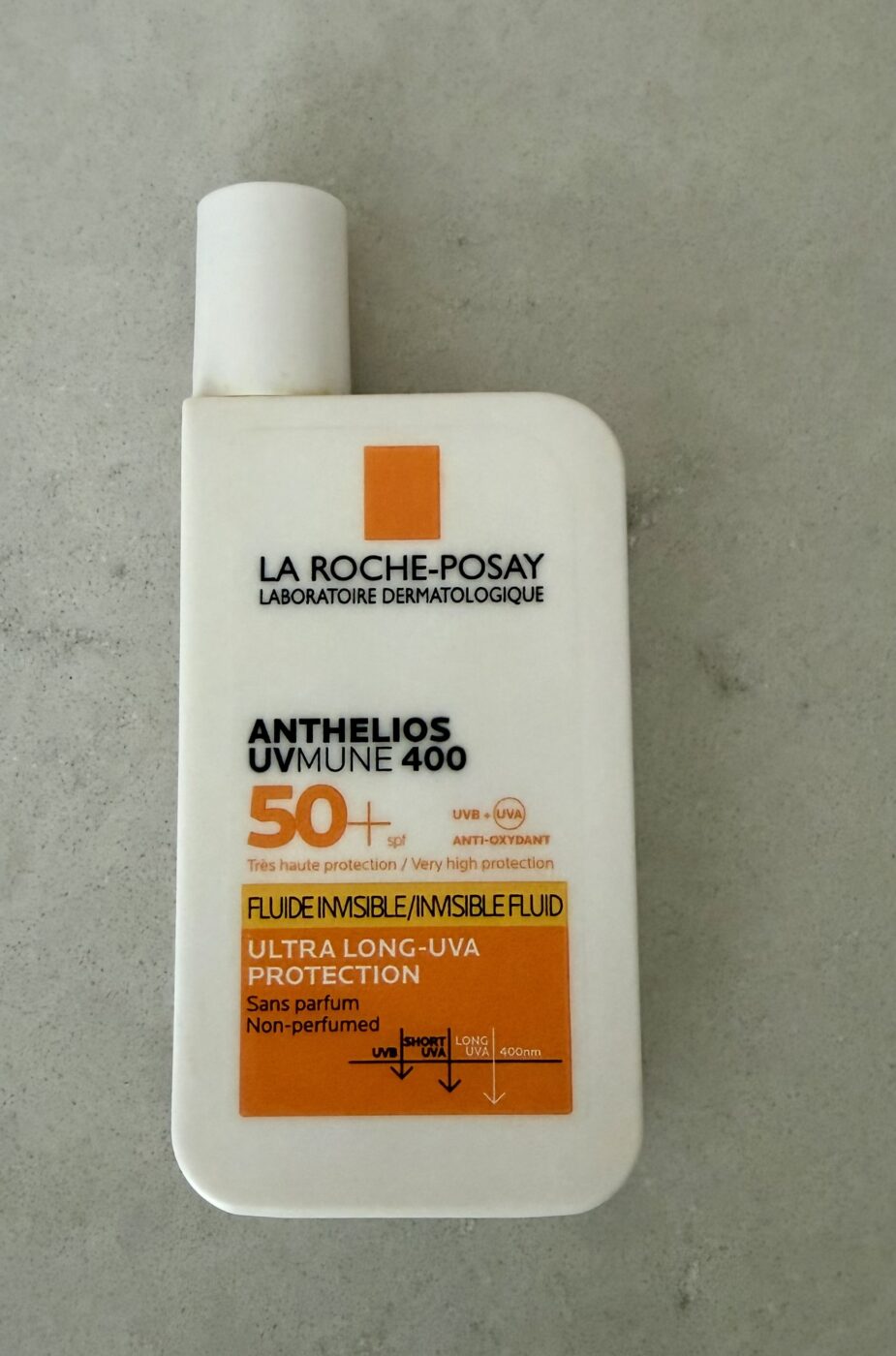
Mineral filters — zinc oxide and titanium dioxide — sit on the surface and work immediately. They are the more reliable choice for sensitive or reactive skin, and modern formulations have largely solved the white cast on lighter skin without solving it on darker skin.
Chemical filters absorb UV and convert it to heat. They are lighter, more cosmetically elegant and easier to apply in sufficient quantity — which, given everything above, is a real advantage rather than a compromise.
The best sunscreen is the one you will put on generously and reapply. That is not a platitude; it is the conclusion the arithmetic forces.
Check the date, and keep it out of the heat
Sunscreen is a regulated over-the-counter drug, and FDA rules require an expiration date unless the manufacturer’s stability testing shows the formula holds up for at least three years. A bottle with no printed date is safe to treat as good for three years from the date you bought it, not indefinitely.
Heat speeds up that decline. The FDA specifically advises against leaving sunscreen in direct sun, and recommends wrapping the bottle in a towel or keeping it in shade during long stretches outdoors — a bottle baked on a car dashboard or left poolside all afternoon degrades faster than the date on the label assumes.
- Check for a printed date first. If there is none, write the purchase date on the bottle yourself.
- Discard anything that has separated, changed color, or changed texture, even if the date has not passed.
- Keep the bottle out of a hot car, a beach bag in direct sun, or a windowsill between uses.
An expired or heat-damaged sunscreen can be applied at a full 2 mg/cm² and still fail — the dose only matters if the formula is still active.
The shortlist
Paid links: we earn a commission if you buy through the buttons below, at no extra cost to you. As an Amazon Associate I earn from qualifying purchases.
Compared on whether you will reapply
| Product type | Best for | Risk estimate | Where to buy |
|---|---|---|---|
| Facial Sunscreen SPF 50 | Daily face use | 30/100 | See listings on AmazonOpens Amazon search results, not one listing: check the model on the product page. |
| Body Sunscreen SPF 30+ | A day outdoors | 26/100 | See listings on AmazonOpens Amazon search results, not one listing: check the model on the product page. |
| Sunscreen Stick for Reapplication | Reapplying over makeup | 22/100 | See listings on AmazonOpens Amazon search results, not one listing: check the model on the product page. |
Risk estimate is our editorial Fear Index for the product type (lower is safer), not a customer rating. How it is scored.
Body Sunscreen SPF 30+
The most useful purchase here is a big bottle you do not ration. Buying small and using it sparingly is exactly the wrong way round.
- Large bottle encourages a proper dose
- Water resistance rated in minutes on the label
- Cheap enough to be generous with
- Needs reapplying every two hours
- Rubs off on towels
Sunscreen Stick for Reapplication
Reapplication is where protection is lost. A stick in a bag removes the excuse — pass it over each area several times.
- Goes over makeup without wrecking it
- Fits in a pocket, so it is actually with you
- No spillage
- Easy to apply too thinly
- More expensive per milliliter
More: Beauty & Personal Care analyses and how the Fear Index is scored.
Sources
- How to Apply Sunscreen — American Academy of Dermatology
- Q&A: FDA Announces New Requirements for OTC Sunscreen Products — FDA
- Labeling and Effectiveness Testing: Sunscreen Drug Products (Small Entity Compliance Guide) — FDA
- Application of Sunscreen — Theory and Reality — Photodermatology, Photoimmunology & Photomedicine
- Sunscreen: How to Help Protect Your Skin From the Sun — FDA
Questions people actually ask
How much sunscreen should I use on my face?
About the amount that fits along the length of your index and middle fingers — roughly a third of a teaspoon for face and neck. Most people apply far less.
Is SPF 50 twice as good as SPF 25?
No. SPF 25 blocks about 96% of UVB and SPF 50 about 98%. The far bigger variable is how thickly you apply it.
How often should sunscreen be reapplied?
Every two hours, and immediately after swimming or toweling. Water-resistant claims are tested for 40 or 80 minutes, not for a whole day.
Is mineral sunscreen better than chemical?
Mineral is more reliable for sensitive skin and works immediately. Chemical filters are lighter and easier to apply generously, which in practice often means better real protection.