
A Single Hawk Decal Rarely Stops Window Strikes; Closely Spaced Markings Usually Do
Nearly one billion birds die hitting glass in the US yearly. Why one decal rarely helps, the two-inch rule that does, and which treatments hold up.

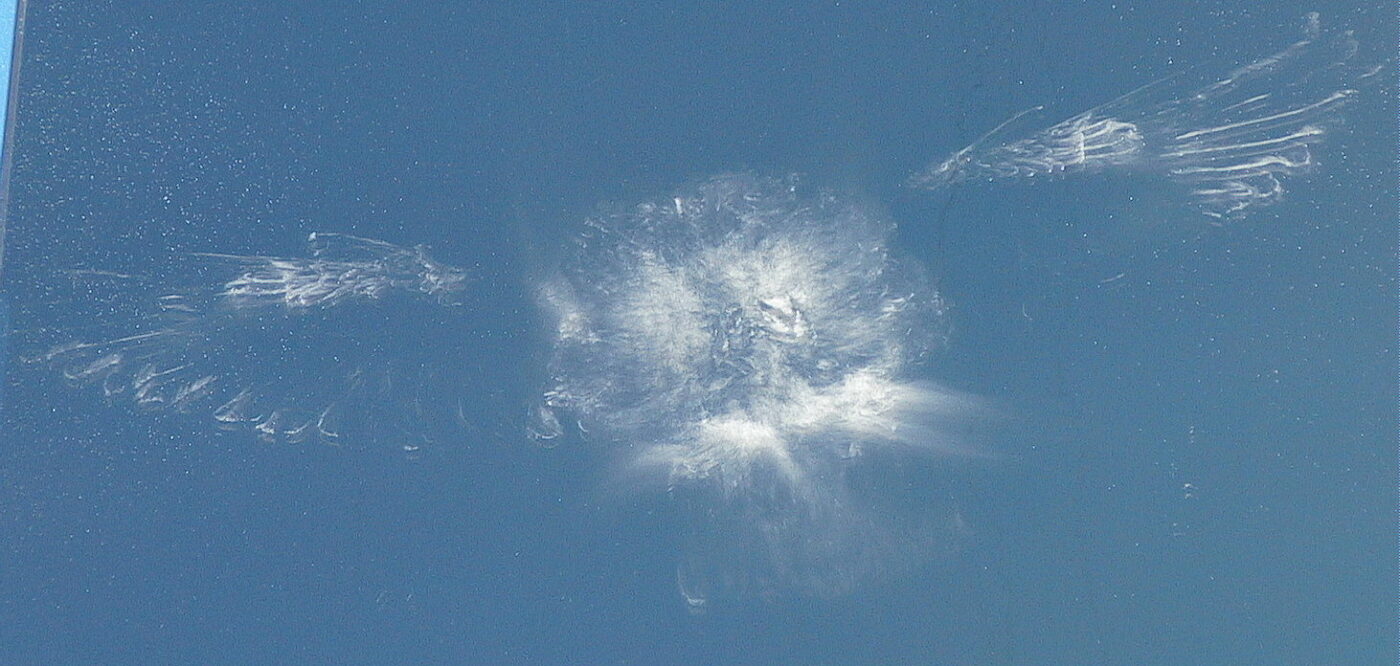
A hawk-silhouette decal stuck in the center of a picture window looks like it should work, and it almost never does on its own. The bird is not avoiding a shape it recognizes as a predator; it is avoiding what looks like open sky and trees, and a single sticker leaves the rest of the glass exactly as inviting as before.
Conservation groups that study this have converged on the same fix, and it has nothing to do with predator silhouettes. It is about spacing a pattern closely enough, across the whole pane, that a bird never mistakes any part of it for a way through.
Fear Index · Think twice
A window that looks like open sky
The U.S. Fish and Wildlife Service says nearly one billion birds die colliding with glass in the US every year, and most of those collisions happen at homes and low-rise buildings, not skyscrapers.
Why birds hit glass they can obviously see
The U.S. Fish and Wildlife Service explains the mechanism directly: windows reflect the surrounding environment — forest, clouds, sky — and birds, unable to recognize glass as a barrier, see natural habitat mirrored in the reflection and fly directly into it. The bird is not fooled by a picture; it is responding to what looks like a continuation of the world it is already flying through.
The scale is large and mostly invisible to the people it affects. FWS says nearly one billion birds collide with glass in the US every year, and that most fatal collisions happen at homes and buildings shorter than four stories, not the glass towers usually pictured with this problem. A collision can cause internal hemorrhage, a concussion, or damage to a bird’s bill, wings, eyes or skull, and FWS notes some birds are killed on impact and never fly away, which is part of why the true toll is undercounted.
The two-inch rule behind markings that work
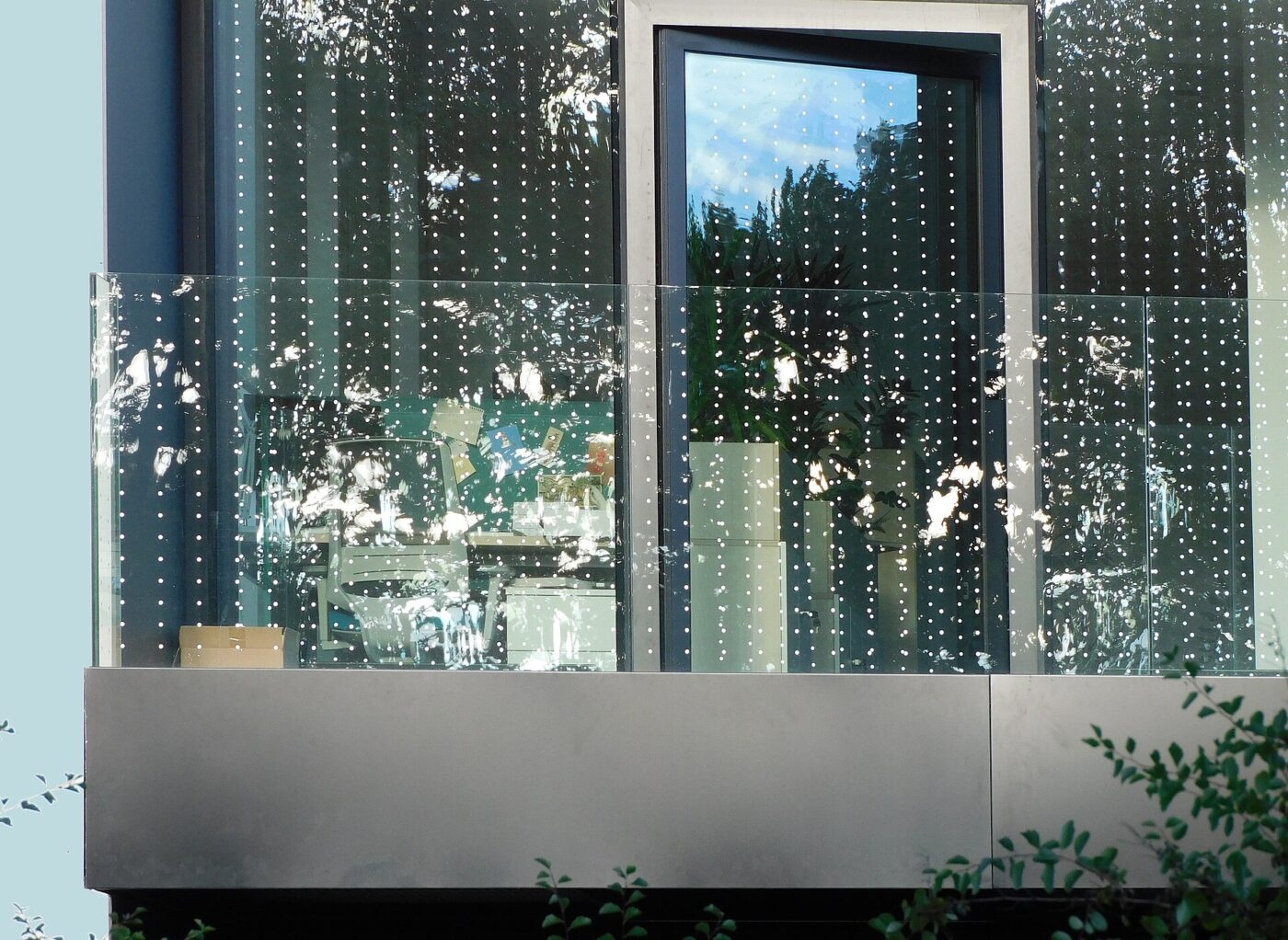
American Bird Conservancy’s guidance for homeowners spells out the spacing that actually breaks a reflection: “Ideal spacing follows the two-inch-by-two-inch rule. Patterns that have vertical, horizontal, or diagonal spaces of two inches or less … will prevent most collisions.” Anything spaced wider than that still reads as a gap a small bird might fit through.
That is not a rounding error. ABC warns that “larger spacing poses a risk to small songbirds, including hummingbirds, that can easily fly through four-inch-wide gaps” — a spacing loose enough to look safe on a spec sheet can still be lethal for the smallest birds in a yard. ABC also sets a visibility standard: a pattern should be visible from about 10 feet away, giving a bird enough distance to register it and change course before reaching the glass.
Two inches is the spacing that works for the birds most likely to be in a yard. Wider spacing is a compromise, not a safer-looking option.
Tape, dots, cord and paint: what to put on the glass
A single decal fails the two-inch rule by definition — it covers one small area of a pane that can be several feet wide in every direction. FWS lists several low-cost treatments built around covering the whole window instead: adhesive dot patterns or tape spaced no more than 2 inches apart; exterior tempera paint applied in a 2-by-2-inch grid, which is non-toxic and washes off with rain or a hose; taut parachute cord strung roughly 4 inches apart across the outside of the glass; and insect screens or netting mounted outside the pane, which soften an impact even where a bird cannot see the mesh clearly.
FWS also flags a treatment that has nothing to do with markings: reducing nighttime lighting, especially during migration seasons, since lit windows draw birds that are flying at night. Turning off unnecessary exterior lights or using motion sensors and timers cuts that risk without changing how a window looks by day.
Feeder placement and which windows to treat first
Not every window carries equal risk. ABC’s guidance for homeowners specifically flags “windows across from bird feeders, bird baths, and fruit-bearing plants” as the ones needing treatment first, since those are the panes birds are most often flying directly toward.
That makes feeder placement itself a decision worth making deliberately rather than by whatever spot has an outlet or a view. A feeder positioned so a bird’s normal flight path crosses in front of an untreated window turns that ordinary backyard fixture into the trigger for a strike; treating the glass those birds actually face does more than moving the feeder a few feet in either direction.
Confirming a treatment is working, and what still fails
A treatment only works where it is actually applied. A strip of dot tape across the bottom third of a tall window, or cord strung over one panel of a multi-pane door, still leaves the untreated glass above or beside it just as reflective, and a bird aiming for open sky does not know to avoid the treated section.
The same logic applies to interior solutions: a decal stuck on the inside of the glass sits behind the reflection FWS describes, which is why the site’s recommended treatments — dots, cord, paint, screens — are applied to the outside of the pane. Checking a treatment means standing outside at different times of day and confirming the whole window, corner to corner, no longer reflects like open sky.
A treatment that covers part of a window protects part of the risk. The two-inch pattern has to run edge to edge to do its job.
The shortlist
Paid links: we earn a commission if you buy through the buttons below, at no extra cost to you. As an Amazon Associate I earn from qualifying purchases.
Compared on treating a strike-prone window
| Product type | Best for | Risk estimate | Where to buy |
|---|---|---|---|
| Bird Collision Prevention Dot Tape | Marking the glass itself | 15/100 | See listings on AmazonOpens Amazon search results, not one listing: check the model on the product page. |
| Window-Mounted Bird Feeder (Suction Cup) | Feeding right at the window | 20/100 | See listings on AmazonOpens Amazon search results, not one listing: check the model on the product page. |
| Bird Feeder Pole Kit With Squirrel Baffle | Keeping feeders well clear | 18/100 | See listings on AmazonOpens Amazon search results, not one listing: check the model on the product page. |
Risk estimate is our editorial Fear Index for the product type (lower is safer), not a customer rating. How it is scored.
Bird Collision Prevention Dot Tape
A full-pane dot pattern spaced within ABC’s two-inch rule treats a window the way a single decal never can.
- Meets the 2-inch spacing ABC recommends
- Applies edge to edge, not just one corner
- Removable without damaging glass
- Needs reapplying if it peels or fades
- Visible pattern changes the window’s look
Bird Feeder Pole Kit With Squirrel Baffle
ABC flags windows facing feeders as priority candidates for treatment; a freestanding pole feeder avoids creating that flight path in the first place.
- Keeps the feeder away from any glass
- Baffle addresses squirrels separately
- Works with any existing window treatment
- Needs its own clear yard space
- More assembly than a window mount
More: Garden and Outdoor Living analyses and how the Fear Index is scored.
Questions people actually ask
Why doesn’t a hawk decal stop birds from hitting windows?
Birds are not avoiding a recognized predator shape; they are avoiding what looks like open sky in the reflection. One decal leaves the rest of a large pane just as reflective as before.
What is the two-inch rule for bird-safe windows?
American Bird Conservancy recommends spacing markings, whether dots, tape or cord, no more than 2 inches apart in any direction, since wider gaps still look flyable to small birds.
How many birds die from hitting windows in the US?
The U.S. Fish and Wildlife Service says nearly one billion birds collide with glass in the US every year, with most fatal strikes happening at homes and low-rise buildings.
Should a bird feeder be moved away from windows?
ABC identifies windows facing feeders, baths and fruiting plants as priority candidates for treatment. Either treat that window fully or keep the feeder well clear of it.
Do window decals need to go on the inside or outside of the glass?
Outside. FWS’s recommended treatments, including dots, cord, paint and screens, are applied to the exterior of the pane, ahead of the reflection.