
Emergency Water Storage Runs Short Because Households Count Bottles, Not Gallons
CDC guidance is at least a gallon per person per day, ideally for two weeks. The math, containers that hold up, six-month rotation and backup treatment.

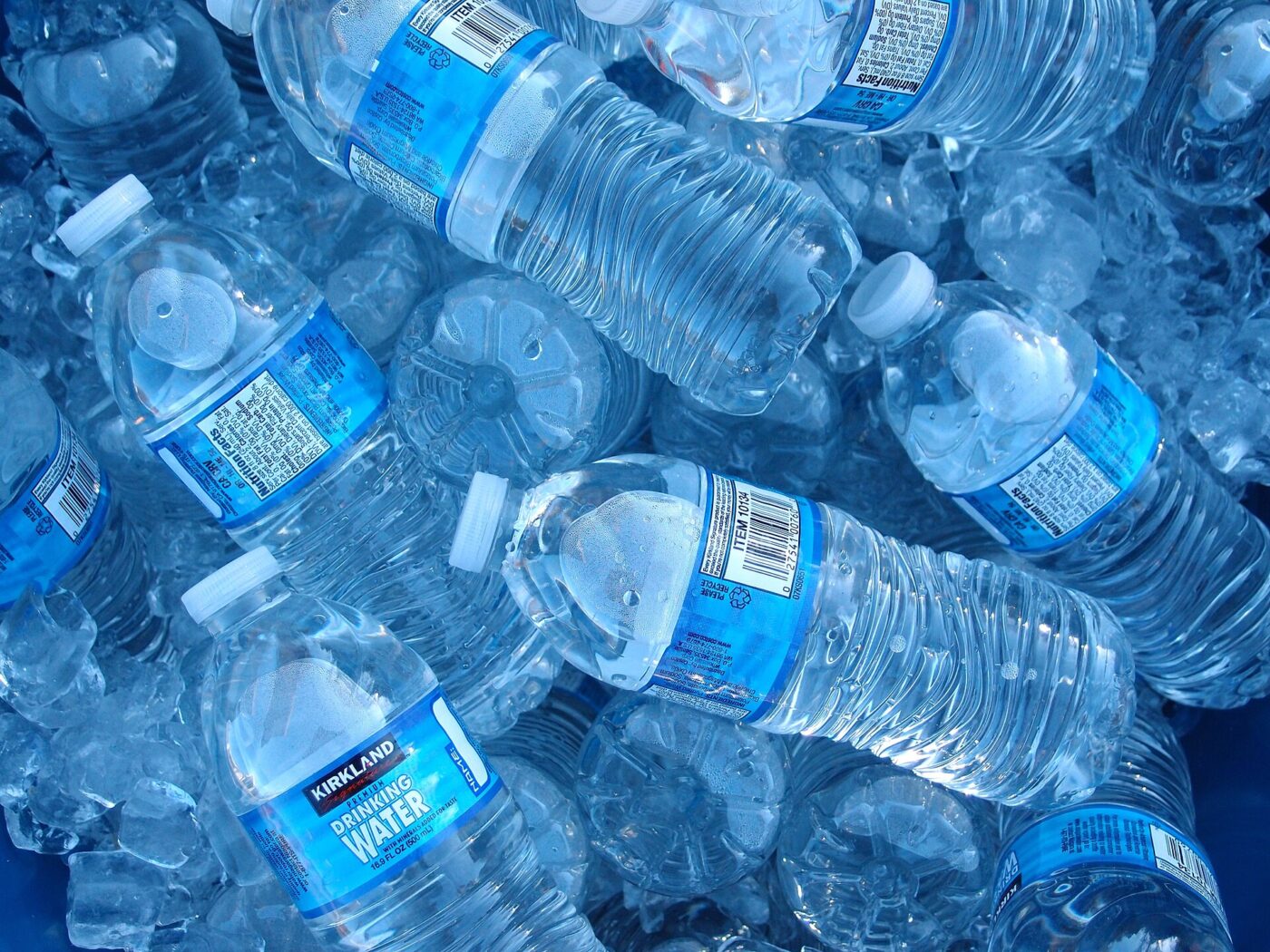
Most households that store water do it in cases of small bottles, because they are easy to buy and stack. They are also easy to overestimate. A tall stack of cases looks like weeks of water and holds days.
The official figure is simple, the arithmetic is unforgiving, and the storage details, from container type to rotation dates, decide whether the water is usable when you need it.
Fear Index · Think twice
A few cases of bottles mistaken for two weeks
The shortfall appears days into an outage or boil-water notice, when stores are empty and the stored supply turns out to be a fraction of what a household uses.
The gallon math
The CDC’s guidance is to store at least 1 gallon of water per person, per day, for 3 days, and to try for a 2-week supply if possible. It suggests storing more for pregnant women, people who are sick, pets and hot climates. The American Red Cross uses the same gallon-a-day figure: a 3-day supply for evacuation and a 2-week supply for home.
A standard case of 24 bottles of 16.9 ounces holds about 3.2 gallons. A family of four needs 12 gallons for three days, roughly four cases, and 56 gallons for two weeks, which is about 18 cases. That much water weighs roughly 470 pounds, so where it will sit matters as much as how it is packaged.
| Household | 3-day minimum | 2-week supply |
|---|---|---|
| 1 person | 3 gallons | 14 gallons |
| 2 people | 6 gallons | 28 gallons |
| 4 people | 12 gallons | 56 gallons |
| 6 people | 18 gallons | 84 gallons |
Count gallons, not bottles or cases. Divide your total by 3.2 to see how many standard cases of half-liter bottles it would take.
Containers that hold up
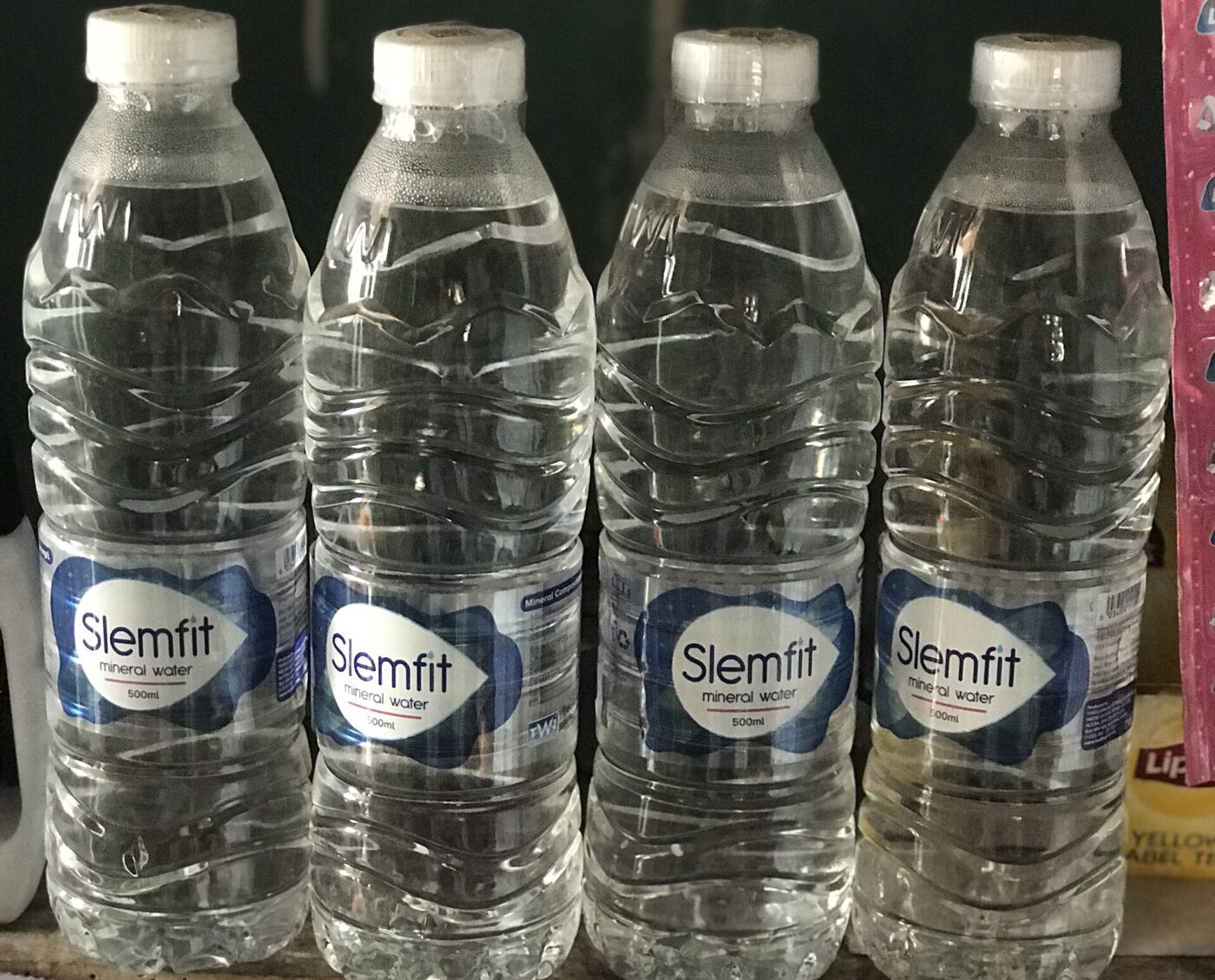
The CDC calls unopened, commercially bottled water the safest and most reliable source in an emergency, and says to observe the expiration date on store-bought water. For water you bottle yourself, it recommends FDA-approved food-grade water storage containers, sold at surplus and camping stores.
Containers you fill should have tight-closing tops, be durable and unbreakable, which rules out glass, and ideally have a narrow neck so water can be poured without touching it. Do not use any container that previously held toxic chemicals such as bleach or pesticides.
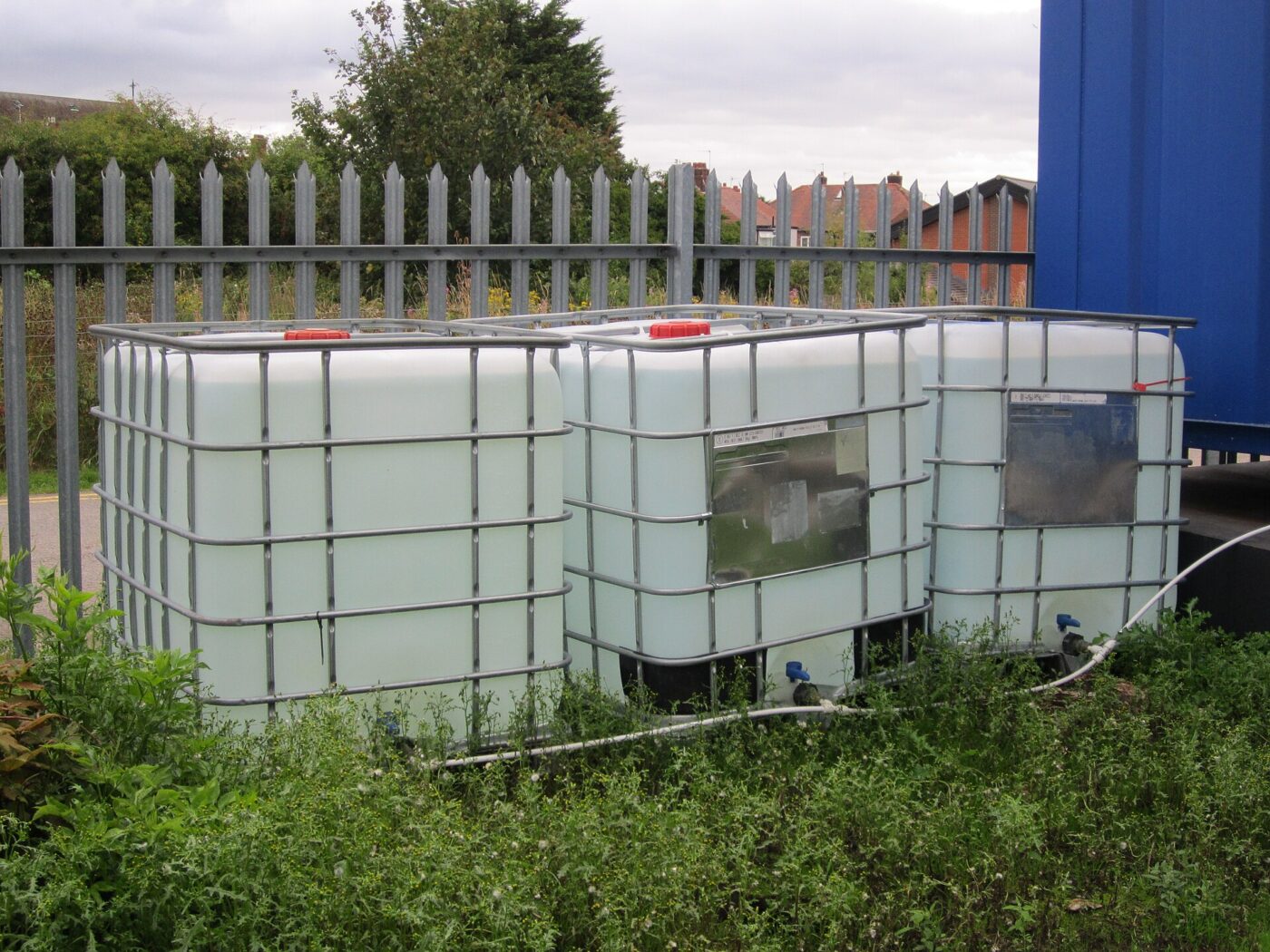
Size is a trade-off between efficiency and handling. A 5-gallon jug weighs about 42 pounds full, which most adults can move and pour. A 55-gallon drum holds a lot in one footprint but weighs more than 450 pounds full and needs a pump or siphon, so it must be filled where it will stay.
- Unopened bottled water is the easiest to rotate: note the expiration dates and use the oldest first.
- Food-grade jugs of 5 to 7 gallons balance capacity with a weight you can carry.
- Food-grade drums suit a cool basement or closet corner away from fuel and chemicals; add a pump and a bung wrench.
- Bathtub storage bladders hold a large volume filled just before a forecast storm, for short-term use.
- Never reuse chemical containers, however well rinsed.
Rotation and storage conditions

Water you store yourself has a schedule. The CDC says to label containers as drinking water with the date stored, replace the water every six months, keep containers at 50 to 70°F out of direct sunlight, and store them away from toxic substances such as gasoline and pesticides.
Before filling, containers should be clean. The CDC’s method is to wash and rinse the container, then sanitize it with a solution of 1 teaspoon of unscented liquid household chlorine bleach, containing 5 to 9 percent sodium hypochlorite, in 1 quart of water. Cover and shake so the solution touches all inside surfaces, wait at least 30 seconds, pour it out and let the container air-dry before filling with clean water.
Rotation fails because nobody remembers. Put the six-month date on the container and in a calendar, and pair it with another routine, such as testing smoke and CO alarms, so the job happens.
When stored water runs out
Keep a bottle of unscented household bleach with 5 to 9 percent sodium hypochlorite, which the CDC lists as an emergency supply. Its guidance for making water safe is to use bottled, boiled or treated water. To boil, bring clear water to a rolling boil for 1 minute, or 3 minutes above 6,500 feet, then let it cool.
To disinfect clear water with bleach, the CDC says to add 8 drops, about half a milliliter, per gallon, double that for cloudy water, and let it stand at least 30 minutes before drinking. It also warns that water containing fuel, toxic chemicals or radioactive material cannot be made safe by boiling or disinfecting; use bottled water and contact your health department.
Portable filters are useful backups, but they differ in what they remove. Check each filter’s rating against the problem, and follow local boil-water advisories over any general rule.
Store a bottle of unscented bleach and the CDC’s treatment amounts with your water, so a backup plan does not depend on an internet connection.
The shortlist
Paid links: we earn a commission if you buy through the buttons below, at no extra cost to you. As an Amazon Associate I earn from qualifying purchases.
Compared on storage role
| Product type | Best for | Risk estimate | Where to buy |
|---|---|---|---|
| 5-Gallon Food-Grade Water Jug | Most households | 20/100 | See listings on Amazon |
| 55-Gallon Water Storage Drum Kit | Large two-week supply | 40/100 | See listings on Amazon |
| Bathtub Water Storage Bladder | Short-notice top-up | 35/100 | See listings on Amazon |
Risk estimate is our editorial Fear Index for the product type (lower is safer), not a customer rating. How it is scored. The buttons open Amazon search results rather than one listing, so check the model on the product page.
5-Gallon Food-Grade Water Jug
A family of four needs twelve 5-gallon jugs to cover 56 gallons for two weeks. Label each with the fill date.
- Food-grade with a tight lid
- Light enough to carry and pour
- Easy to rotate every six months
- Takes several for a two-week supply
- Needs cleaning before refilling
55-Gallon Water Storage Drum Kit
Fill it where it will stay, away from sunlight and fuel, and plan how you will drain and refill it every six months.
- One drum covers two people for over three weeks
- Compact footprint
- Pump makes dispensing clean
- Over 450 pounds full
- Harder to empty, clean and rotate
More: Emergency Prep & Power analyses and how the Fear Index is scored.
Questions people actually ask
How much water should I store per person for emergencies?
The CDC recommends at least 1 gallon per person per day for 3 days, and a 2-week supply if possible, with more for pregnant women, sick people, pets and hot climates.
How often should stored emergency water be replaced?
The CDC says to replace water you store yourself every six months and to observe the expiration date on store-bought bottled water.
What containers are safe for storing drinking water?
FDA-approved food-grade containers with tight-closing tops that are durable and unbreakable. Never use containers that held toxic chemicals such as bleach or pesticides.
How many cases of bottled water do I need for two weeks?
A case of 24 half-liter bottles holds about 3.2 gallons. One person needs 14 gallons for two weeks, roughly four and a half cases; a family of four needs about 18 cases.