
A Phone Alert Can Miss the Warning a Programmed NOAA Weather Radio Catches
Phone emergency alerts carry only selected high-impact warnings. How a SAME weather radio fills the gap, how to find six-digit county codes and program them.

Most people now count on their phone to warn them about dangerous weather, and for the most severe events it often will. The system behind those alerts was designed to cut through only for a short list of high-impact warnings.
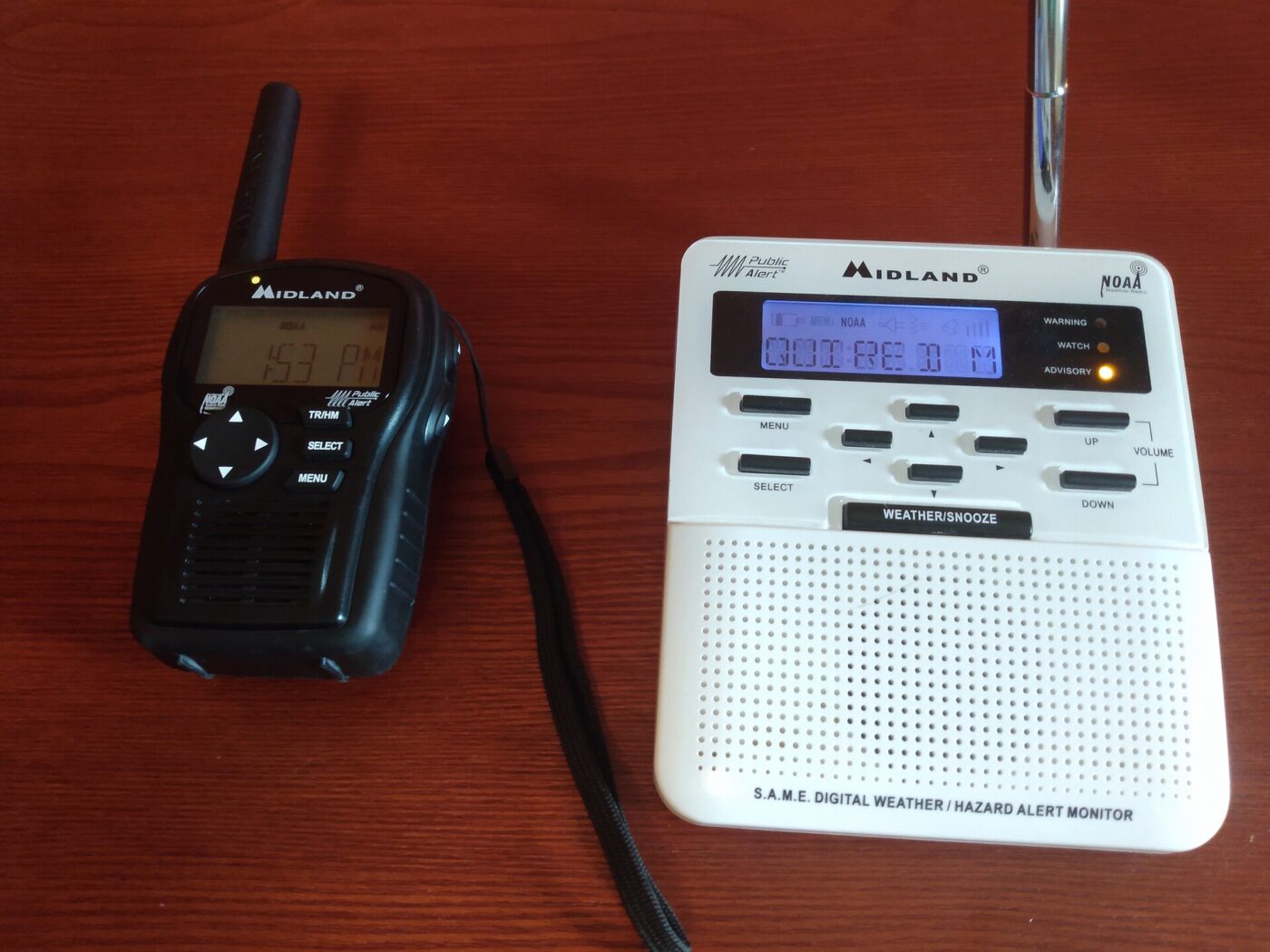
A NOAA Weather Radio receiver with SAME fills the gaps. It does so only after it has been programmed with the right county code, which is the step many owners skip.
Fear Index · Think twice
Assuming the phone will wake you for every warning
The gap shows up overnight: a warning type phones do not receive, a phone on silent or out of signal, or a radio bought but never programmed.
What phone alerts do and do not send
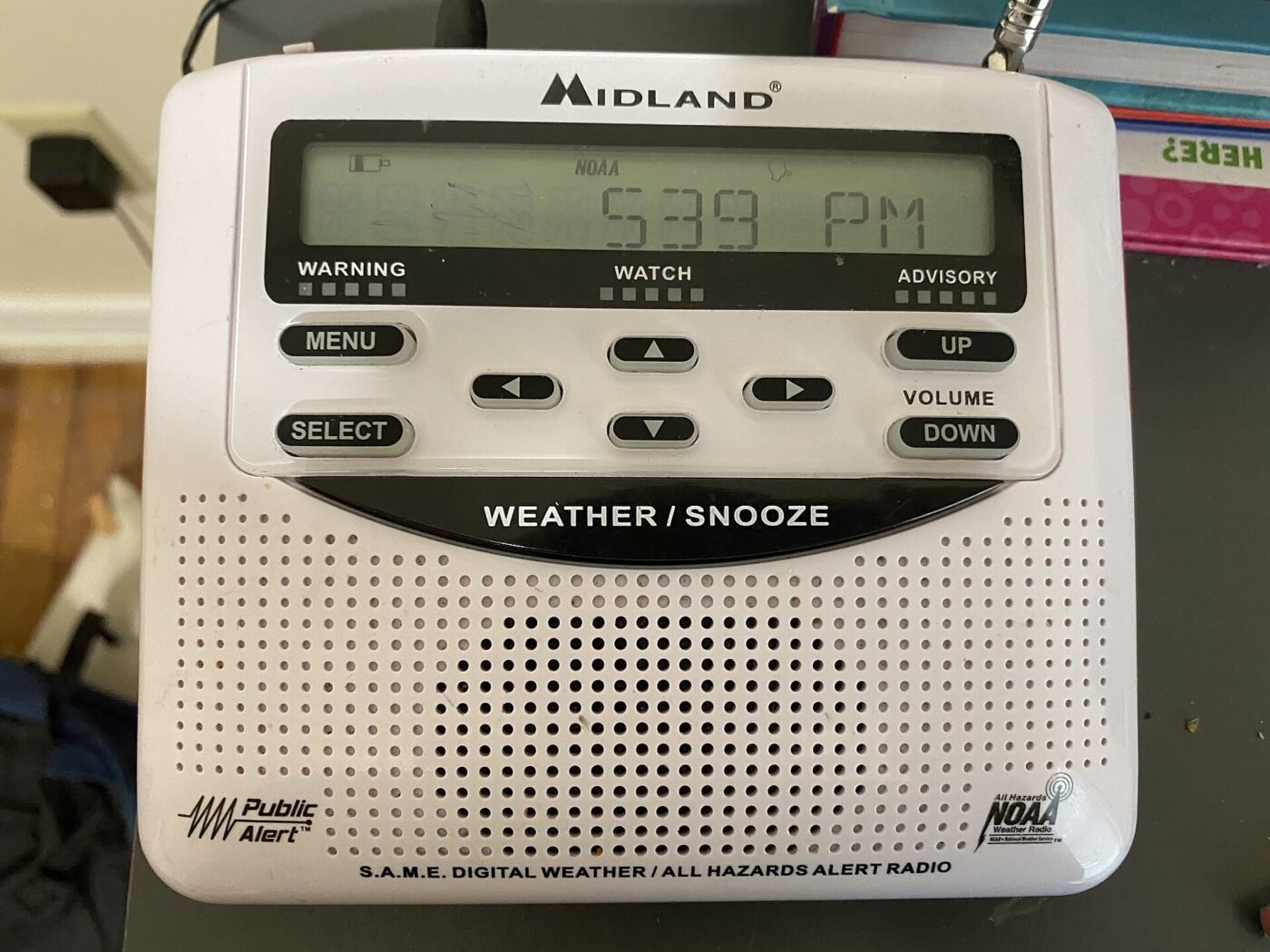
Wireless Emergency Alerts are broadcast from cell towers to WEA-capable phones in the threatened area. The National Weather Service sends them for tsunami, tornado, hurricane, typhoon, storm surge, extreme wind, dust storm and snow squall warnings, for severe thunderstorm warnings only when the damage threat is destructive, and for flash flood warnings only when the damage threat is considerable or catastrophic.
That means an ordinary severe thunderstorm or flash flood warning may never reach a phone through WEA. The NWS also notes that WEA messages are designed to get attention and may not give all the details, and recommends seeking more from sources including NOAA Weather Radio. Users can opt out of imminent threat alerts, and a phone needs signal and charge to receive anything.
| Feature | Phone WEA | NOAA Weather Radio with SAME |
|---|---|---|
| Signal path | Cell towers | VHF broadcast from NWS transmitters |
| Warning types | Selected high-impact warnings | Watches and warnings you choose to enable |
| During cell outages | Nothing arrives | Works if in transmitter range and powered |
| Coverage | Where carriers have signal | About 40 miles from a transmitter on level terrain |
| Setup | Usually none | County SAME codes must be programmed |
How SAME programming works

NOAA Weather Radio broadcasts forecasts and warnings from NWS offices around the clock on seven VHF frequencies between 162.400 and 162.550 MHz. Specific Area Message Encoding, or SAME, adds digital codes identifying the area each alert covers, so a receiver can stay silent until a code you selected is broadcast.
Each location code has six digits. Full county codes begin with zero; some Weather Forecast Offices divide large counties into parts with codes that start with a non-zero digit, called Partial County Alerting. The NWS says that to get the benefit, you program the partial county codes you want and remove the full county code, otherwise you will still be alerted for warnings anywhere in the county.
Most new SAME receivers accept multiple codes. Adding neighboring counties in the direction storms typically approach from can buy warning time, at the cost of more alerts.
- Find your transmitter and its frequency on the NWS station and county coverage pages.
- Look up the six-digit SAME code at weather.gov/nwr/counties or by calling 1-888-NWR-SAME.
- Enter each code following the receiver manual, including partial county codes if your office uses them.
- Choose alert types so warnings sound loudly and lesser statements do not wake you needlessly.
- Install backup batteries so the radio keeps working when the power fails.
- Confirm it works with the routine weekly test your local NWS office schedules.
Reception and placement
The NWS says service to a county depends on reliable reception, which typically extends about 40 miles from a transmitter over level terrain, and that mountainous areas may lack reliable coverage because of signal blockage or distance. Check the coverage maps before assuming your home is in range.
If reception is poor, the NWS suggests a receiver with a good internal antenna, an external antenna, or connecting the receiver to an existing outdoor or indoor TV antenna. Moving the radio to an upper floor or a window often helps too.
Placement is about hearing it. An alert radio in the kitchen does little for a household asleep upstairs. Put it where it will wake the people who need to act, and consider a second unit for a separate sleeping area.
An unprogrammed or out-of-range weather radio is a decoration. Program the code, check reception and confirm with the weekly test.
Choosing a receiver
Look for SAME capability first, then battery backup, a loud alarm tone, adjustable alert types and an external antenna connection. The NWS encourages buyers to look for receivers with the Public Alert logo or identified as SAME-capable. Some models offer connections for strobe lights or bed shakers for people who are deaf or hard of hearing.
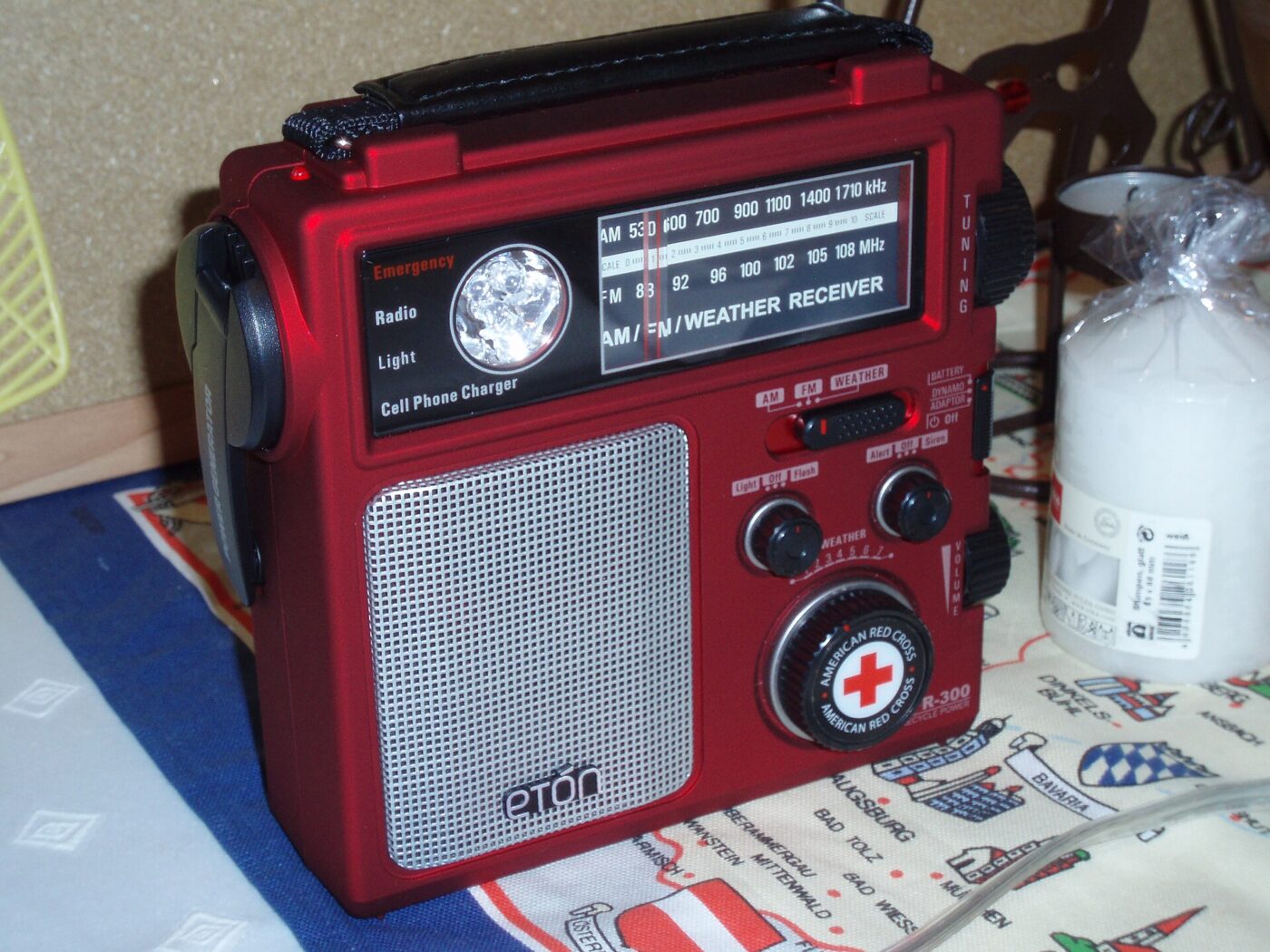
Be careful with hand-crank emergency radios. Many can tune NOAA weather channels, which makes them excellent for listening during a long outage, but most do not stand by silently and sound an alarm when a warning is issued, and few can be programmed with SAME codes. They complement an alert radio rather than replace one.
Keep the alert radio at home for warnings and a crank radio in the go-bag for information. They do different jobs.
The shortlist
Paid links: we earn a commission if you buy through the buttons below, at no extra cost to you. As an Amazon Associate I earn from qualifying purchases.
Compared on alerting role
| Product type | Best for | Risk estimate | Where to buy |
|---|---|---|---|
| NOAA Weather Alert Radio with SAME | Overnight warnings at home | 18/100 | See listings on Amazon |
| Hand-Crank Emergency Radio | Go-bag and long outages | 42/100 | See listings on Amazon |
| Weather Radio External Antenna | Weak signal areas | 25/100 | See listings on Amazon |
Risk estimate is our editorial Fear Index for the product type (lower is safer), not a customer rating. How it is scored. The buttons open Amazon search results rather than one listing, so check the model on the product page.
NOAA Weather Alert Radio with SAME
Look up your six-digit code before it arrives, then confirm it responds to the weekly test.
- Silent until your county is warned
- Works without cell service
- Battery backup through outages
- Must be programmed with SAME codes
- Depends on transmitter range
Hand-Crank Emergency Radio
A good go-bag companion for following forecasts after a storm. Pair it with a SAME alert radio for overnight warnings.
- No batteries required
- Tunes NOAA broadcasts and AM/FM
- Often charges a phone
- Usually will not wake you for a warning
- Cranking gives short listening time
More: Emergency Prep & Power analyses and how the Fear Index is scored.
Sources
- NWR Specific Area Message Encoding (SAME) — National Weather Service
- Programming NOAA Weather Radio Receivers for Counties using Partial County Alerting: Q&A — National Weather Service
- Weather Warnings on the Go (Wireless Emergency Alerts) — National Weather Service
- NOAA Weather Radio Frequently Asked Questions — National Weather Service
Questions people actually ask
Do I need a NOAA weather radio if I have a smartphone?
Phones receive only selected high-impact NWS warnings through WEA and need signal and charge. A SAME weather radio covers more alert types and works without cell service.
How do I find my SAME code?
The National Weather Service lists county and partial county SAME codes at weather.gov/nwr/counties, and you can also call 1-888-NWR-SAME.
Why does my weather radio alert for storms that are not near me?
A full county code alerts for warnings anywhere in the county. If your office uses partial county codes, program those and remove the full county code, which begins with zero.
What frequency is NOAA Weather Radio on?
It uses seven VHF frequencies from 162.400 to 162.550 MHz. The NWS station listings show which frequency serves your area.