
A 1,000Wh Power Station Delivers Less Than 1,000Wh to Your Appliances
Why a power station delivers less than its rated watt-hours, how inverter losses and surge ratings limit what it runs, and how to estimate real runtime.

Part of the guide: Tech and Audio Buying Mistakes: What Fails and How to Check Before You Buy
Power stations are sold by two big numbers: watt-hours of capacity and watts of output. Buyers tend to treat the first as a fuel tank and the second as a promise that anything below it will run.
Neither is quite true. The energy that reaches an appliance is less than the rated capacity, and the output rating hides a second, shorter rating that decides whether a refrigerator or pump will start at all.
Fear Index · Think twice
Buying by watt-hours alone
The disappointment arrives mid-outage: an appliance that trips the inverter at startup, or a battery that empties hours before the estimate on the box.
Rated capacity versus usable energy
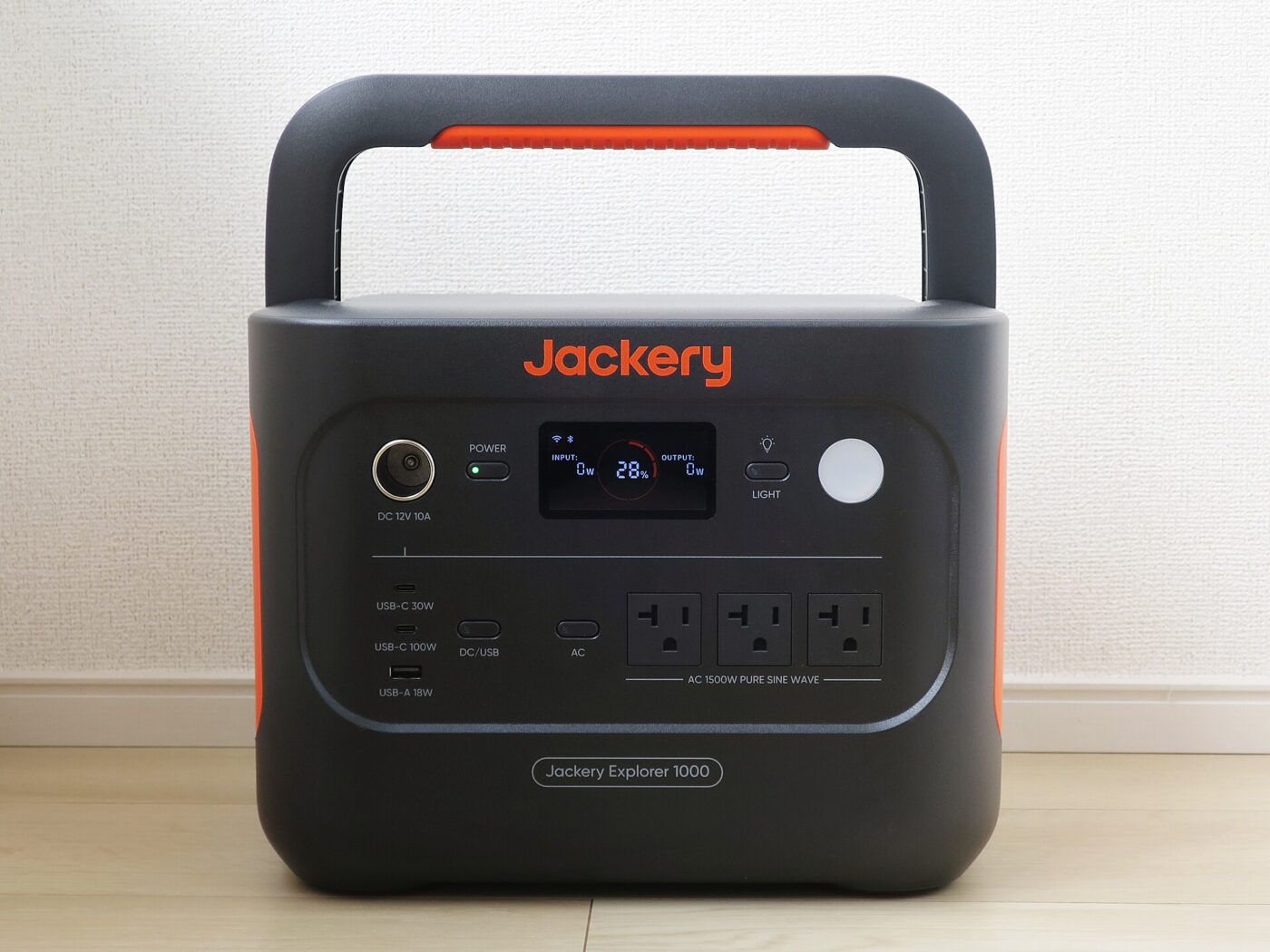
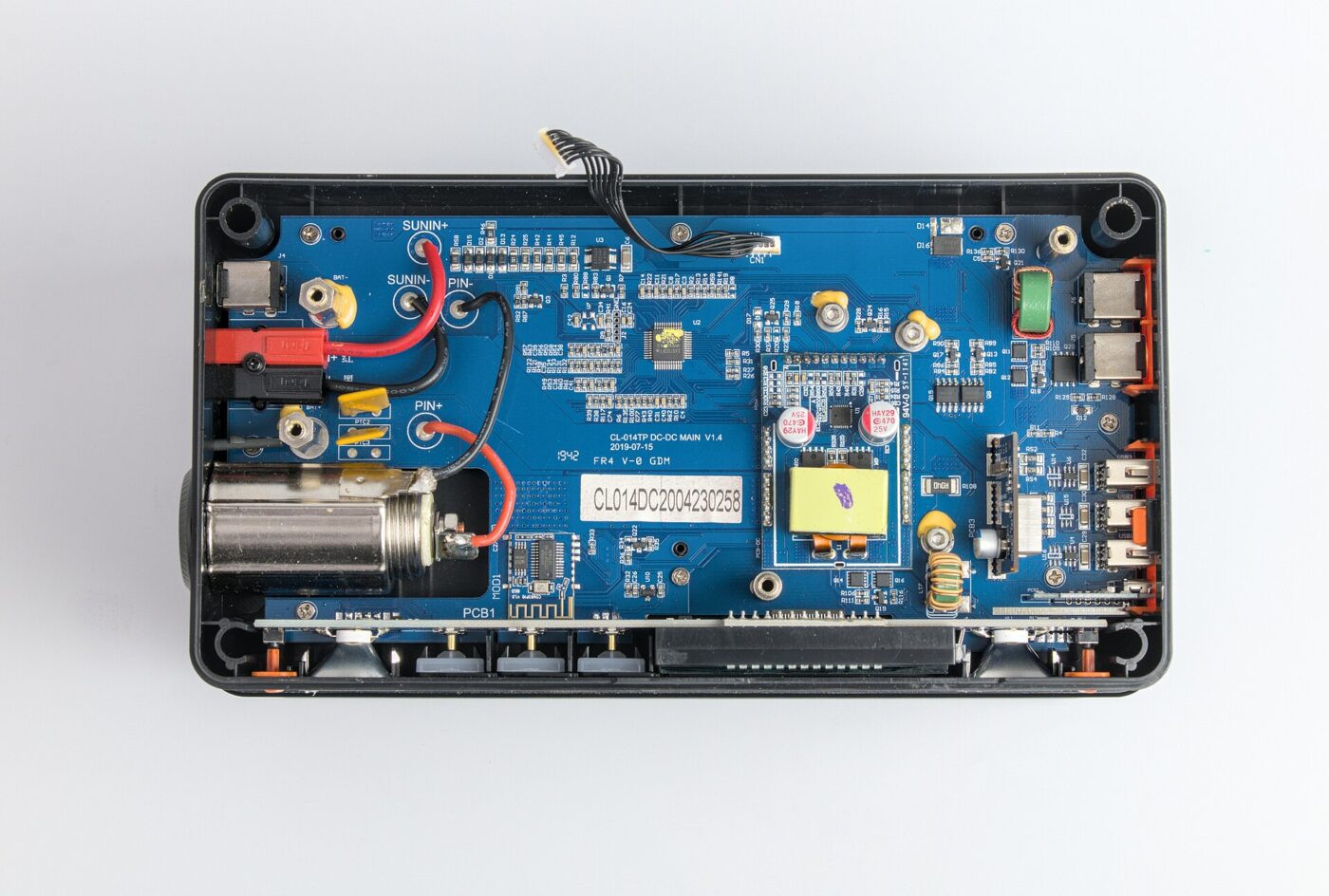
Capacity in watt-hours is the battery’s stored energy: its voltage multiplied by its amp-hours. Plugging a lamp into an AC outlet sends that energy through an inverter, which converts the battery’s direct current into household alternating current and gives off part of it as heat. The station’s own electronics, display and cooling fan also draw power, and the battery management system keeps a small reserve so cells are not fully drained.
As a rule of thumb, plan on roughly 80 to 90 percent of rated capacity reaching AC loads, and less when the load is very small, because the inverter’s idle draw becomes a large share of the total. A common planning formula is runtime in hours equals rated watt-hours multiplied by 0.85, divided by the load in watts.
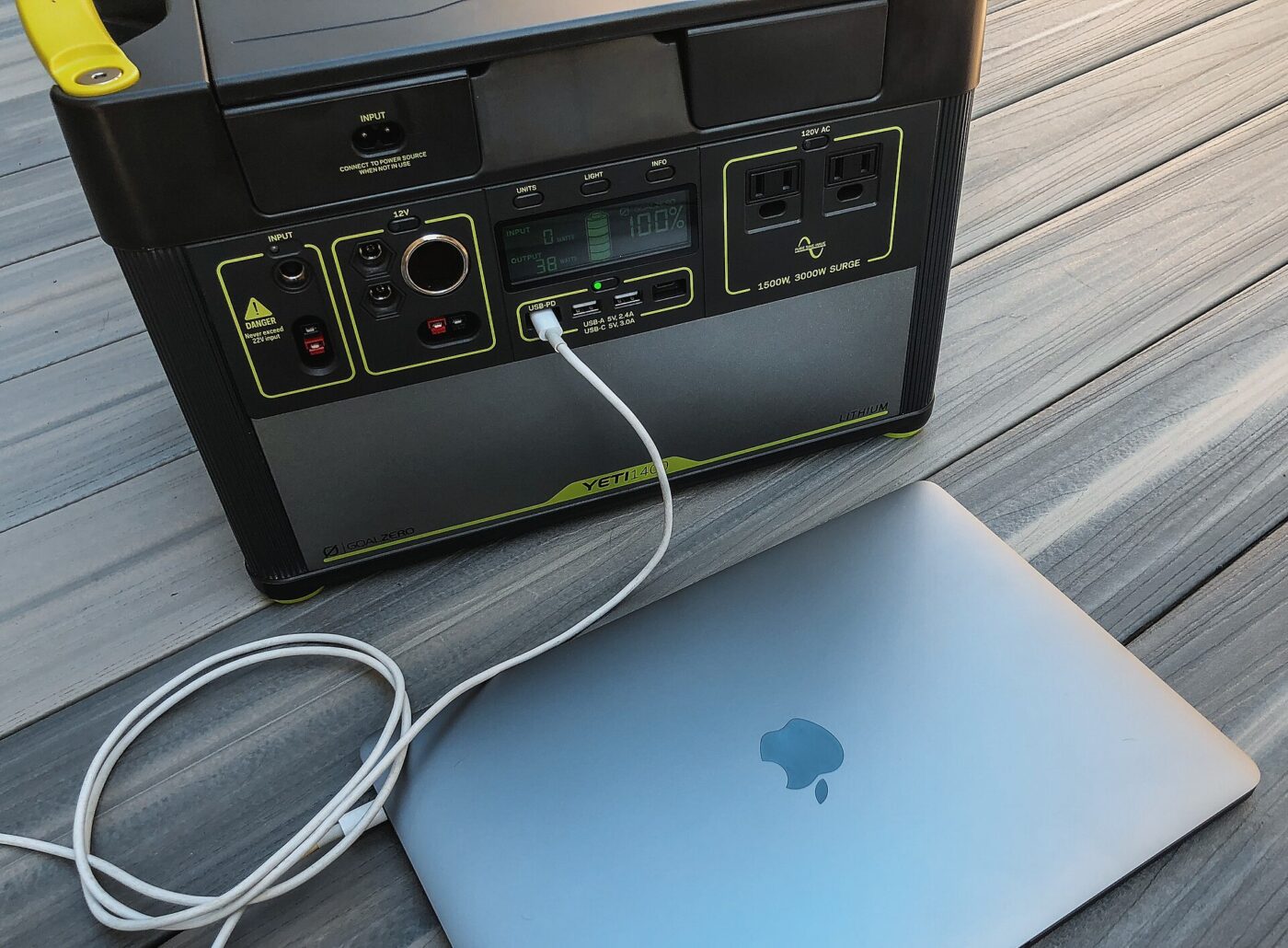
USB-C and 12-volt outputs skip the inverter, so charging phones, laptops and running DC devices from those ports wastes less. Turning the AC inverter off when nothing needs it stops its idle draw. Cold weather also cuts available capacity and can limit charging, so a station stored in an unheated garage performs below its rating in winter.
Multiply the rated watt-hours by about 0.85 before doing any runtime math for AC appliances. Use the DC and USB-C ports whenever a device can use them.
Running watts, surge watts and startup spikes
A station lists a continuous output rating, the power its inverter can deliver indefinitely, and a surge or peak rating it can supply for a brief moment. Resistive loads such as lamps and chargers draw close to steady power. Motors and compressors do not: refrigerators, freezers, sump pumps, well pumps and many power tools can draw several times their running watts for a fraction of a second as they start.
If that startup spike exceeds the surge rating, the inverter protects itself by shutting off, and the appliance never starts, even though its running watts were well within the continuous rating. Check the appliance manual or the motor’s nameplate for starting requirements, or test the combination before an outage.
Heating appliances are the other trap. Space heaters, hair dryers, kettles, coffee makers and microwaves draw hundreds to well over a thousand watts continuously. A 1,000Wh station running a 1,500-watt heater, if its inverter could even supply it, would be empty in roughly half an hour.
What it can actually run

Refrigerators cycle on and off, so their average draw is far below their running watts. The yellow EnergyGuide label estimates yearly electricity use in kilowatt-hours; divide by 365 for a daily figure. A refrigerator estimated at 600 kWh a year uses about 1.6 kWh a day, more than a 1,000Wh station can deliver, which means hours of cold rather than days unless the station is recharged.
Medical equipment needs a different conversation. The FDA advises reading your device instructions or calling the distributor or manufacturer to find out whether the device can be used with batteries or a generator, notifying your electric company and fire department that you depend on powered equipment, and checking device settings after power returns because they may reset.
| Load | Draw pattern | On a station of about 1,000Wh |
|---|---|---|
| Phones, tablets, laptops via USB-C | Low, intermittent | Many full charges |
| Wi-Fi router and modem | Low, continuous | Typically a day or more |
| LED lamps | Low, continuous | Many hours |
| Refrigerator | Cycles, with startup surge | Hours, not days; check surge rating |
| Space heater, kettle or hair dryer | Very high, continuous | Minutes to under an hour, if it runs at all |
Choosing and living with one
Size the inverter for the largest startup surge you need and the battery for the total energy you need per day between recharges. They are separate decisions, and a big battery with a small inverter, or the reverse, disappoints in different ways.
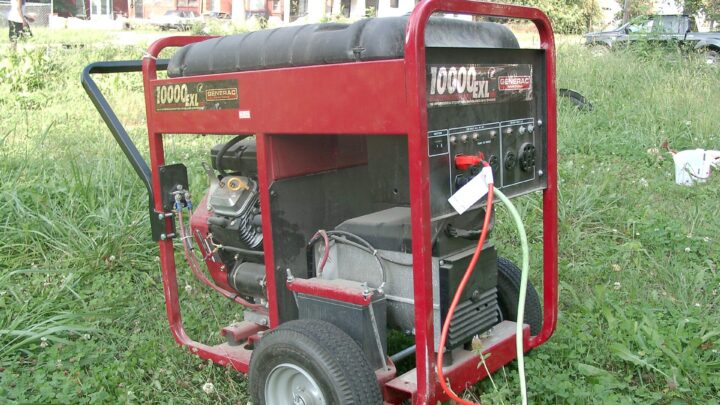
Portable power packs have their own safety standard, UL 2743, whose third edition was published in September 2025, which covers battery units intended for use when grid power is not available, such as camping or emergencies. Because a battery station burns no fuel it produces no exhaust, so unlike a gasoline generator it can be used indoors in line with the manufacturer’s instructions. It is still a large lithium-ion battery, so follow the U.S. Fire Administration’s general advice to charge and store lithium-ion batteries in a cool, dry place and unplug a device that becomes noticeably hot while charging.
- Continuous and surge watts both listed, with surge high enough for your largest motor load.
- Battery chemistry. Lithium iron phosphate packs are typically rated for more charge cycles but weigh more for the same capacity.
- Pure sine wave output for motors and sensitive electronics.
- Recharging options: wall charging speed, car charging and a solar input rated for the panels you plan to use.
- Certification to UL 2743 or listing by a recognized testing laboratory.
- A storage routine. Top it up every few months and follow the manufacturer’s storage charge guidance.
Test your real outage loads on the station once, on a normal day. It is the only way to learn whether the refrigerator starts and how fast the percentage falls.
The shortlist
Paid links: we earn a commission if you buy through the buttons below, at no extra cost to you. As an Amazon Associate I earn from qualifying purchases.
Compared on outage role
| Product type | Best for | Risk estimate | Where to buy |
|---|---|---|---|
| 1,000Wh LiFePO4 Power Station | Refrigerator and essentials in bursts | 30/100 | See listings on Amazon |
| 300Wh Compact Power Station | Communications and lighting | 36/100 | See listings on Amazon |
| 200W Foldable Solar Panel | Recharging in long outages | 42/100 | See listings on Amazon |
Risk estimate is our editorial Fear Index for the product type (lower is safer), not a customer rating. How it is scored. The buttons open Amazon search results rather than one listing, so check the model on the product page.
1,000Wh LiFePO4 Power Station
Plan on about 85 percent of the rated watt-hours at the AC outlets, and confirm the surge rating covers your refrigerator before relying on it.
- Enough energy for a fridge in bursts
- LiFePO4 cells rated for many cycles
- AC, USB-C and 12V outputs
- Heavy to carry
- Cannot run heating appliances for long
300Wh Compact Power Station
The right size for staying informed and lit. Use the USB-C and DC ports and switch the AC inverter off when idle.
- Light and easy to store
- Keeps phones, router and lights running
- Charges quickly from the wall
- Too small for refrigerators
- Idle inverter draw matters more
More: Emergency Prep & Power analyses and how the Fear Index is scored.
Questions people actually ask
How long will a portable power station run a refrigerator?
Divide the fridge’s yearly kWh estimate by 365 for daily use, then compare with about 85 percent of the station’s capacity. Many refrigerators need more per day than a 1,000Wh station holds.
What does surge watts mean on a power station?
It is the brief peak power the inverter can supply, which motors and compressors need when starting. If the startup spike exceeds it, the inverter shuts off.
Can I use a portable power station indoors?
Battery stations burn no fuel and produce no exhaust, unlike generators. Follow the manufacturer’s instructions and general lithium-ion battery safety advice when charging and storing.
Can a power station run a medical device like a CPAP?
The FDA advises checking your device instructions or contacting the manufacturer to find out whether the device can be used with batteries or a generator before relying on it.