
Your 20,000 mAh Power Bank Does Not Hold 20,000 mAh of Your Phone
Rated mAh is measured at the cell, not the output. Expect around 60–70% of the number on the box, and here is exactly where the rest goes.

Part of the guide: Tech and Audio Buying Mistakes: What Fails and How to Check Before You Buy
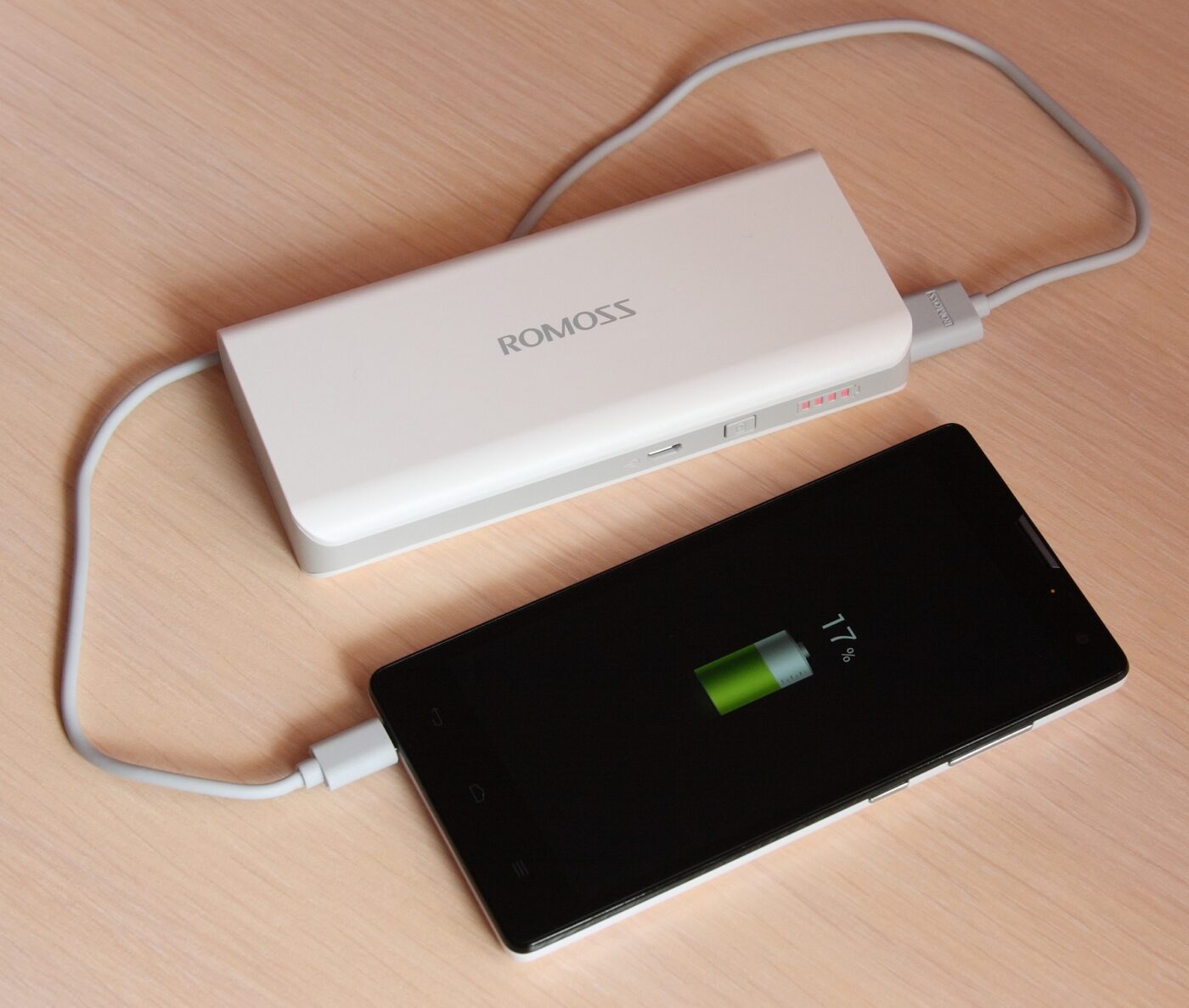
A 20,000 mAh power bank and a 4,000 mAh phone suggest five full charges. In practice you will get three, occasionally three and a half, and the shortfall feels like a defect.
It is not. The arithmetic was wrong from the start, because the two numbers are measured at different voltages and mAh without a voltage is not a unit of energy at all.
Fear Index · Think twice
The headline number is measured somewhere you never see
No manufacturer is lying. They are quoting cell capacity, which is the industry convention — and which systematically overstates what a buyer receives.
Where the missing third goes
Lithium cells run at a nominal 3.7 V. USB output is 5 V or higher. Converting between them costs energy, and the loss is unavoidable.
- Why mAh misleads: it has no voltage attached. 20,000 mAh at 3.7 V is 74 Wh of energy. A 4,000 mAh phone battery is rated at its own cell voltage too — about 3.85 V, or roughly 15 Wh. Comparing the two mAh figures directly compares numbers measured at different voltages, which is not a real comparison.
- Voltage conversion: roughly 10–20%. Boost circuitry raises the pack’s 3.7 V to the 5 V (or higher) that USB output needs. Boost circuitry is efficient, not perfect, and the loss appears as heat.
- Your phone’s own charging loss: 5–10%. The same conversion happens again inside the phone.
Take away 30–40% for those two conversion losses together, and a 74 Wh pack puts roughly 45–50 Wh into the phone — about three charges of a 15 Wh, 4,000 mAh battery, not five.
Compare watt-hours. A pack that states 74 Wh is telling you the truth about its energy; one that only shouts 20,000 mAh is quoting the flattering number.
The airline limit almost nobody checks

Lithium packs must travel in the cabin, never in checked baggage, and the FAA and TSA allow up to 100 Wh without prior approval, 101–160 Wh with the airline’s permission, and nothing above that. A 100 Wh limit works out to roughly 27,000 mAh at cell voltage.
Very large packs — the 30,000 mAh class sold for camping — sit above the 100 Wh line and can be refused at the gate. The rating is printed on the pack, usually in small type near the model number. Since 2025 several US carriers have added their own rules on top of the federal limit — caps on how many packs you carry, a requirement to keep the pack visible while it charges a device in flight, or a ban on using or recharging one at your seat at all — so check your airline’s own policy before a flight, not only the watt-hour math.
What to buy instead of chasing capacity
Beyond about 20,000 mAh the pack gets heavy faster than it gets useful. Two things usually matter more.
Output wattage. A 10,000 mAh pack that delivers 30 W refills a phone far faster than a 20,000 mAh pack limited to 12 W. For a laptop you need 45 W or more, and most packs cannot supply it.
Pass-through charging. Being able to charge the pack and a device from one wall socket overnight is worth more on a trip than another 5,000 mAh.
The pack loses real capacity too, over time
Everything above assumes a new pack. Lithium-ion cells lose capacity with age even sitting unused, and faster in heat — a pack left in a hot car or a glovebox degrades noticeably quicker than one kept at room temperature. A pack that delivered three phone charges when new may deliver two after a couple of years of heavy use.
- Store it partly charged, not full or empty. Around 50% is the setting that ages a lithium cell slowest if it will sit for weeks.
- Keep it out of direct heat. A car dashboard or a sunny windowsill is worse for the cell than the cold.
- A cheap pack that arrives already warm from ambient shipping or storage is not a defect to worry about — but one that gets hot while simply sitting idle is, and should be returned.
Paid links: we earn a commission if you buy through the buttons below, at no extra cost to you. As an Amazon Associate I earn from qualifying purchases.
Compared on delivered energy, not printed mAh
| Product type | Best for | Risk estimate | Where to buy |
|---|---|---|---|
| Power Bank, 10,000 mAh with USB-C PD | Daily carry | 28/100 | See listings on AmazonOpens Amazon search results, not one listing: check the model on the product page. |
| Power Bank, 20,000 mAh, 65 W | Travel and laptops | 40/100 | See listings on AmazonOpens Amazon search results, not one listing: check the model on the product page. |
| GaN Wall Charger, 65 W | When there is a socket | 20/100 | See listings on AmazonOpens Amazon search results, not one listing: check the model on the product page. |
Risk estimate is our editorial Fear Index for the product type (lower is safer), not a customer rating. How it is scored.
Power Bank, 10,000 mAh with USB-C PD
The size people keep carrying. A larger pack left at home delivers nothing.
- Actually fits a pocket
- Around 37 Wh — far under any airline limit
- Enough for one full phone charge plus a top-up
- Will not charge a laptop meaningfully
- One port on most models
GaN Wall Charger, 65 W
Before buying a bigger battery, count how many hours a week you are actually away from a socket. For most people the answer makes this the better purchase.
- Unlimited energy where there is a socket
- Fraction of the weight
- Charges most laptops at full speed
- Useless away from an outlet
- Not a substitute on a long flight
Questions people actually ask
Why does my power bank not fully charge my phone twice?
Rated mAh is measured at the cell’s 3.7 V, while output is at 5 V or more. That conversion plus heat losses means roughly 60–70% of the printed capacity reaches your device.
How many watt-hours is a 20,000 mAh power bank?
About 74 Wh (20,000 mAh × 3.7 V ÷ 1000). Watt-hours is the unit that accounts for voltage, and the one airlines use.
What size power bank can I take on a plane?
The FAA and TSA allow up to 100 Wh without approval (roughly 27,000 mAh), 101–160 Wh with your airline’s permission, and nothing above that. It must travel in the cabin, never in checked baggage, and some airlines add their own pack-count or in-use rules on top.
Is a higher mAh power bank always better?
No. Output wattage usually matters more — a 10,000 mAh pack at 30 W refills a phone faster than a 20,000 mAh pack at 12 W, and weighs half as much.