
A Printed Safety Logo Is a Claim: Checking a USB-C Charger in the Certifier Directory
A UL or ETL logo is a claim; the certifier directory is the check. What USB-IF certification covers, and what charger recalls say about the failure.

Part of the guide: Tech and Audio Buying Mistakes: What Fails and How to Check Before You Buy
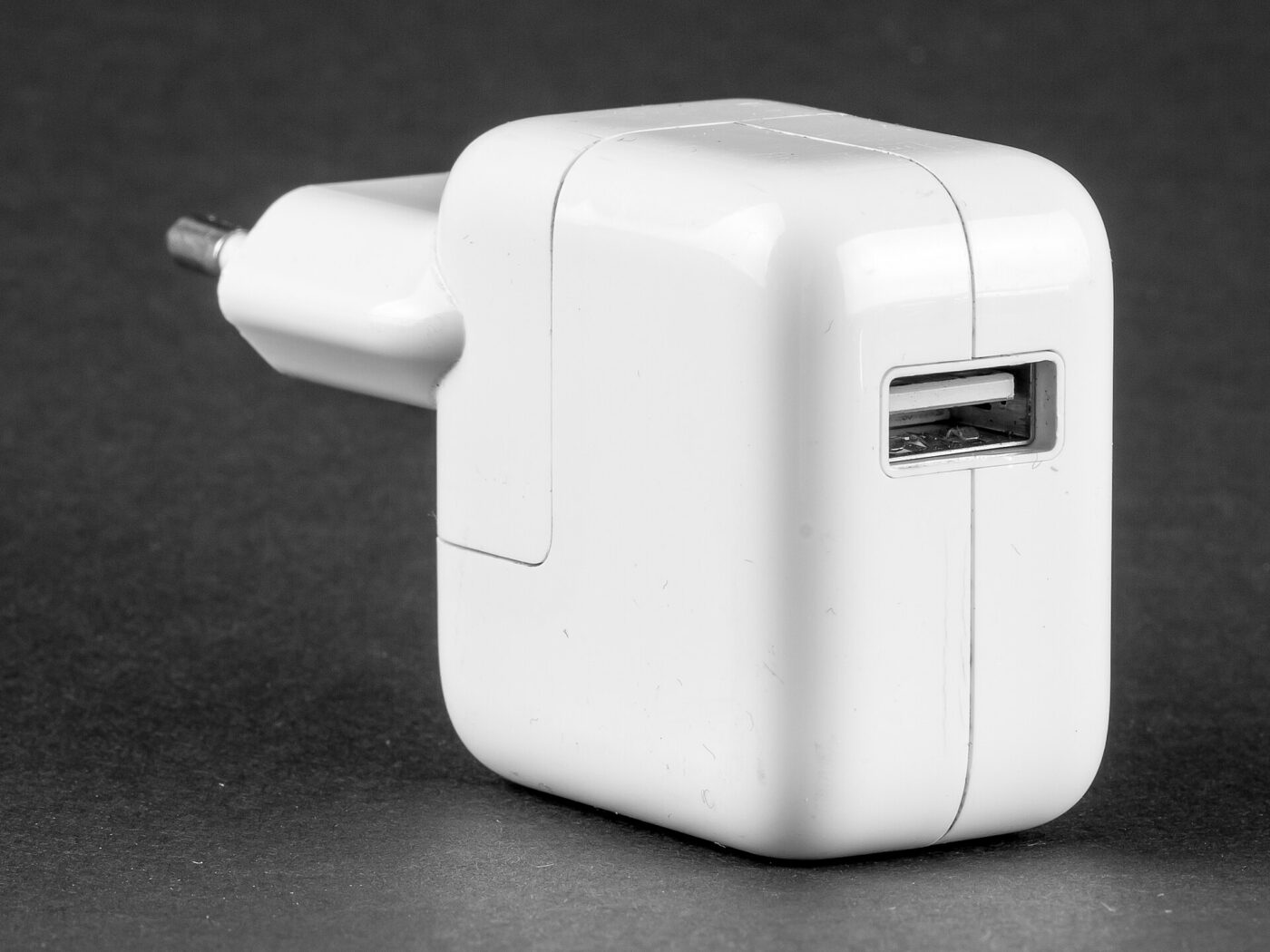
Every other gadget in the house fails quietly. A charger fails at the one point where house wiring meets a lithium cell, which is why the small marks screened onto its shell carry more weight than anything else printed there. Screen printing, though, is cheap, and the marks are not self-verifying.
Two separate questions hide behind a cheap charger, and the box usually blurs them. One is electrical safety, which a nationally recognized testing laboratory handles when it lists a product to a safety standard. The other is whether the thing speaks USB properly, which is what USB-IF certification addresses. A charger can satisfy one and say nothing about the other.
Fear Index · High risk
An unverified brick between the wall and a lithium cell
A wall charger is the one accessory sitting between 120-volt wall power and a lithium battery, and the safety mark printed on its shell stays a claim until the certifier’s own directory returns the model.
What a listing mark means and who issues it
Intertek states what its mark claims: “The ETL Listed Mark is proof that a product has been independently tested and certified by Intertek” to applicable safety standards, and that products bearing it “meet the same safety requirements as products bearing other NRTL marks.” Intertek describes the mark as widely accepted across the United States and Canada. UL Solutions fills the same role under its own marks.
The load-bearing word is independently. A listing means a third party evaluated a specific construction against a specific safety standard and keeps it under follow-up. It is a record held by the certifier, not a property of the plastic, which is why both bodies publish a directory.
A listing mark is a pointer to a record at the certifier. If the record does not exist, the mark is decoration.
How to check the directory yourself
Intertek’s instruction is one sentence long: “To verify an ETL certification, you can easily search our Directory of Listed Products online,” which accepts a manufacturer name, a model name or number, or a standard. UL Solutions points to Product iQ, where, as UL puts it, you can “Quickly access UL certification information with the powerful search engine Product iQ,” starting from a single keyword or from a CCN, file number, assembly number, design number, system number or construction number.
Two practical notes. UL says you can obtain information about the validity of a given certification by contacting its Customer Experience Center, which settles a listing that looks stale. And a hit has to match the model and company printed on the charger, not merely the brand on the retail page, because the record is tied to the construction that was tested.
| Program | What it certifies | Public check |
|---|---|---|
| ETL Listed, Intertek | Independent testing to applicable safety standards | Directory of Listed Products, by maker, model or standard |
| UL Solutions | UL certification records for products and components | Product iQ, by keyword, CCN, file or design number |
| USB-IF Certified | Products that passed the USB-IF Compliance Program | Public product list, defaulting to the last two years |
What USB-IF certification adds and what it leaves out
USB-IF runs a real program with a real list, and the wording on its own page sets the boundary. The product search “is limited to only those products that are certified to bear the USB-IF logo” and “is limited to those products that have passed the USB-IF Compliance Program.” Nothing on that page addresses electrical safety, which is the testing laboratory’s subject rather than USB-IF’s.
The list carries caveats worth reading before treating it as a seal. USB-IF says “Lists are maintained by USB-IF members themselves and USB-IF does not take responsibility for contents,” that “Products with Certification Dates older than 2 years may fail the current iteration of the USB-IF Compliance Program,” and that the public display defaults to products certified within the last two years, so an older entry needs the date filter.
The two programs answer different questions. USB-IF certification predicts whether a charger negotiates the power a laptop asked for, a subject our note on USB-C cable power ratings covers from the cable side. A listing mark speaks to the part of the charger facing the outlet.
USB-IF certification and a safety listing are not substitutes. Verify each in its own directory, and expect neither to cover the other.
What charger recalls show about the failure mode
CPSC recall 24-125, announced February 22, 2024, covered about 22,600 IKEA ÅSKSTORM 40W USB chargers in the United States, model ICPSW5-40-1, with about 10,250 more sold in Canada. The hazard was wear rather than a dramatic fault: “The USB charger’s cable can become damaged or break over time, posing burn and electric shock hazards.” IKEA reported 17 incidents globally, including five reports of burns and four of electric shock, none reported in the United States, and the remedy was a full refund.
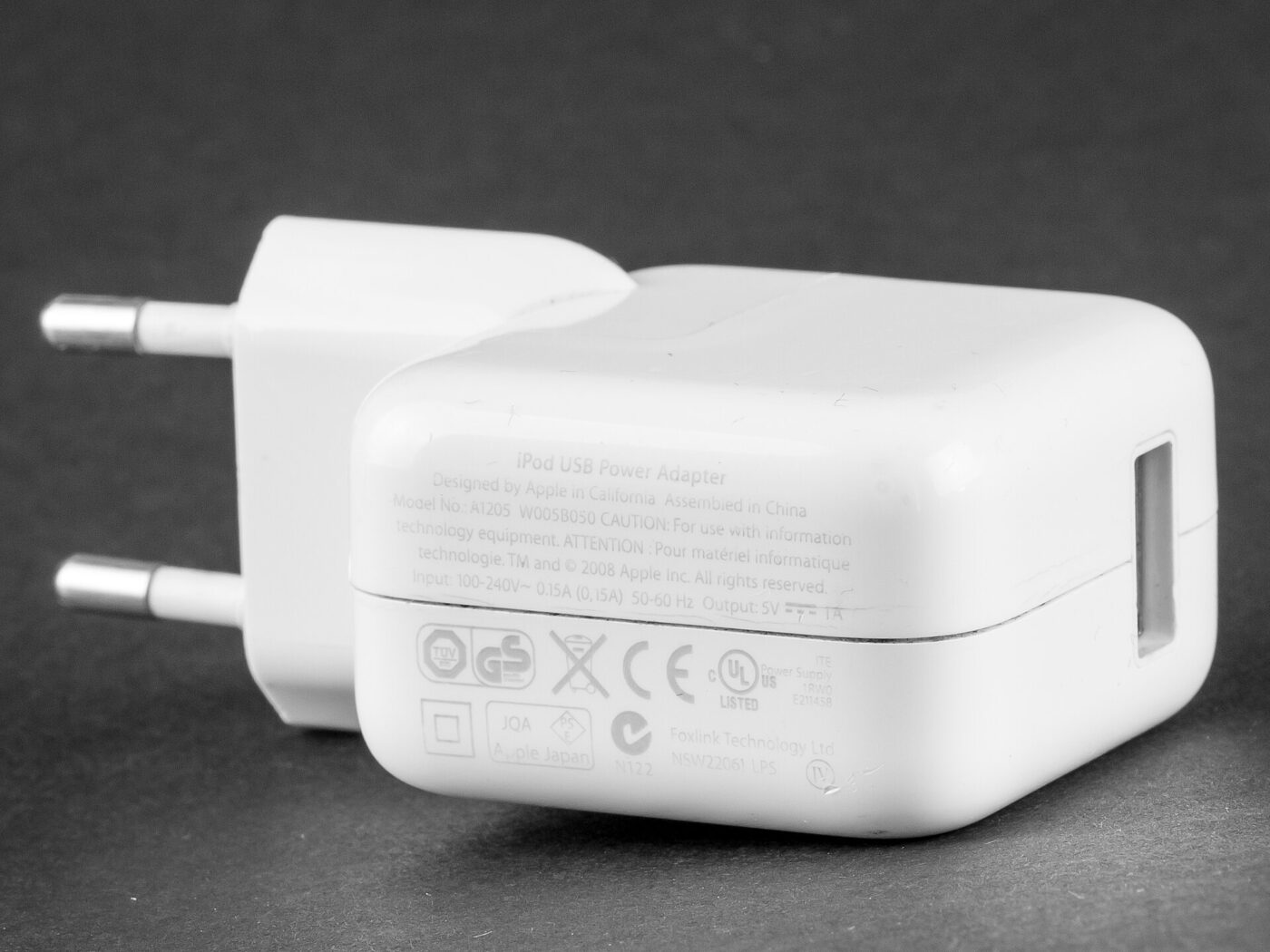
The counterfeit version is blunter. UL’s public notice 15PN-28, dated November 30, 2015, covered a USB power adapter, model A1265, that “bears a counterfeit UL Mark for the United States and Canada.” UL stated that “The USB adapters have not been evaluated by UL to the appropriate Standards for Safety” and that “it is unknown if these USB power adapters comply with any safety requirements.” The tells were typographic: the unit read “Designed by WHP in California” where the authorized product reads “Designed by Apple in California,” and it misspelled equipment as “equipmnet.”
Apple publishes identification guidance along the same lines, telling owners that genuine adapters have clear, laser-etched markings and a flush connection between the body and the connector, where counterfeits show blurry or missing etching or a step down at that joint. Those are surface cues, which is their limit: they catch sloppy fakes and miss good ones.
What to check before you plug one in
In our judgment the order of the checks matters, because each later one depends on the earlier being true.
- Read the model number and company name off the charger itself, not the retail listing, and search that pair in Intertek’s Directory of Listed Products or UL’s Product iQ.
- If a listing looks out of date, UL says to confirm validity through its Customer Experience Center rather than assuming.
- Treat USB-IF certification as a separate lookup, remembering its two-year default view and that members maintain their own entries.
- Check the etching and seams, which is Apple’s published counterfeit guidance: crisp laser marking and a flush body-to-connector joint.
- Retire any charger whose cable or strain relief is damaged, the exact wear mode behind CPSC recall 24-125.
The directory is the check. Markings, weight and finish are evidence, and a logo alone is only a claim.
The shortlist
Paid links: we earn a commission if you buy through the buttons below, at no extra cost to you. As an Amazon Associate I earn from qualifying purchases.
Compared on what the certification covers
| Product type | Best for | Risk estimate | Where to buy |
|---|---|---|---|
| USB-C Wall Charger Carrying a Listing Mark | One phone or tablet | 24/100 | See listings on Amazon |
| Multi-Port GaN Desktop Charger | A desk with several devices | 30/100 | See listings on Amazon |
| USB-IF Certified USB-C Cable | The cable half of the pair | 22/100 | See listings on Amazon |
Risk estimate is our editorial Fear Index for the product type (lower is safer), not a customer rating. How it is scored. The buttons open Amazon search results rather than one listing, so check the model on the product page.
USB-C Wall Charger Carrying a Listing Mark
Intertek calls the ETL Listed Mark proof of independent testing and certification, and tells buyers to verify it in its Directory of Listed Products. UL Solutions does the same through Product iQ. Either lookup takes a model number and a minute.
- Listing means independent testing to a safety standard
- Model is searchable by maker and number
- Validity confirmable through the certifier
- A printed mark alone proves nothing
- Directory record must match the model on the shell
Multi-Port GaN Desktop Charger
Consolidating four unverified adapters into one verified charger shrinks the number of records to check. It does not remove the check: the model and company on the housing still have to return a hit.
- Replaces a row of separate adapters
- Listing can be verified for the whole unit
- Fewer cables to inspect for wear
- Shared power budget across the ports
- Still needs its own directory record
USB-IF Certified USB-C Cable
USB-IF certification answers whether the cable behaves per the specification, and its own list warns that entries certified more than two years ago may fail the current iteration of the program.
- Listed only after passing the USB-IF Compliance Program
- Searchable in the public USB-IF product list
- Predicts power negotiation behavior
- Says nothing about electrical safety
- Entries older than 2 years may fail current testing
- Member companies maintain their own listings
More: Tech and Audio analyses and how the Fear Index is scored.
Sources
- ETL Listed Mark — Intertek
- Product iQ certification search — UL Solutions
- UL Warns of Counterfeit UL Mark on USB Power Adapters, Release 15PN-28 — UL
- Certified USB-IF product search — USB Implementers Forum
- IKEA Recalls USB Chargers Due to Burn and Electric Shock Hazards, 24-125 — CPSC
- Identify counterfeit or uncertified Lightning connector accessories — Apple
Questions people actually ask
Is a cheap USB-C charger safe if it has a UL logo printed on it?
The logo is a claim about a record, so check the record. Intertek says to verify an ETL certification by searching its Directory of Listed Products, and UL publishes certification information through Product iQ. UL’s 2015 notice 15PN-28 described a USB power adapter carrying a counterfeit UL Mark that UL had never evaluated.
What is the difference between UL Listed and ETL Listed?
They are two certifiers doing the same job. Intertek says products bearing the ETL Listed Mark meet the same safety requirements as products bearing other NRTL marks, and describes it as accepted across the United States and Canada. The practical difference is which directory you search.
Does USB-IF certification mean a charger is safe?
It is a different subject. USB-IF says its product search is limited to products certified to bear the USB-IF logo and that have passed its Compliance Program, and nothing on that page addresses electrical safety. USB-IF also says members maintain the listings and that it does not take responsibility for contents.
Have chargers actually been recalled in the United States?
Yes. CPSC recall 24-125, dated February 22, 2024, covered about 22,600 IKEA 40W USB chargers because the cable can become damaged or break over time, posing burn and electric shock hazards, after 17 incident reports globally including five burns and four shocks.