
An AirTag Needs an iPhone, a Tile Needs Its Network, and Both Can Ride in a Checked Bag
AirTag setup requires an iPhone; Tile and Find Hub tags cover Android. How the finding network, FAA luggage rules and anti-stalking alerts compare.

Part of the guide: Tech and Audio Buying Mistakes: What Fails and How to Check Before You Buy
A Bluetooth tracker does not know where it is. It only knows that it is nearby, and it borrows a stranger’s phone to say so. That single mechanic decides almost everything else about how well an AirTag, a Tile or an Android tag actually works, and it is not the same mechanic for every tracker on the shelf.
Apple’s AirTag, Google’s Find Hub network and Tile’s own network all rely on other people’s phones running in the background to relay a lost item’s location, which means the size and reach of that network, and which phones can even join it, matters more than the tracker’s specs.
Fear Index · Think twice
A network you are joining, not a gadget you are buying
The tracker itself is nearly interchangeable; what differs is which phones can find it, and that is decided by the phone already in your own pocket.
How crowd-sourced finding works
An AirTag, a Find Hub tag and a Tile do not have GPS or a cellular connection of their own. Each one broadcasts a low-power Bluetooth signal that nearby phones running the matching app pick up anonymously and relay back to the owner, encrypted, without the finder ever knowing whose item they just helped locate.
That design means a tracker is only as useful as the number of compatible phones passing near it. A tracker in a well-traveled airport or city street gets found quickly; the same tracker in a rural area with few compatible phones nearby can sit silent for a long time, regardless of brand.
It also means the tracker itself stays simple and cheap: a small battery, a Bluetooth radio, and in AirTag’s case a speaker and an Ultra Wideband chip for close-range Precision Finding, rather than anything that needs its own data plan.
A tracker’s real spec sheet is the network behind it, not the hardware inside it.
An iPhone to set one up, an Android phone to be warned
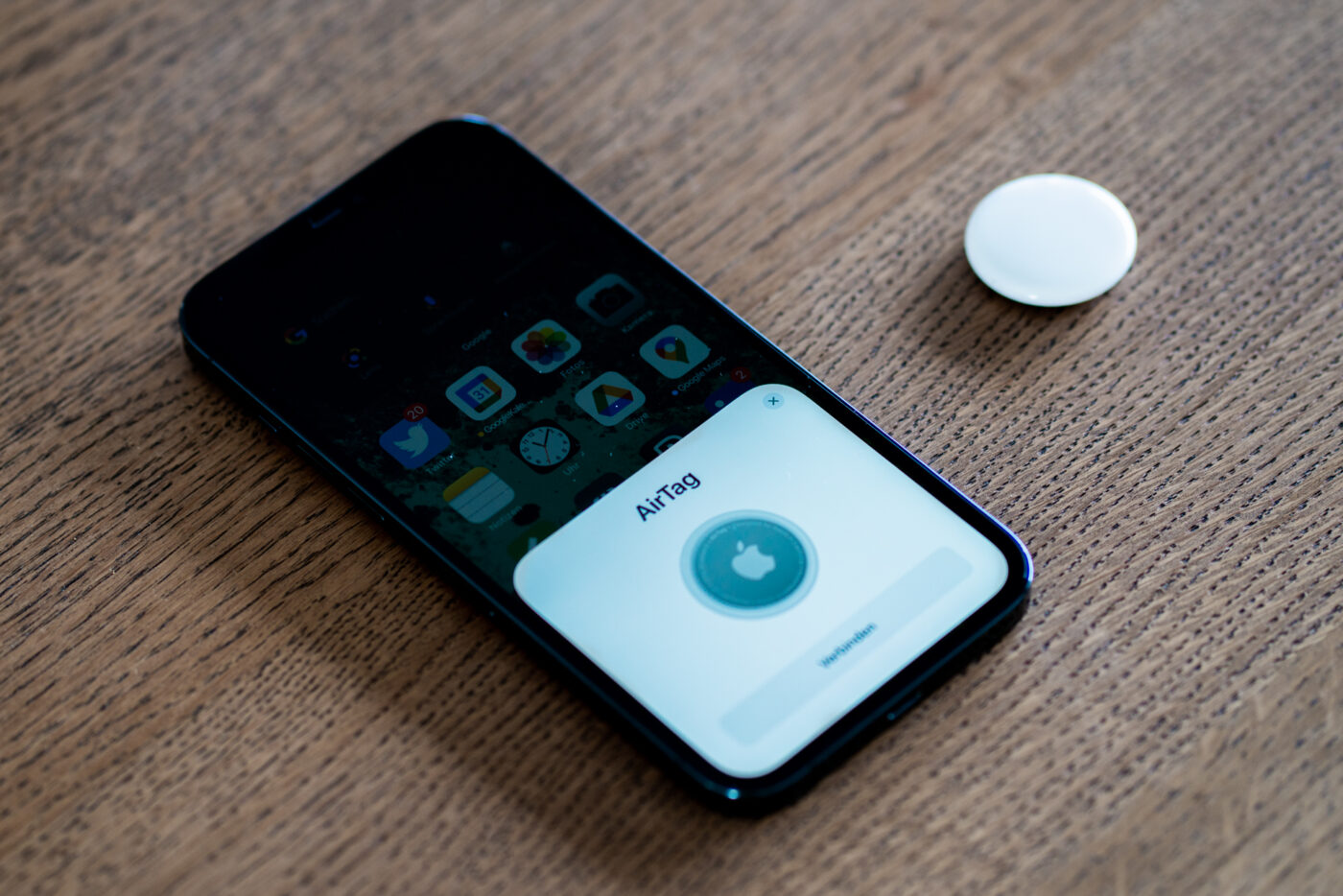
Apple says the current AirTag requires an iPhone with iOS 26 or later, or an iPad with iPadOS 26 or later; there is no way to add an AirTag to a Find My account from an Android phone. An Android owner can still receive an alert if an AirTag is traveling with them, but cannot own, name or locate one the way an iPhone owner can.
Google’s Find Hub network runs the other direction: it works with Find Hub network compatible tags from brands such as Chipolo, Motorola and Pebblebee, not with AirTag as an owned device. Tile is the one option here that its maker, Life360, says works with both iOS and Android; the trade-off is that a lost Tile is located through Tile’s own apps rather than the finding network built into every iPhone or Android phone.
The practical rule: an iPhone household gets Apple’s Find My network, which Apple says can draw on more than a billion Apple devices, through AirTag; an Android household gets Google’s Find Hub network through a compatible tag; and Tile is the cross-platform option for a mixed household, relying on its own apps instead.
Luggage: batteries and airline rules
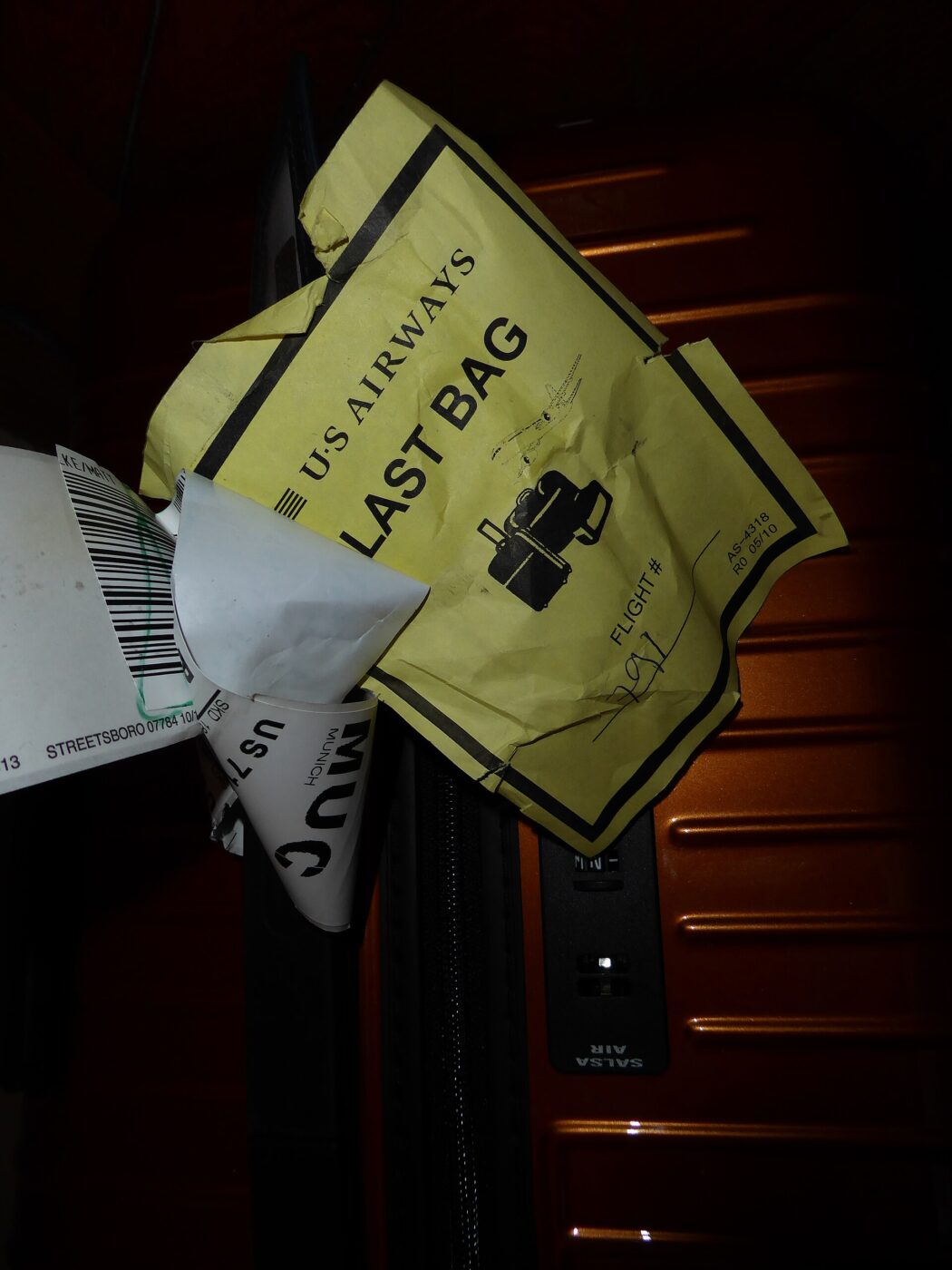
A tracker slipped into a suitcase is exactly the kind of device the FAA calls out by name. Its guidance on baggage equipped with lithium batteries defines “baggage location tracking devices” as portable electronic devices that a traveler attaches to or places in baggage to track its location, and says a checked bag fitted with one must meet the limits the FAA sets for baggage with built-in batteries: no more than 0.3 grams of lithium in a lithium metal battery, or 2.7 watt-hours for lithium ion. The FAA also tells travelers to check with the airline first.
AirTag uses a single CR2032 coin cell, and Energizer’s datasheet lists a typical CR2032 lithium content of 0.109 grams, about a third of the FAA limit. The rule that trips travelers up is a different one: batteries removed from a bag, and spares carried as backups, fall under the FAA’s separate provision for spare batteries, not the rule for the tracker itself.
If the airline loses the bag, a tracker only helps if its network reaches wherever the bag ends up, which is one more reason the size of the network behind the tracker matters more on a trip than at home. For everything else about carry-on and checked sizing, see how carry-on limits actually get enforced at the gate.
The FAA treats the coin cell inside a tracker differently from a spare battery. Check the spare-battery rules, and the airline, before packing extras.
Anti-stalking alerts: how fast, and how loud

Both major platforms now warn a phone’s owner if an unfamiliar tracker seems to be traveling with them. Apple says an iPhone or Android phone will notice an unfamiliar AirTag traveling with it and send an alert, and that these alerts trigger only when an AirTag is separated from its owner. Google’s equivalent on Android works with Find Hub network compatible tags, headphones and Apple AirTags, on Android 6 and up.
Neither alert fires just because a tracker is nearby. Apple says a friend’s AirTag, or a train full of them, will not set one off, because the alerts are only for a tracker separated from its owner; Google notes an alert can still come from a borrowed item or a companion’s tracker. On Android, the alert lets the person play a sound on the tracker and points to the maker’s instructions for turning it off.
An unwanted tracker with no phone nearby to alert falls back to sound alone. AirTag is built to emit an audible alert on its own after enough time separated from its owner, which is the backstop for a target who does not carry a smartphone at all.
The alert is built to ignore trackers that are with their owners. It is meant for one that has been separated from its owner and is moving with you.
Coin cells, Reese’s Law and everyday carry
The same CR2032 that makes a tracker airline-friendly is also the battery Reese’s Law was written to contain. CPSC’s mandatory standard, adopted to protect children six years and younger from battery-ingestion injuries, requires compartments that need a tool such as a screwdriver or coin, or at least two independent and simultaneous movements, to open by hand. CPSC cites 27 deaths and an estimated 54,300 injuries treated in emergency rooms involving button cell or coin batteries from 2011 through 2021.
Whether a particular tracker’s battery door meets that requirement is for its maker to certify. For a tracker clipped to a toddler’s backpack or a pet’s collar, check that the door needs a tool or two simultaneous movements to open, rather than assuming a well-known brand has it covered.
For luggage, keys, wallets and pet collars, the choice mostly comes down to network and mounting: a slim keys-and-wallet tag favors AirTag or a Find Hub tag for network reach, a pet collar favors whichever tracker’s clip survives being chewed, and a shared family car is where Tile’s cross-platform setup earns its keep.
The shortlist
Paid links: we earn a commission if you buy through the buttons below, at no extra cost to you. As an Amazon Associate I earn from qualifying purchases.
Compared on network, phone and mounting
| Product type | Best for | Risk estimate | Where to buy |
|---|---|---|---|
| Apple AirTag (4-Pack) | Built into iPhone Find My | 20/100 | See listings on Amazon |
| Tile Pro Bluetooth Tracker | Works on iPhone or Android | 30/100 | See listings on Amazon |
| Find Hub-Compatible Tracker Tag | Built into Android Find Hub | 22/100 | See listings on Amazon |
Risk estimate is our editorial Fear Index for the product type (lower is safer), not a customer rating. How it is scored. The buttons open Amazon search results rather than one listing, so check the model on the product page.
Apple AirTag (4-Pack)
The network is the real product here, and AirTag puts an iPhone household on Apple’s Find My network.
- Find My network of over a billion Apple devices
- Precision Finding with compatible iPhones
- Battery lasts more than a year, per Apple
- Cannot be set up on Android
- Coin cell needs careful handling around kids
Find Hub-Compatible Tracker Tag
The Android equivalent of AirTag’s network, tied to the phone the household already carries.
- Uses Google’s Find Hub network
- Works with a range of tag brands
- Same FAA tracker rules as AirTag
- Tag features vary by brand
- Needs an Android phone to set up