
First Aid Kit Piece Counts Pad the Box With Bandages, Not Essentials
Piece counts make generic kits look complete. How they compare with the Red Cross list, what to add, and why expiration dates and restocking matter.

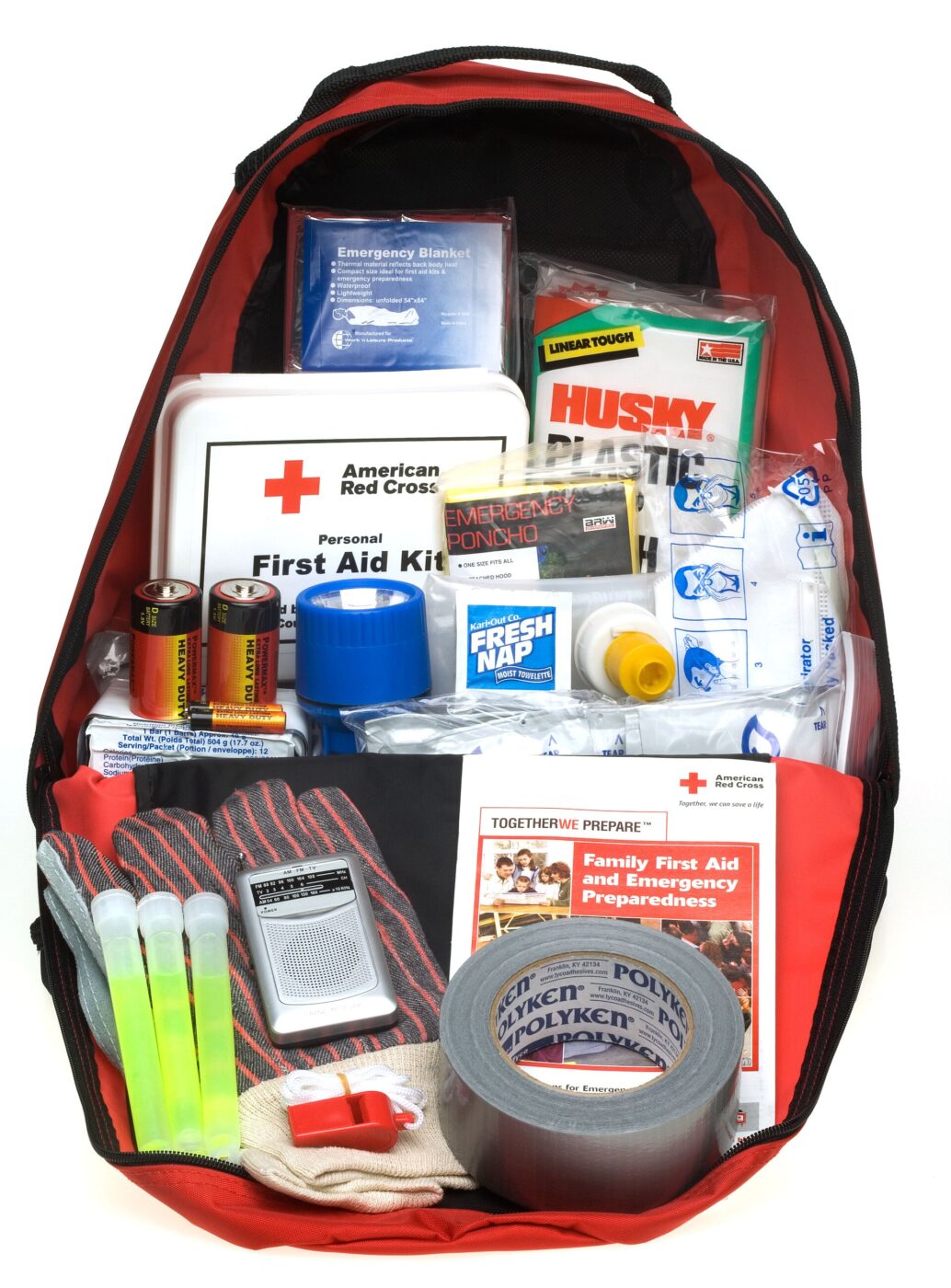
First aid kits are sold by piece count, and bigger numbers look safer. But every individual adhesive bandage, alcohol pad and cotton swab counts as a piece, so a large total can mean a box full of small items and very little for a deep cut or a sprain.
The American Red Cross publishes what it recommends for a family of four. Comparing a store-bought kit against that list, then adding what is personal to your household, is cheaper and more reliable than paying for a higher number.
Fear Index · Think twice
A big number on the box and little inside
The problem appears during an injury bigger than a scrape, when the kit turns out to hold dozens of small bandages and not enough gauze, tape or gloves.
How piece counts inflate a kit
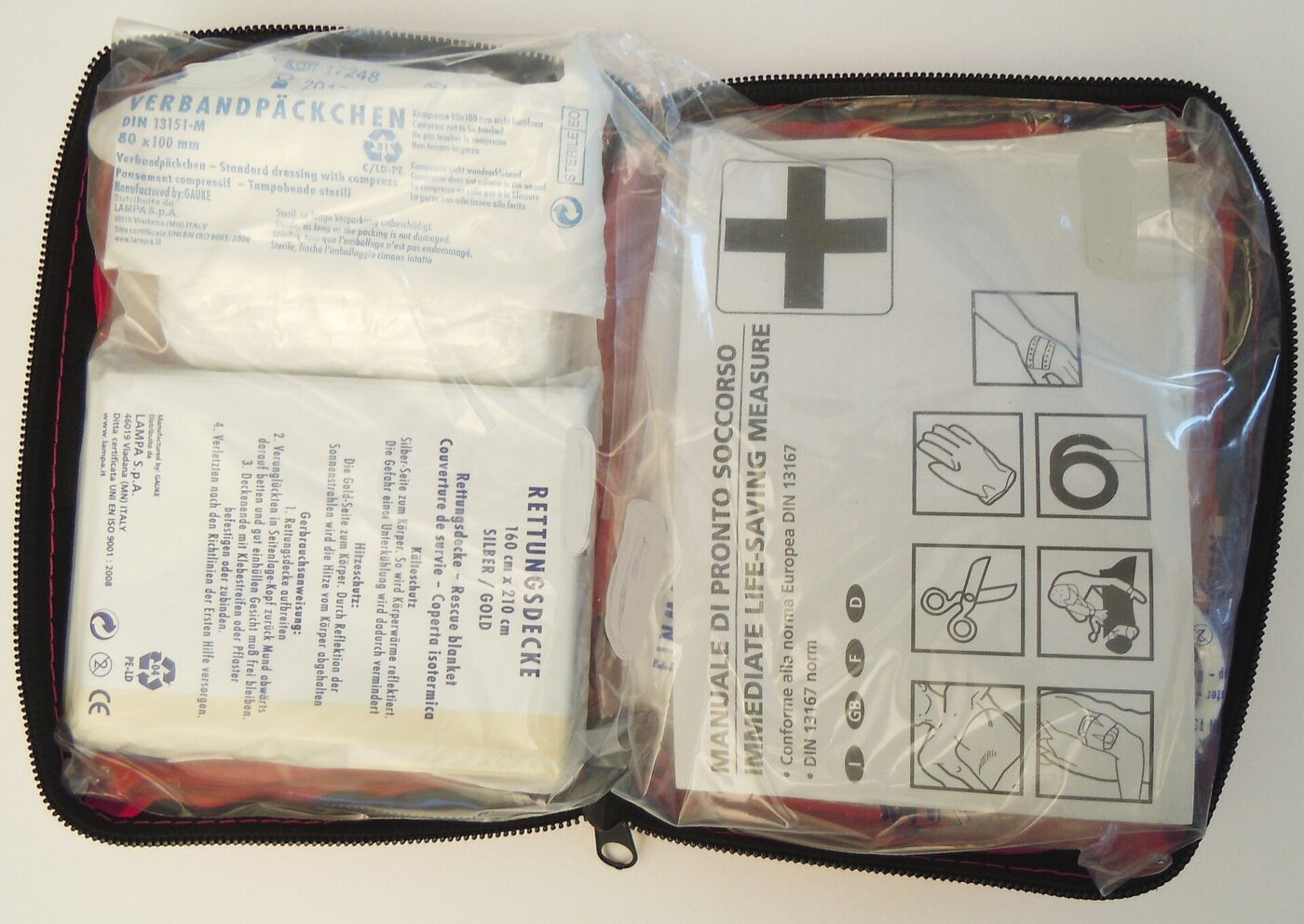
Open a budget kit and count. Adhesive bandages often make up a large share of the pieces, followed by antiseptic wipes and swabs. Those are useful for small cuts, but they are the least important items when an injury is serious, and they are the cheapest to buy separately.
The items that matter for bigger wounds, such as large absorbent dressings, gauze in quantity, roller bandages and enough tape to hold them, are often present in single units or small sizes. A kit can be accurately labeled as having hundreds of pieces and still leave you short after the first real use.
Compare any kit against the Red Cross list below before buying, and treat the piece count as marketing rather than a measure of readiness.
| Item | Red Cross list for a family of four | What to check in a store-bought kit |
|---|---|---|
| Absorbent compress dressings, 5 by 9 inches | 2 | Often missing from small kits |
| Sterile gauze pads, 3 by 3 and 4 by 4 inches | 5 of each | Count and size, not just presence |
| Roller bandages, 3 and 4 inches wide | 1 of each | Width and length |
| Adhesive cloth tape, 10 yards by 1 inch | 1 roll | Tiny sample rolls are common |
| Nonlatex gloves | 2 pairs, size large | Enough pairs in sizes that fit |
What to add
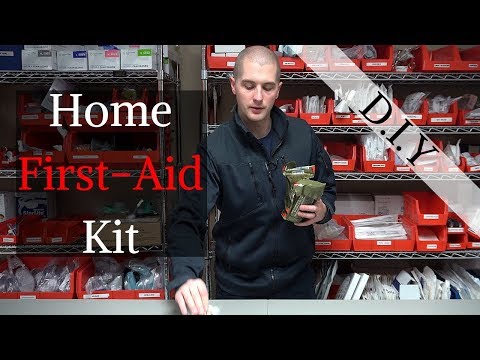
The rest of the Red Cross list is worth checking item by item: 25 adhesive bandages in assorted sizes, 5 antibiotic ointment packets, 5 antiseptic wipe packets, 2 packets of 81 mg aspirin, 2 hydrocortisone ointment packets, an emergency blanket, a breathing barrier with a one-way valve, an instant cold compress, an oral thermometer that is non-mercury and nonglass, 2 triangular bandages, tweezers and emergency first aid instructions.
The Red Cross also says to include personal items such as medications, emergency phone numbers and anything your health care provider suggests. No generic kit can include those, which is why even a well-stocked box needs a personal layer. Medication decisions belong to your own clinician and the product labels, not to a kit list.
Workplace kits follow a separate industry standard, ANSI/ISEA Z308.1. Its 2021 edition kept two classes of kit, made a foil blanket mandatory and added more specificity on tourniquets and more guidance on bleeding control kits, which is a useful signal of what safety professionals consider essential.
- Personal medications, as the Red Cross advises, plus a written list of them.
- Emergency phone numbers on paper, in case a phone is dead or locked.
- Extra gauze, dressings and tape beyond a kit’s single units.
- Gloves in sizes that fit everyone likely to give first aid.
- A bleeding control kit with training on how to use it, if you want to go beyond the basics.
Expiration dates and restocking

The Red Cross advises checking the kit regularly, checking expiration dates and replacing any used or out-of-date contents. Ointments, wipes and medications carry dates, and adhesives and sterile packaging do not last forever either.
The FDA is direct about medicines: once the expiration date has passed there is no guarantee a medicine is safe and effective, and expired products can be less effective or risky because of changes in chemical composition or strength. It also notes that storage matters, since a damp bathroom cabinet can reduce effectiveness before the date, and that a cool, dry place is better. Expired medicines are best taken to a drug take-back location.
The workplace standard sets a useful benchmark for frequency: the ISEA says workplace kits should be inspected at least monthly or after any use. A household kit used less often can be checked less often, but it should be restocked after every use.
Write a check-by date on the lid with a marker, based on the soonest expiring item, and restock after every use rather than when you next remember.
Build, buy or upgrade
The Red Cross suggests keeping a first aid kit at home and in the car, and knowing where kits are at work. For most households the most economical approach is a mid-size kit as a starting point, upgraded with a refill of gauze, roller bandages and tape bought in bulk, plus the personal layer.
Building a kit entirely from bulk supplies costs more at first but gives full-size quantities and a container you choose. A car kit is exposed to heat and cold, so keep medications out of it or rotate them often, in line with the FDA’s cool, dry storage advice.
The most valuable addition does not fit in the box. A hands-on first aid class makes the contents usable, and it is the difference between owning a breathing barrier and knowing when to use one.
Spend on dressings, tape, gloves and training before spending on a higher piece count.
The shortlist
Paid links: we earn a commission if you buy through the buttons below, at no extra cost to you. As an Amazon Associate I earn from qualifying purchases.
Compared on what they add
| Product type | Best for | Risk estimate | Where to buy |
|---|---|---|---|
| Family First Aid Kit with Large Dressings | A starting point | 34/100 | See listings on Amazon |
| Gauze, Roller Bandage and Tape Refill | Upgrading a thin kit | 12/100 | See listings on Amazon |
| Emergency Foil Blankets | Every kit and car | 10/100 | See listings on Amazon |
Risk estimate is our editorial Fear Index for the product type (lower is safer), not a customer rating. How it is scored. The buttons open Amazon search results rather than one listing, so check the model on the product page.
Gauze, Roller Bandage and Tape Refill
Most kits are thin exactly here. Add enough gauze, roller bandage and tape to handle more than one injury.
- Full-size dressings and tape
- Fills the gaps in budget kits
- Easy to restock after use
- Needs a container and organizing
- Check sterile packaging dates
Family First Aid Kit with Large Dressings
Compare the contents against the Red Cross list before buying, then add the personal layer and larger dressings.
- Organized container
- Can cover much of the Red Cross list; check the contents
- Suits home or car
- Still needs personal medications and numbers
- Piece count overstates coverage
More: Emergency Prep & Power analyses and how the Fear Index is scored.
Questions people actually ask
What should be in a basic first aid kit?
The Red Cross list for a family of four includes compress dressings, gauze pads, roller bandages, cloth tape, adhesive bandages, gloves, an emergency blanket, a breathing barrier, a cold compress and more, plus personal items.
Do first aid kit supplies expire?
Many do, including medications, ointments and wipes. The Red Cross advises checking expiration dates and replacing out-of-date items, and the FDA advises against using expired medicines.
Are store-bought first aid kits good enough?
They are a reasonable start, but piece counts can hide thin supplies of gauze, dressings and tape. Compare contents with the Red Cross list and add what is missing.
How often should I check my first aid kit?
The Red Cross advises checking it regularly and replacing used items. Workplace kits are inspected at least monthly under industry guidance; restock a home kit after every use.