
Choose a High Chair by How It Cleans, Because You Will Clean It Three Times a Day
Fabric covers, seams and harness slots collect food, and footrests matter for eating. What to check before your baby starts solid food.

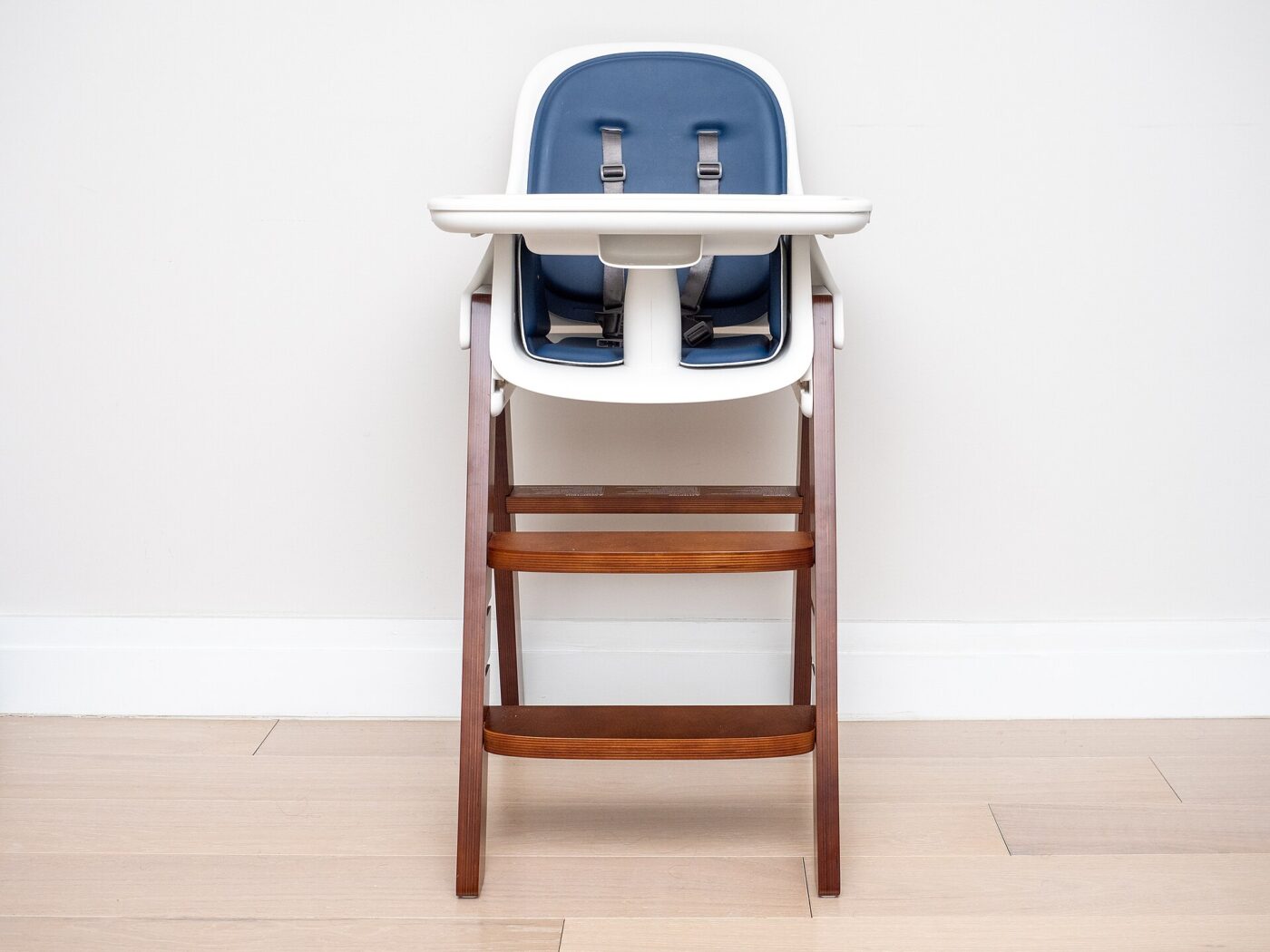
A high chair is bought before solid food starts and chosen mostly on how it looks in the kitchen.
Then feeding begins, and it becomes a surface cleaned after every meal — and mashed food finds every seam, slot and fold it can.
Fear Index · Think twice
Chosen for looks, lived with for cleaning
Mold in padded seams and straps is a common discovery, and it happens on attractive chairs as readily as cheap ones.
Food goes everywhere, and into everything
Look at a high chair as a cleaning job, and a few features decide how long it takes.
- Seams and gaps. Joints between seat and frame fill with food that dries hard. Fewer seams, less scrubbing.
- Padded fabric inserts. They absorb spills and are the place mold is most often found.
- Harness slots. Straps threaded through the seat carry food into the slots behind.
- Tray design. A dishwasher-safe tray with a lip saves more time than any other single feature.
- Hidden underside. Food lodges under the tray edge and the seat front, out of sight.
Remove every removable part in the shop and look at where it attaches. That is where food will live.
The footrest nobody mentions

Feeding specialists often emphasize a stable seated posture for young children: hips, knees and ankles supported roughly at right angles, with feet resting on something.
Dangling legs make a child less stable, and a less stable child has to work harder to sit upright while learning to chew and swallow. An adjustable footrest is widely recommended for this reason.
Many chairs have a footrest set too low to reach for a young child. Adjustable ones fix that, and they also make the chair usable for longer.
Chairs that grow
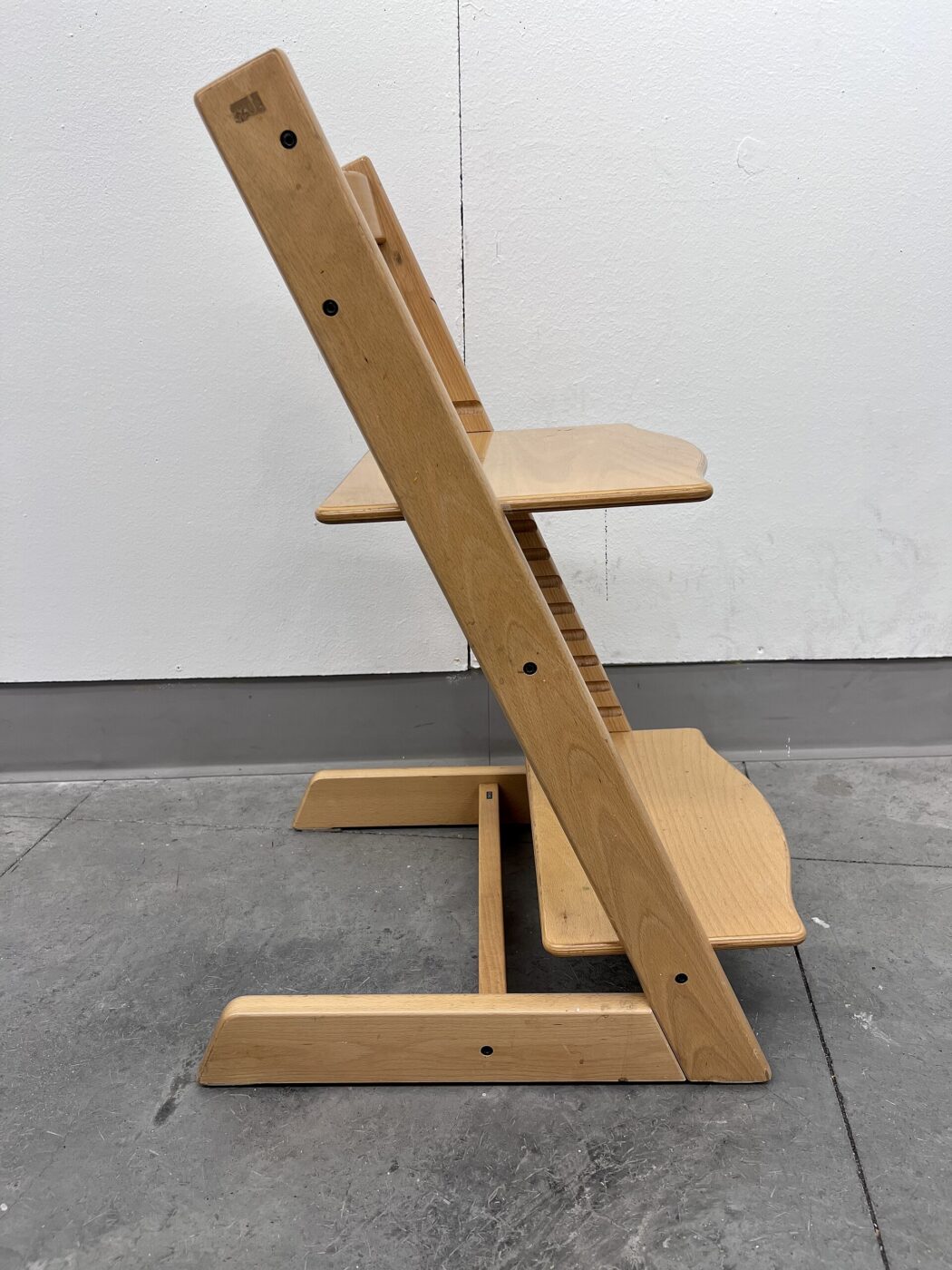
Adjustable wooden chairs that convert to a child’s seat at the table last for years. Their seat and footrest move up and down independently, which is exactly what posture needs.
The trade is cleaning: wood joints and a separate baby set can be fiddlier than a molded plastic seat. Many parents accept that for a chair that lasts from six months to school age.
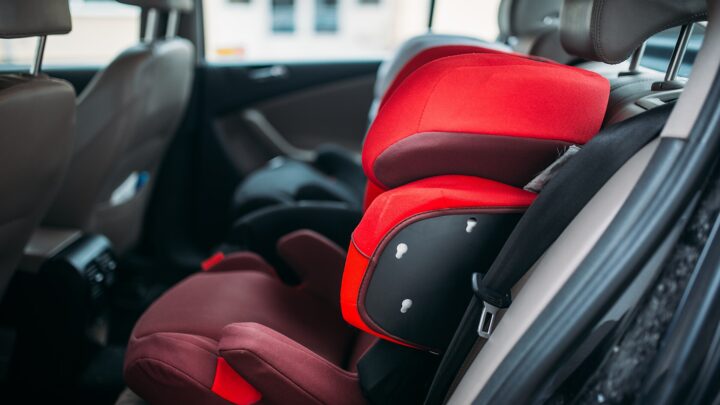
In small kitchens, a booster that straps to an ordinary dining chair saves floor space and pulls the child up to the family table. Whatever you choose, use the full harness at every meal — the tray is not a restraint — strap a booster to the chair as well as the child, and keep the chair far enough from the table or counter that a child cannot push off and tip it.
What the safety standard actually requires
High chairs sold in the US must meet the CPSC’s mandatory rule, which incorporates ASTM F404. It requires a passive crotch restraint so a child cannot slide out under the tray, a three-point or better harness, stability testing so the chair does not tip when a child rocks or leans, and leg openings sized to stop a child sliding through.
A tray that detaches or a harness that cannot be fully tightened are the two most common complaints in CPSC incident data, so check both while a child is actually sitting in the chair, not just on the showroom floor.
As with other durable infant products, register a new high chair with the manufacturer, and check the model against open recalls at cpsc.gov/Recalls before buying secondhand — cracked plastic and worn tray latches are the parts most likely to fail with age.
A chair made before the current rule took effect is not necessarily unsafe, but it was not tested against these specific requirements. Check an older or handed-down chair against this list rather than assuming it is fine because it worked for an older sibling.
Sit the child in the chair before buying and tighten the harness fully. If it will not stay snug, or the tray pops off under light pressure, that is a problem no amount of cleaning ease fixes.
The shortlist
Paid links: we earn a commission if you buy through the buttons below, at no extra cost to you. As an Amazon Associate I earn from qualifying purchases.
Compared on cleaning and posture
| Product type | Best for | Risk estimate | Where to buy |
|---|---|---|---|
| Molded Easy-Clean High Chair | Easiest to clean | 24/100 | See listings on AmazonOpens Amazon search results, not one listing: check the model on the product page. |
| Adjustable Wooden High Chair | Grows with the child | 22/100 | See listings on AmazonOpens Amazon search results, not one listing: check the model on the product page. |
| Dining Chair Booster Seat | Small spaces | 28/100 | See listings on AmazonOpens Amazon search results, not one listing: check the model on the product page. |
Risk estimate is our editorial Fear Index for the product type (lower is safer), not a customer rating. How it is scored.
Molded Easy-Clean High Chair
The practical choice for the messiest months. Check the harness straps come out and go in the washing machine.
- One-piece seat with few seams
- Dishwasher-safe tray
- No fabric to harbor mold
- Outgrown sooner
- Less furniture-like
Adjustable Wooden High Chair
Worth it if you want one chair from starting solids to school age. The adjustable footrest is the real benefit.
- Seat and footrest adjust as the child grows
- Supports good seated posture
- Pulls up to the family table
- More joints to clean
- Needs its baby set and harness for young babies, sometimes sold separately
More: Baby & Kids analyses and how the Fear Index is scored.
Questions people actually ask
What is the easiest high chair to clean?
One with a molded seat, few seams, no padded fabric insert, washable harness straps and a dishwasher-safe tray.
Does a high chair need a footrest?
A footrest gives a young child a stable seated posture, which feeding specialists often recommend to support chewing and swallowing. Adjustable ones stay useful as the child grows.
How do I stop mold in a high chair?
Avoid fabric inserts where possible, remove and wash straps regularly, and dry every part fully after cleaning. Mold grows fastest in padding and seams.
When should a baby use a high chair?
When they can sit upright with minimal support, which usually coincides with starting solid food around six months.