
A Yard Inflatable Lives or Dies by Its Blower, Its Stakes and Its Outlet
Yard inflatables fail at the fan, the tethers and the plug. How blowers get starved of air, why stakes matter in gusts, and how to power them outdoors.

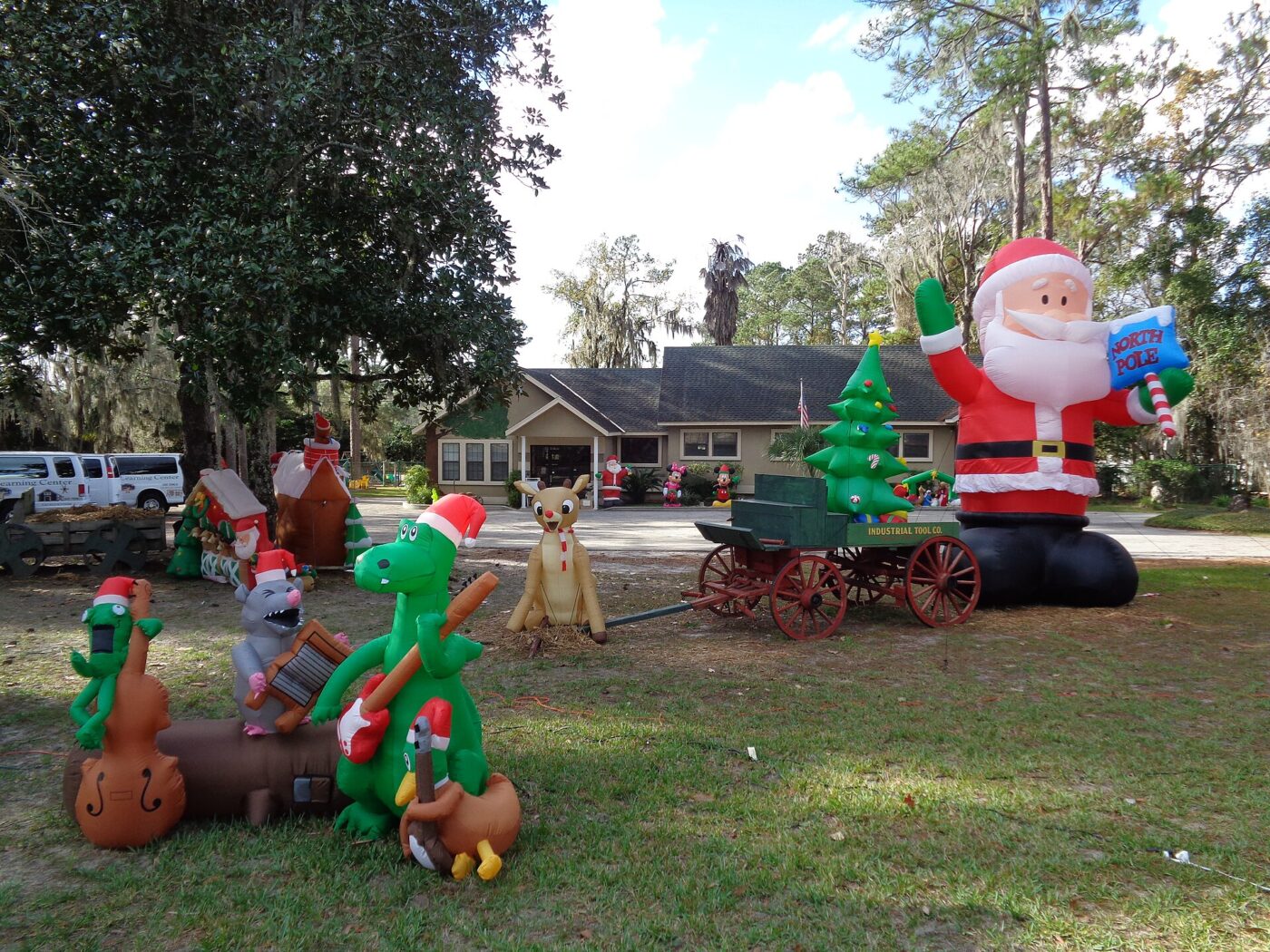
Inflatable yard decorations are cheap for their size, go up in minutes and fold into a small box. They also run an electric blower outdoors, day and night, for weeks, in weather the fabric was never meant to shrug off.
When they fail, the fabric is not usually the first thing to go. The figure sags because the fan is starved of air or weighed down by water, it topples because a tether was never staked, or it goes dark because the outlet tripped. Each has a straightforward fix.
Fear Index · Think twice
A decoration that sags, or leaves the yard
A figure slumped over by the second week, or one that lifts off in the first strong gust, are the usual disappointments.
The blower is the weak point
The fan inside an inflatable does not fill it once and stop. Seams, zippers and fabric let air escape, so the blower runs the entire time the decoration is up, pulling air through an intake and pushing it into the figure. Anything that restricts that intake, from fallen leaves and grass to the figure’s own fabric pulled against the grille, makes the motor work harder and the figure droop.
Rain and snow add weight and can fold a figure down onto its own fan. The usual first fixes for a sagging inflatable are simple: set the fan level so the intake is clear, close every zipper, shake out water and snow, and make sure no fabric is blocking the opening where air enters the figure.
In a 2004 letter to makers of blower-powered home inflatables for children, CPSC compliance staff noted that the motor and blower are integral to the product and within easy reach of children, and may present an electrocution hazard. Staff said they expected the motors to be certified to an appropriate outdoor electrical standard that includes rain spray tests. Yard decorations are not toys, but they put the same kind of blower in the same weather.
Check the intake every few days. A clear, level fan keeps the figure upright and spares the motor from running strained.
Wind, stakes and tethers

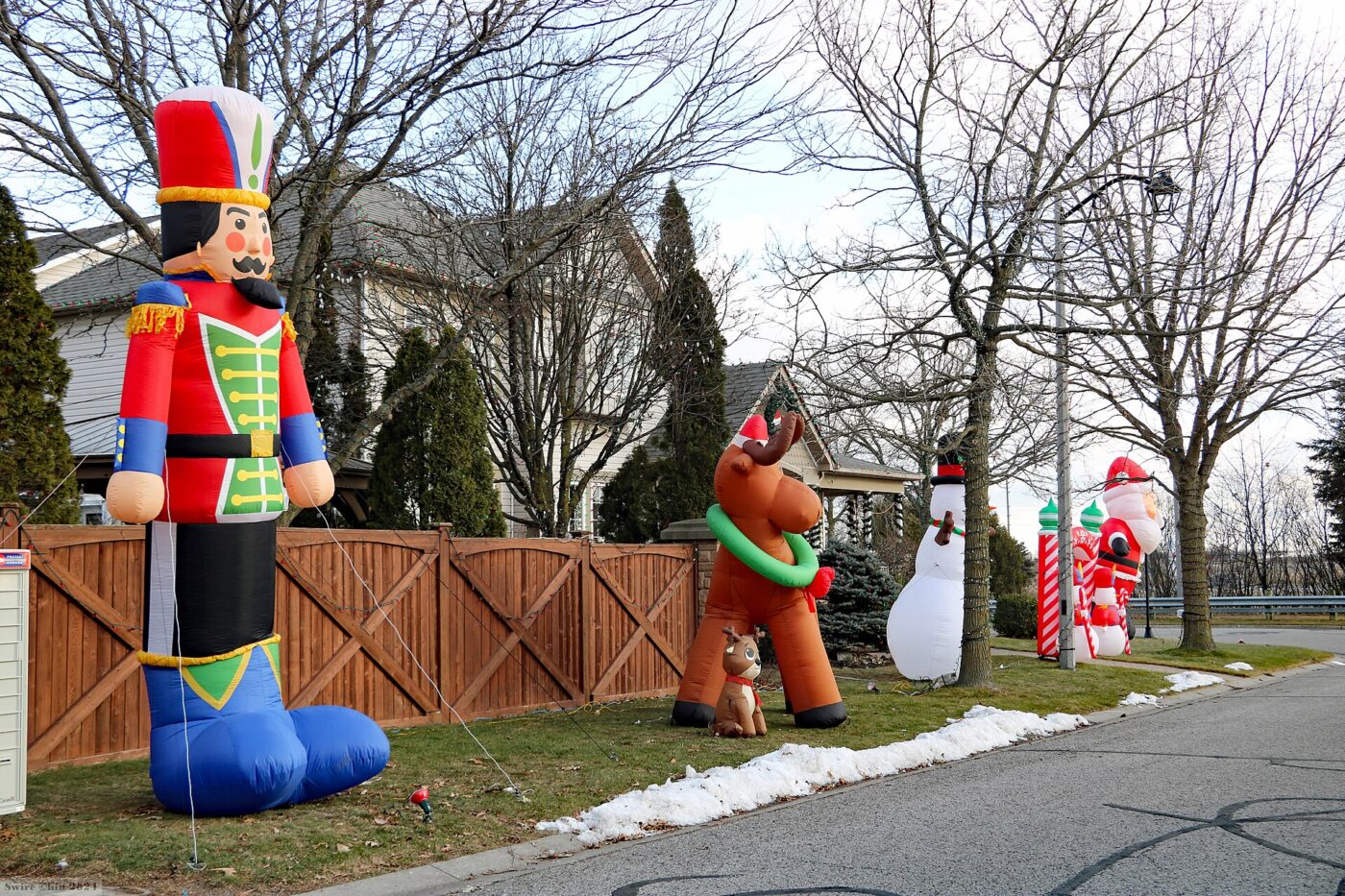
An inflatable is a large, light sail. In the same letter, CPSC staff said makers should warn that sudden gusts of wind may lift inflatables off the ground, should include a means of anchoring such as stakes, and should instruct users to secure the loops on the inflatable to the ground to keep it from moving or turning over. That applies to every tether, not just the easy ones.
Supplied stakes are often thin and short, and wet or thawing ground loosens them. Longer, heavier stakes hold better in soft soil, and weights help where stakes cannot go in, following the product instructions. Place the figure where it cannot reach a street, driveway, walkway or overhead line if it does break loose.
- Stake every loop and tether before switching the blower on.
- Use longer or heavier stakes in soft, wet or sandy ground.
- Anchor on hard surfaces only in ways the instructions allow.
- Keep clear of streets, walkways and overhead lines.
- Unplug and let it deflate ahead of strong winds, heavy rain or snow.
- Recheck tethers after every storm.
Powering it safely outdoors
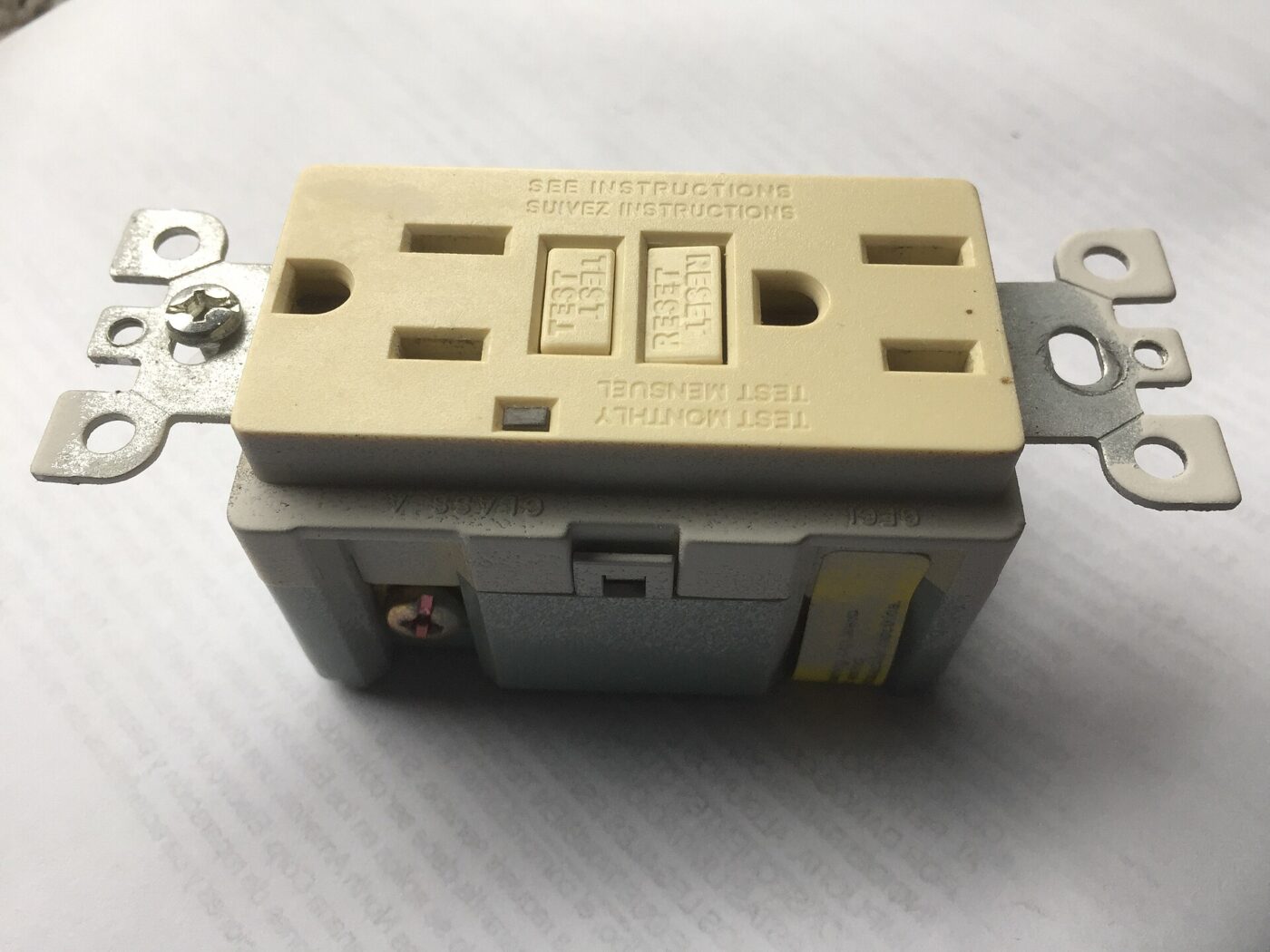
CPSC’s GFCI fact sheet describes a ground fault circuit interrupter as a device that constantly monitors current and interrupts power if the current flowing into the circuit differs from the returning current by as little as 0.006 amperes. With a motor sitting on wet grass, that protection matters. The fact sheet notes that the National Electrical Code has required GFCI protection for outdoor receptacles since 1973, typically in new construction, and that portable GFCIs provide protection even where none is installed.
The 2004 letter also said CPSC staff expected blower inflatables for children to have a listed GFCI-protected power cord and a warning not to use extension cords. Instructions for yard decorations vary, with some ruling out extension cords and others allowing only outdoor-rated ones, so follow your model’s instructions, keep plug connections off the ground and never run cords through standing water or snow.
CPSC recommends testing every GFCI at least once a month and after a power failure: press the test button and confirm the power goes off, then press reset. A GFCI that trips repeatedly in wet weather is doing its job; the fix is finding the wet connection or damaged cord.
| Setup | Protection | Verdict |
|---|---|---|
| GFCI-protected outdoor outlet | Trips on ground faults | The right default |
| Portable outdoor GFCI | Adds protection at the plug | Good for unprotected outlets |
| Outdoor-rated extension cord | None by itself | Only if the instructions permit |
| Indoor cord run through a window | None, and exposed to moisture | Avoid |
| Timer on a protected outlet | Same as the outlet | Cuts running hours |
Never bypass or remove a GFCI that keeps tripping. Find the wet connection or damaged cord that is causing it.
Buying and storing inflatables
When comparing inflatables, look for a testing-lab mark on the blower and cord, the number of tethers and stakes included, and whether internal lights are LED. Taller figures catch more wind, so a modest figure in a sheltered spot can outlast a giant one in an exposed yard.
At the end of the season, unplug the unit, let it dry completely before folding, brush off dirt and leaves, and store it somewhere dry. Fabric packed damp can mildew, and a fan stored with debris in its grille starts the next season already restricted.
Run it for a few minutes before packing it away to confirm the fan still spins freely and the lights work, and note the model number. Replacement blowers must match the figure’s airflow and fitting, and the manufacturer is the place to ask.
The shortlist
Paid links: we earn a commission if you buy through the buttons below, at no extra cost to you. As an Amazon Associate I earn from qualifying purchases.
Compared on setup and protection
| Product type | Best for | Risk estimate | Where to buy |
|---|---|---|---|
| LED Inflatable Yard Decoration (6 ft) | A durable figure | 35/100 | See listings on Amazon |
| Heavy-Duty Ground Stakes for Inflatables | Staying put in wind | 12/100 | See listings on Amazon |
| Portable Outdoor GFCI Adapter | Protection at the plug | 10/100 | See listings on Amazon |
Risk estimate is our editorial Fear Index for the product type (lower is safer), not a customer rating. How it is scored. The buttons open Amazon search results rather than one listing, so check the model on the product page.
Portable Outdoor GFCI Adapter
For outdoor outlets without GFCI protection. Test it, and keep the connection up off wet ground.
- Adds ground-fault protection to older outlets
- No installation required
- Easy to test
- Must be rated for outdoor use
- No substitute for dry connections
Heavy-Duty Ground Stakes for Inflatables
Stake every tether. Gusts can lift inflatables, and the supplied stakes are often the weakest part.
- Longer grip than thin supplied stakes
- Holds better in soft ground
- Reusable every season
- No help on pavement
- Can loosen in thawing ground
More: Holiday and Seasonal analyses and how the Fear Index is scored.
Questions people actually ask
Why is my inflatable decoration not inflating?
Check that the fan is level and its intake clear, every zipper is closed, fabric is not blocking the air opening, and water or snow has not weighed it down. Then check whether the GFCI tripped.
How do you keep inflatables from blowing away?
Stake every loop and tether, use heavier stakes where the ground is soft, and unplug and deflate the figure before strong winds.
Do outdoor inflatables need a GFCI outlet?
Outdoor electrical decorations should be on GFCI protection. CPSC notes portable GFCIs provide protection even where none is installed.
Can you leave inflatables up in the rain?
Many are built for outdoor use, but unplugging during heavy rain, snow or high wind reduces strain and risk. Follow the manufacturer’s instructions.