
A Dry Christmas Tree Burns Fast, and an Undersized Stand Is How It Dries
A fresh cut, a stand that holds enough water and daily refills keep a real tree green. Why dry trees burn fast and how far to keep a tree from heat.


A cut Christmas tree keeps drawing water up through its trunk, and in a warm living room it can drink a surprising amount. As long as it keeps drinking, its needles stay supple and green.
When the water runs out, the tree does not warn anyone. Needles dry, branches turn brittle, and a tree that looked fine last week becomes fuel standing next to the sofa. Fire agencies are consistent about the few habits that prevent that.
Fear Index · Think twice
A stand that runs dry while nobody looks
NFPA says Christmas tree fires are not common, but when they occur they are more likely to be serious, and a tree that dried out quietly gives little warning.
Why a dry tree is dangerous
The U.S. Fire Administration puts it plainly: a dry Christmas tree can burn very hot and very fast. Dried needles and thin branches ignite easily and release heat quickly, and a tree usually stands close to curtains, furniture and wrapped presents that can carry a fire into the room.
NFPA’s Christmas tree safety sheet says that although Christmas tree fires are not common, when they do occur they are more likely to be serious. It highlights two patterns: nearly half of home Christmas tree fires are caused by electrical problems, and a heat source too close to the tree causes one in every four.
Both patterns come back to the same habits. A well-watered tree placed away from heat and lit with sound, listed lights leaves far fewer opportunities for a fire to start.
Tree safety is mostly water and distance. Neither costs anything, and both need attention every day the tree is up.
The stand and the cut

A tree drinks through fresh wood at the base of its trunk. NFPA advises cutting 2 inches from the base of the trunk before placing the tree in the stand, and CPSC’s holiday decoration tips similarly say to cut off about two inches to expose fresh wood for better water absorption. Put the tree into water promptly after the cut.
The stand then has to keep up. CPSC recommends a sturdy, water-holding stand with wide-spread feet, kept filled with water while the tree is indoors. Small stands hold little for a large trunk, so a thirsty tree can empty one between checks. The National Christmas Tree Association’s rule of thumb is a stand that holds about a quart of water for each inch of trunk diameter.
Check the water level every day, and more often in the first days or if the reservoir is small. If the stand does run dry, the cut end can seal over and take up much less water afterwards; a new cut is the usual remedy, which means taking the tree down.
- Choose a fresh tree: CPSC says fresh needles are green, hard to pull from branches and do not break when bent.
- Bounce-test it: a shower of falling needles when the trunk is bounced on the ground shows the tree is too dry.
- Cut about two inches off the trunk just before it goes in the stand.
- Use a stand with wide feet and a reservoir sized for the trunk.
- Add water daily and never let the level fall below the base of the trunk.
Distance from heat and light
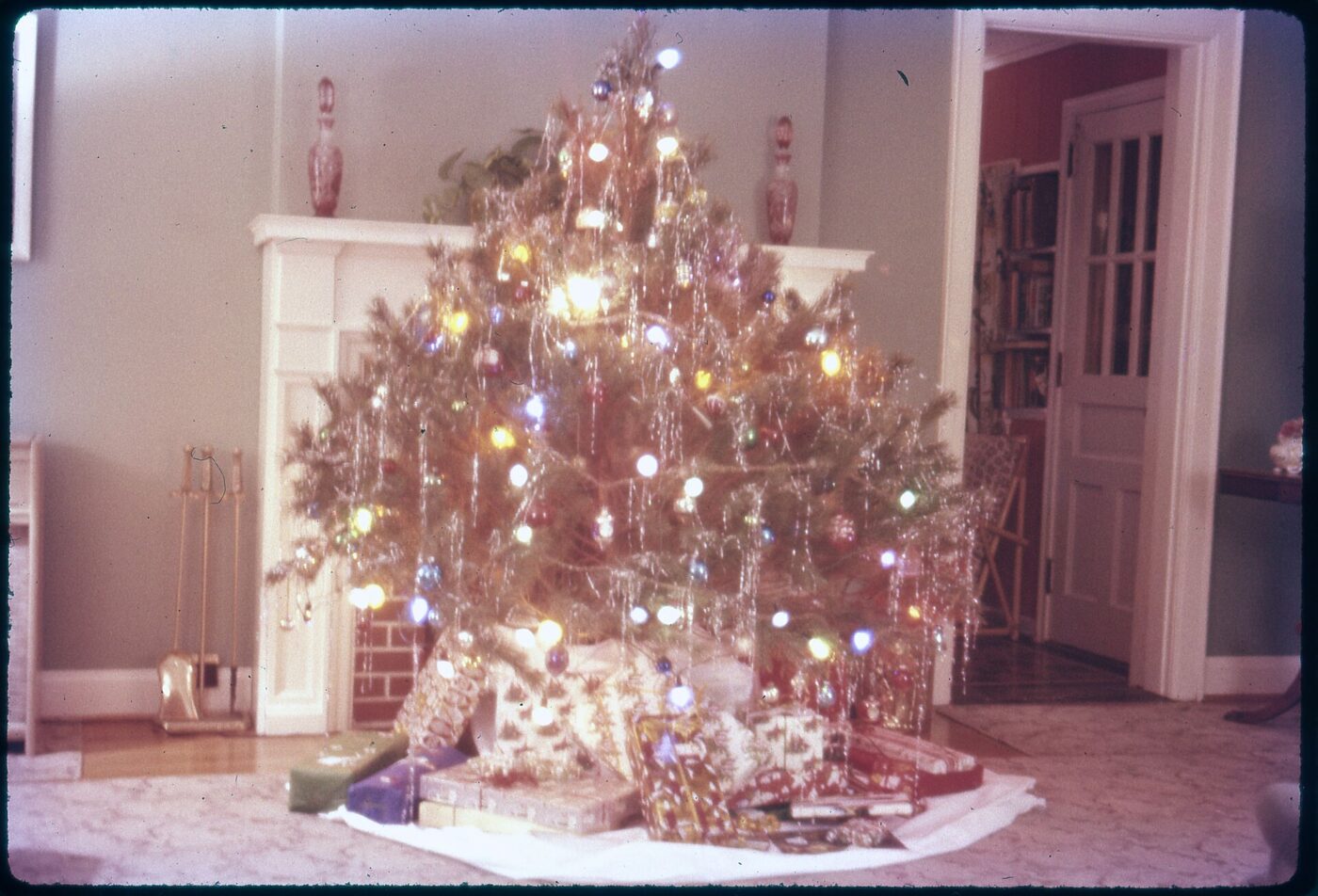
NFPA and USFA both say to keep the tree at least three feet away from heat sources such as fireplaces, radiators, candles and heat vents; USFA adds space heaters and NFPA adds lights. CPSC notes that heated rooms dry trees out rapidly, so a spot beside a heat register shortens how long the tree stays green.
Placement is also about getting out. NFPA says to make sure the tree is not blocking an exit, and CPSC says not to block doorways. Never use lit candles to decorate the tree, use lights listed by a qualified testing laboratory, replace any string with worn or broken cords, and turn tree lights off before leaving home or going to bed.
| Hazard | Guidance | Source |
|---|---|---|
| Fireplace, radiator, space heater, heat vent | At least 3 feet away | NFPA, USFA |
| Candles | Never on the tree; at least 3 feet away | NFPA, USFA |
| Worn or broken light cords | Replace the string | NFPA |
| Lights left on | Turn off before bed or leaving home | NFPA |
| Exits and doorways | Keep the tree clear of them | NFPA, CPSC |
When the tree has to go
A tree does not stay safe for a fixed number of weeks. NFPA says to get rid of the tree after Christmas or when it is dry, and USFA gives the same advice. Needles that fall when branches are brushed, needles that snap instead of bend, and a reservoir that stays full because the tree has stopped drinking are all signs it is time.
According to NFPA, dried-out trees should not be left in the home or garage, or placed outside against the home. Check with your community for a tree recycling program, and bring outdoor electrical lights inside after the holidays.
Artificial trees avoid the water problem but not the rest. CPSC notes many artificial trees are fire resistant and advises looking for a statement specifying that protection, and the same distance and lighting rules still apply.
Take the tree out when it is dry, even if the holidays are not over. A dry tree in a garage or leaning on the house is still a fire hazard.
The shortlist
Paid links: we earn a commission if you buy through the buttons below, at no extra cost to you. As an Amazon Associate I earn from qualifying purchases.
Compared on keeping a tree watered
| Product type | Best for | Risk estimate | Where to buy |
|---|---|---|---|
| Christmas Tree Stand with Large Water Reservoir | Holding enough water | 18/100 | See listings on Amazon |
| Christmas Tree Watering Funnel | Refilling without crawling | 14/100 | See listings on Amazon |
| Folding Pruning Saw | Making the fresh cut | 12/100 | See listings on Amazon |
Risk estimate is our editorial Fear Index for the product type (lower is safer), not a customer rating. How it is scored. The buttons open Amazon search results rather than one listing, so check the model on the product page.
Christmas Tree Stand with Large Water Reservoir
A reservoir sized for the trunk keeps the cut end underwater between checks. Refill it every day regardless.
- Holds enough water for a large trunk
- Wide feet resist tipping
- Fewer chances to run dry
- Bulky to store
- Still needs daily checks
Christmas Tree Watering Funnel
Makes daily watering easy. Still look at the level directly each day, because the funnel hides it.
- Refill without crawling under branches
- Less water spilled on floors
- Inexpensive
- Hides the water level from view
- Tube can slip out of the stand
More: Holiday and Seasonal analyses and how the Fear Index is scored.
Questions people actually ask
How often should you water a Christmas tree?
Every day. USFA and NFPA both advise watering daily, and a small stand may need checking more than once a day.
How much should you cut off a Christmas tree trunk?
NFPA advises cutting 2 inches from the base before placing the tree in the stand; CPSC says about two inches, to expose fresh wood.
How far should a Christmas tree be from a fireplace or heater?
At least three feet from fireplaces, radiators, space heaters, candles and heat vents, according to USFA and NFPA.
How can you tell if a Christmas tree is too dry?
Needles that fall easily or break when bent are warning signs. CPSC notes that a shower of falling needles when the trunk is bounced means it is too dry.