
Indoor-Only Lights Outside and Too Many Linked Strings Turn Decorations Into Fire Risks
Holiday light sets carry an indoor or outdoor rating and a limit on how many can be linked. How to read the tag, count strings and power outdoor displays.

Part of the guide: Tools and DIY Buying Mistakes: What Fails and How to Check Before You Buy
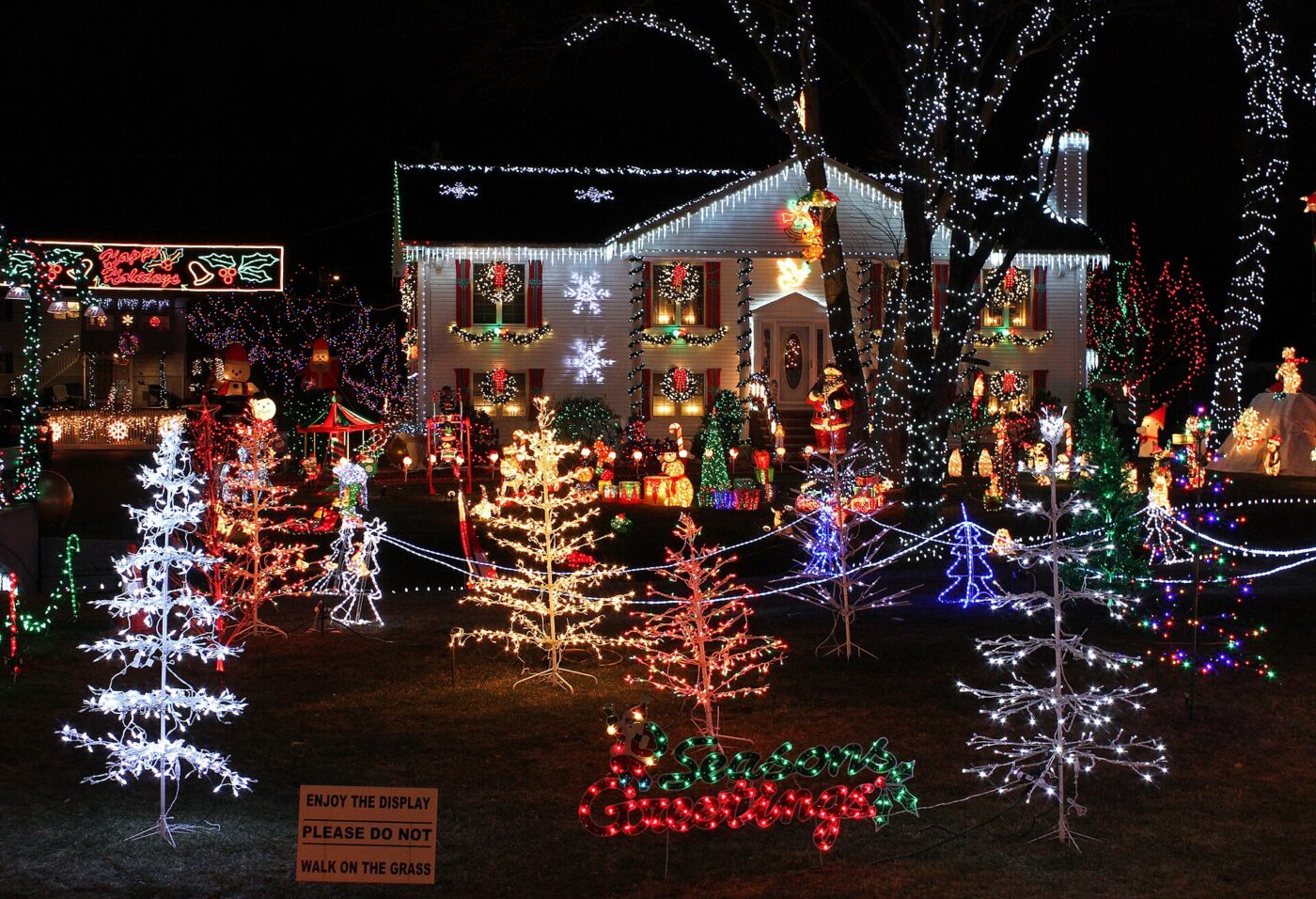
Most households own a tangle of light sets bought over several years, some indoor, some outdoor, some incandescent and some LED, with the original boxes long gone. They go up in whatever order they come out of the storage bin.
The safety information is still on the sets, printed on a tag or label near the plug. It states whether the lights were certified for indoor or outdoor use and how many sets can safely be connected end to end, and both details matter more than brightness or color.
Fear Index · Think twice
A label nobody reads until a plug runs hot
Light sets are cheap and familiar, so ratings, linking limits and outdoor protection get skipped. NFPA says nearly half of home Christmas tree fires are caused by electrical problems.
Reading the label before the lights
CPSC’s holiday decorating advice is to use only lights tested for safety by a nationally recognized testing laboratory. UL, Intertek’s ETL and CSA are the marks most US shoppers will see. For decorative light strings, UL Solutions says it evaluates products against UL 588, the Standard for Seasonal and Holiday Decorative Products.
UL Solutions says indoor-use-only light strings are marked with its green holographic label, and indoor or outdoor-use strings with its red holographic label. Other labs word their marks differently, so read the text on the tag, not just the logo. CPSC separately advises checking outdoor lights for labels showing they have been certified for outdoor use.
A mark only helps if it is genuine and matches the product. Sets from unfamiliar sellers with no manufacturer name, no rating information on the tag or packaging that contradicts the label deserve a second look before they go anywhere near a porch.
Indoor-only sets do not belong outside, even under a porch roof. Sets rated for indoor or outdoor use can go in either place.
How many strings is too many

Every set is built with wire sized for a certain current. When sets are plugged end to end, the first set’s plug and wire carry the load of everything downstream, so exceeding the limit makes that first connection run hot. Manufacturers print the maximum on the set, usually as a number of sets or a total wattage, and NFPA advises reading the manufacturer’s instructions for the number of light strands to connect.
For traditional incandescent lights, CPSC’s holiday safety releases give a simple ceiling: never string together more than three sets of incandescent lights, and never overload electrical outlets. Plugging several long runs into one outlet through a cube adapter overloads it just as surely as linking too many sets.
LED sets draw far less power, so their printed limits are typically higher, but the limit still comes from the tag rather than from a guess about wattage. Mixing incandescent and LED sets in one run makes the printed limits hard to apply, which is a good reason to keep each run uniform.
| Check | Where to find it | Why it matters |
|---|---|---|
| Indoor or outdoor rating | Tag or label near the plug | Outdoor sets are built for wet conditions |
| Maximum sets or watts to connect | Same tag, or the box | The first plug carries the whole run |
| Testing-lab mark | Tag, plug or packaging | Shows the design was evaluated |
| Extension cord rating | Cord jacket or tag | Must suit outdoor use and the load |
| Plug fuses | Sliding cover on the plug | A blown fuse points to an overload or fault |
Outdoor power and protection
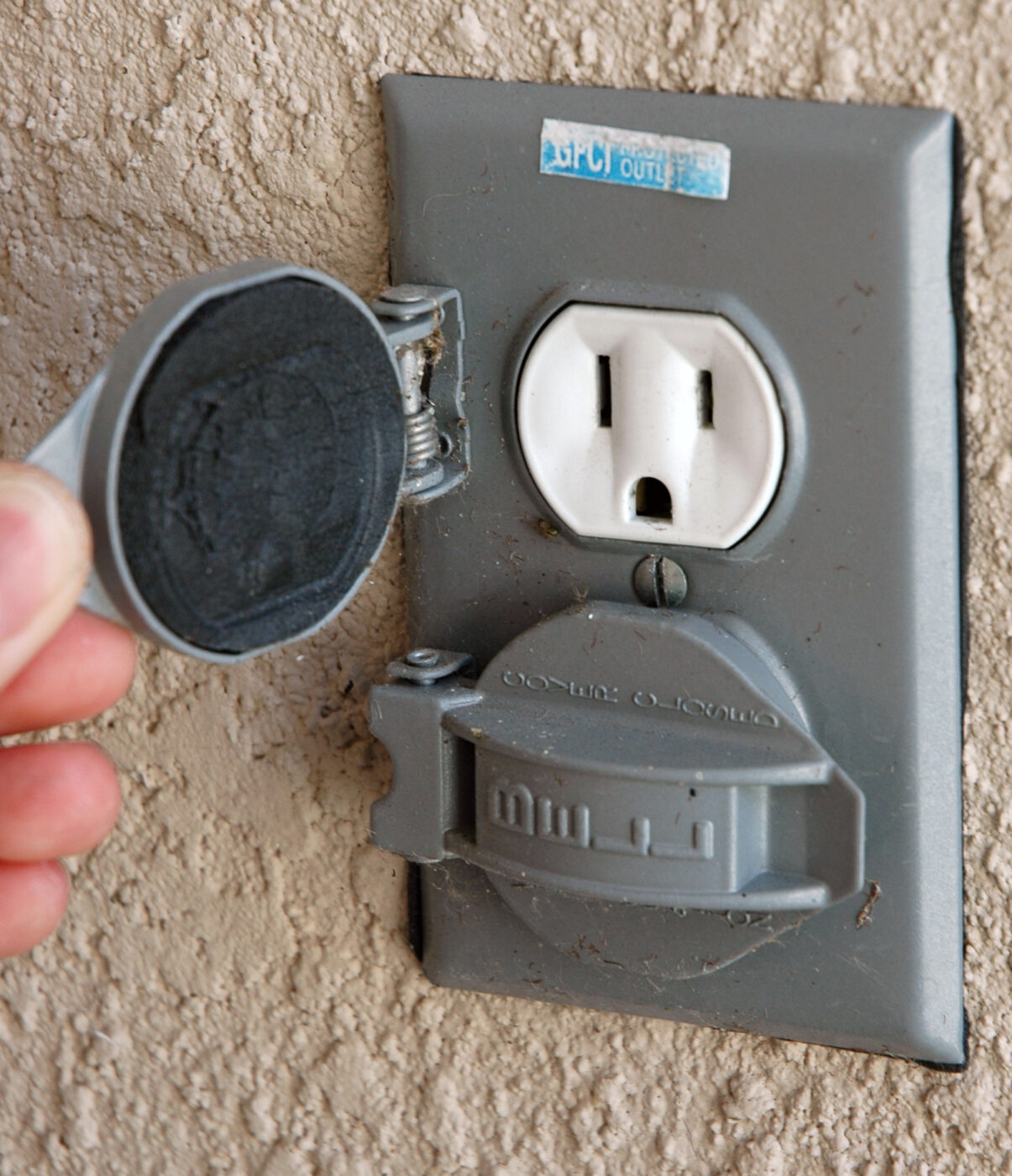
Outdoor decorations sit in rain, snow and wet grass, which is why CPSC says to plug outdoor lights only into a ground-fault circuit interrupter (GFCI) protected receptacle. A GFCI cuts power when it detects current leaking along an unintended path, such as through water or a person, at a level far below anything an ordinary circuit breaker responds to.
Where an outdoor outlet is not protected, portable outdoor GFCI adapters are available. A protected outlet that seems dead may simply have tripped and need resetting, and GFCIs should be tested regularly with their test and reset buttons, following the device instructions. A GFCI that trips repeatedly in wet weather most often points to a wet connection or a damaged cord.
- Inspect every set, new or old, for broken or cracked sockets, frayed or bare wires and loose connections.
- Check each extension cord is rated for its intended use and in good condition, as CPSC advises.
- Keep plug connections off the ground and out of puddles and snow.
- Fasten lights securely to walls, gutters or firm supports so wind cannot pull them loose.
- Do not staple or nail through wires; use plastic light clips instead.
- Put displays on a timer so they are not running all night.
Indoors, trees and bedtime
Inside, the risk concentrates around the tree. NFPA’s Christmas tree safety sheet says nearly half of home Christmas tree fires are caused by electrical problems, and it advises replacing any string of lights with worn or broken cords or loose bulb connections. Never use electric lights on a metal tree, which can become energized by a faulty set.
NFPA also says to always turn off Christmas tree lights before leaving home or going to bed. A timer or a switched power strip makes that automatic. LED sets run much cooler than incandescent ones, but cool bulbs do not fix a damaged cord, an overloaded outlet or a set that was never rated for the place it hangs.
After the season, NFPA recommends bringing outdoor electrical lights inside to prevent hazards and make them last longer. Wind sets loosely on a reel or a piece of cardboard rather than knotting them, which strains wires where they enter the sockets.
If a plug or connector feels hot to the touch, unplug the run and check the linking limit and cord rating before plugging anything back in.
The shortlist
Paid links: we earn a commission if you buy through the buttons below, at no extra cost to you. As an Amazon Associate I earn from qualifying purchases.
Compared on safe outdoor setup
| Product type | Best for | Risk estimate | Where to buy |
|---|---|---|---|
| LED Mini String Lights (Indoor/Outdoor Rated) | Outdoor-rated LED sets | 22/100 | See listings on Amazon |
| Outdoor Power Stake with Timer | Outdoor power on a timer | 25/100 | See listings on Amazon |
| Outdoor Extension Cord (16 AWG) | Longer runs outdoors | 20/100 | See listings on Amazon |
Risk estimate is our editorial Fear Index for the product type (lower is safer), not a customer rating. How it is scored. The buttons open Amazon search results rather than one listing, so check the model on the product page.
LED Mini String Lights (Indoor/Outdoor Rated)
Look for a recognized testing-lab mark and an outdoor rating on the tag itself, not just on the box.
- Rated for indoor or outdoor use
- Runs cooler than incandescent
- Draws far less power per set
- Linking limits still apply
- Color can vary between batches
Outdoor Power Stake with Timer
A timer handles the lights-off advice automatically. It still needs a GFCI-protected outlet and sensible loads.
- Keeps connections off wet ground
- Switches displays off overnight
- Several outlets in one place
- Most add no GFCI protection themselves
- Can still be overloaded