
When Half a Pre-Lit Tree Goes Dark, One Bulb Often Broke the Circuit
Mini lights on pre-lit trees run in series sections, so one loose bulb or failed shunt can darken a whole band. How to troubleshoot, choose LED and store it.

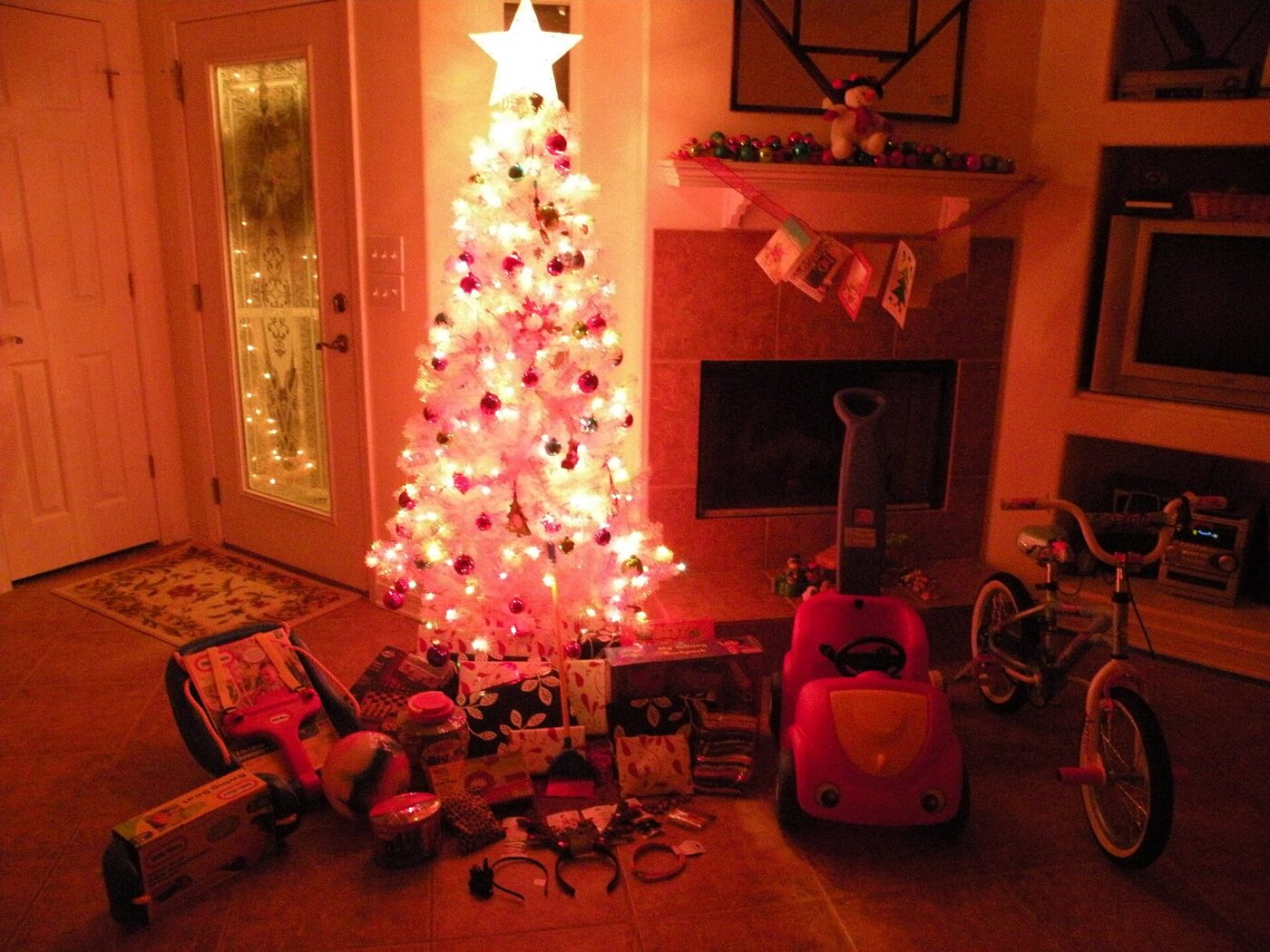
Pre-lit artificial trees solve the most tedious part of decorating. The lights are already clipped along the branches, the sections plug together, and the whole tree switches on at once.
The same design is why a failure is so irritating. When one band of branches stays dark, the lights cannot simply be swapped for a new string without unclipping dozens of wires, and the fault is often a single bulb somewhere inside that band.
Fear Index · Think twice
Lights woven into the tree that cannot be swapped
The lights are clipped through the branches, so a dead section is harder to fix or replace than a loose string, and it often appears only after a year in storage.
Why a whole section goes dark

Traditional incandescent mini lights are wired in series. The Department of Energy explains that in a series circuit, electricity passes from the power source to the first light, then from light to light until it returns to the source, so a break anywhere stops current for every bulb in that run. Pre-lit trees divide their lights into several series sections, which is why one band fails while the rest stays lit.
To keep one burned-out filament from killing a section, mini bulbs contain a shunt: small wires wrapped beneath the filament, coated so they initially carry no current. According to the DOE, when the filament burns out, the heat melts the coating and exposes the lower-resistance wire, so current flows past the dead bulb and the rest of the section stays lit.
Shunts have limits. A bulb that is loose, cracked, missing or pushed out of its socket breaks the circuit mechanically, and no shunt can bridge that gap. A shunt that fails to activate also leaves the section dark. And in a series string, every bypassed bulb shifts a little more voltage onto the survivors, so ignored burnouts can hasten the next ones.
A dark section on an incandescent pre-lit tree is often one bad bulb or connection in a circuit designed to fail as a group, not a dead tree.
Finding the fault

Start with the parts that are easiest to check. Confirm the outlet works and the tree’s switch or controller is on, then look at the plug: many light sets carry small replaceable fuses behind a sliding cover, and spares often come in the box. On trees where power runs through the center pole, make sure each section is fully seated and aligned, since a partly inserted pole can leave an upper section dark.
If the band is still dark, unplug the tree and inspect every bulb in it for any that are missing, loose, broken or have bent leads. Replace them only with the bulb type specified for that set. Handheld testers that trace where current stops, and shunt-repair tools that send a pulse through the string, can shorten the search considerably.
Before any home repair, check what the tree’s warranty says about the lights and how long that coverage lasts. If sockets are melted or wires exposed, stop and treat that lighting as finished; the tree can still be decorated with separate listed string lights.
- Unplug before touching bulbs, sockets or fuses.
- Check the plug fuses and replace them only with the rating printed on the set.
- Reseat pole sections and any plug-together connectors.
- Press each bulb firmly into its socket along the dark band.
- Replace missing or broken bulbs with exact matches.
- Retire sets with damaged wires rather than taping them.
LED and incandescent pre-lit trees
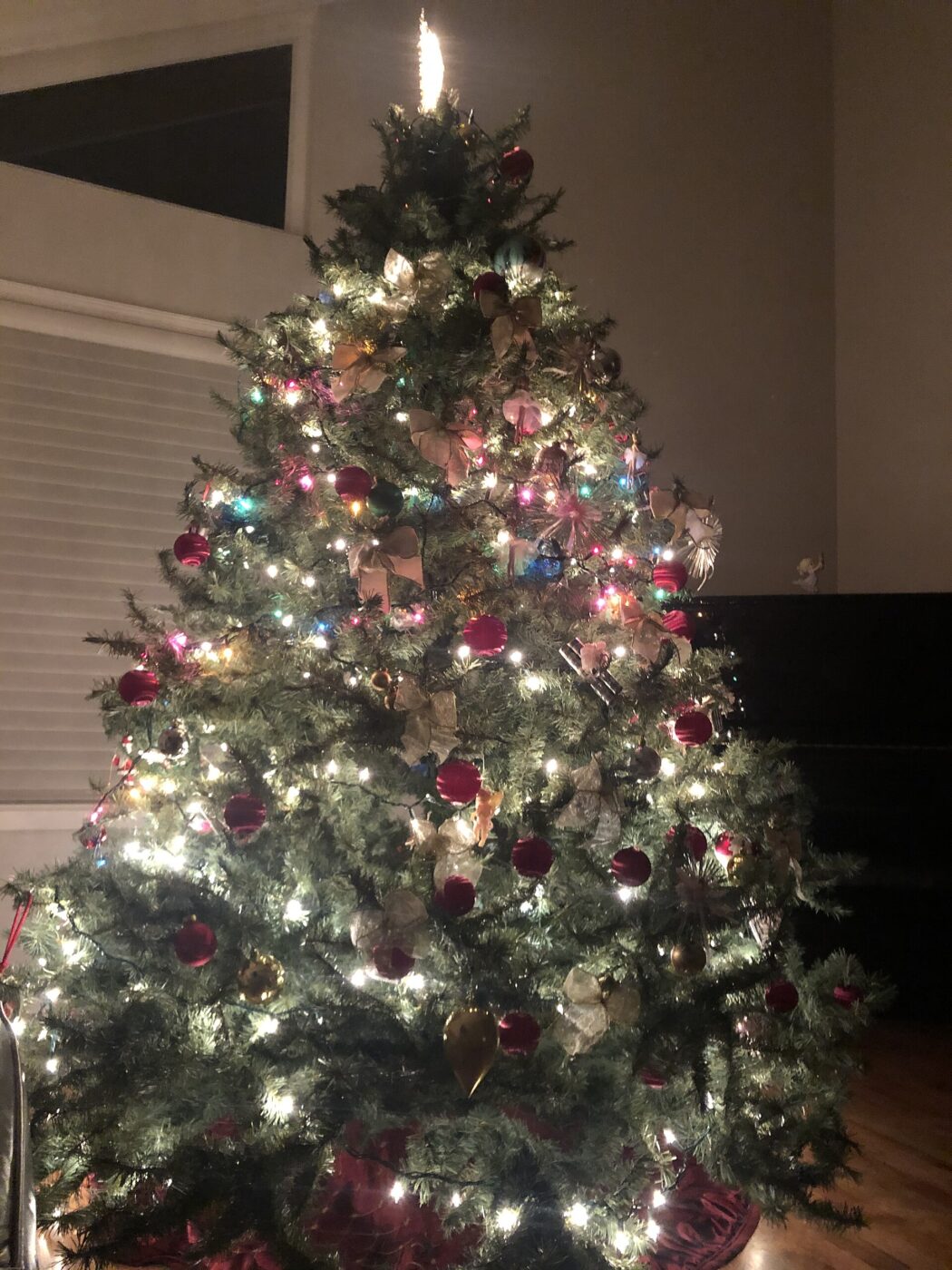
LED strings behave differently. The DOE notes that LED strands do not typically use shunts, and that when an LED fails it typically short-circuits, creating a path of lesser resistance, so a single failure is less likely to take its neighbors down with it. Some LED trees also run from a low-voltage adapter, but designs vary, so the manual is the guide.
ENERGY STAR says certified decorative LED light strings have no moving parts, filaments or glass, making them more durable and shock-resistant than other strings, and that they are cool to the touch, reducing the risk of fire. It says certified strings use about 92 percent less energy than conventional incandescent strings and come with a manufacturer warranty of at least three years. Not every LED tree carries that certification, so treat the label, not the word LED, as the evidence.
Incandescent trees give a warm color some people prefer and bulbs that are easy to replace, but they are the design most exposed to the dark-section problem. Warm-white LEDs have narrowed the color gap, and trees with switchable warm and multicolor modes add a controller that can fail on its own.
| Feature | Incandescent pre-lit | LED pre-lit |
|---|---|---|
| Failure behavior | Series sections rely on shunts | LEDs typically fail short, not open |
| Heat | Bulbs run warm | Certified strings are cool to the touch |
| Durability | Glass bulbs and filaments | No filament or glass |
| Energy use | Higher | Far lower |
| Repairs | Bulbs replaceable, loose bulbs common | Bulbs often not user-replaceable |
Buying and storing a pre-lit tree
Look for a recognized testing-lab listing on the tree’s lighting and, as CPSC advises for artificial trees, a Fire Resistant label. Fire resistant is not the same as fireproof, and the tree still belongs well away from heaters, candles and fireplaces.
Storage decides whether the lights survive to next season. Crushing branches into a small box bends wires at the sockets and loosens bulbs, which are precisely the faults that darken sections. Fold branches gently, keep sections loosely packed in a tree storage bag, and store the tree somewhere dry and away from temperature extremes.
Before packing, switch the tree on one last time and note any dark sections, so repairs happen in the off-season rather than on the first weekend of December. Keep spare bulbs and fuses in a labeled bag with the tree.
Test the lights before you pack the tree away, not when you unpack it. A known fault in January is an easy job; an unknown one in December is a scramble.
The shortlist
Paid links: we earn a commission if you buy through the buttons below, at no extra cost to you. As an Amazon Associate I earn from qualifying purchases.
Compared on repairability and lifespan
| Product type | Best for | Risk estimate | Where to buy |
|---|---|---|---|
| LED Pre-Lit Artificial Christmas Tree (7.5 ft) | Longer-lasting lights | 40/100 | See listings on Amazon |
| Mini Light Tester and Shunt Repair Tool | Reviving dark sections | 30/100 | See listings on Amazon |
| Artificial Christmas Tree Storage Bag | Protecting wires in storage | 15/100 | See listings on Amazon |
Risk estimate is our editorial Fear Index for the product type (lower is safer), not a customer rating. How it is scored. The buttons open Amazon search results rather than one listing, so check the model on the product page.
LED Pre-Lit Artificial Christmas Tree (7.5 ft)
Choose a listed tree with a Fire Resistant label, and read what the warranty covers for the lights.
- LEDs typically fail without darkening neighbors
- Cool-running lights
- Lower energy use
- Bulbs often not replaceable
- Controllers can fail separately
Mini Light Tester and Shunt Repair Tool
Worth owning for an incandescent tree. Follow the tool instructions, and retire sets with damaged wires.
- Finds the break faster
- Can activate stuck shunts
- Checks bulbs and fuses
- Cannot fix damaged wiring
- Little use on LED trees
More: Holiday and Seasonal analyses and how the Fear Index is scored.
Questions people actually ask
Why is one section of my pre-lit tree not working?
Each section is a series circuit, so a loose, broken or missing bulb, a failed shunt, a blown plug fuse or a poorly seated pole connection can darken it.
How do you fix a pre-lit Christmas tree with lights out?
Unplug it, check the fuses and pole connections, reseat and replace bulbs in the dark section, and use a light tester to locate the break if needed.
Are LED pre-lit trees better than incandescent?
LEDs run cooler, use far less energy and are more durable. The DOE notes a failed LED typically short-circuits, so it is less likely to darken a section.
How should you store a pre-lit Christmas tree?
Fold branches gently, avoid crushing sections into a small box, and store it somewhere dry. Test the lights before packing so faults are found early.