
Home Shredders Overheat Because the Duty Cycle Is Measured in Minutes
Most home shredders run a few minutes before a long cool-down. Security level P-4 or higher is what actually protects documents.

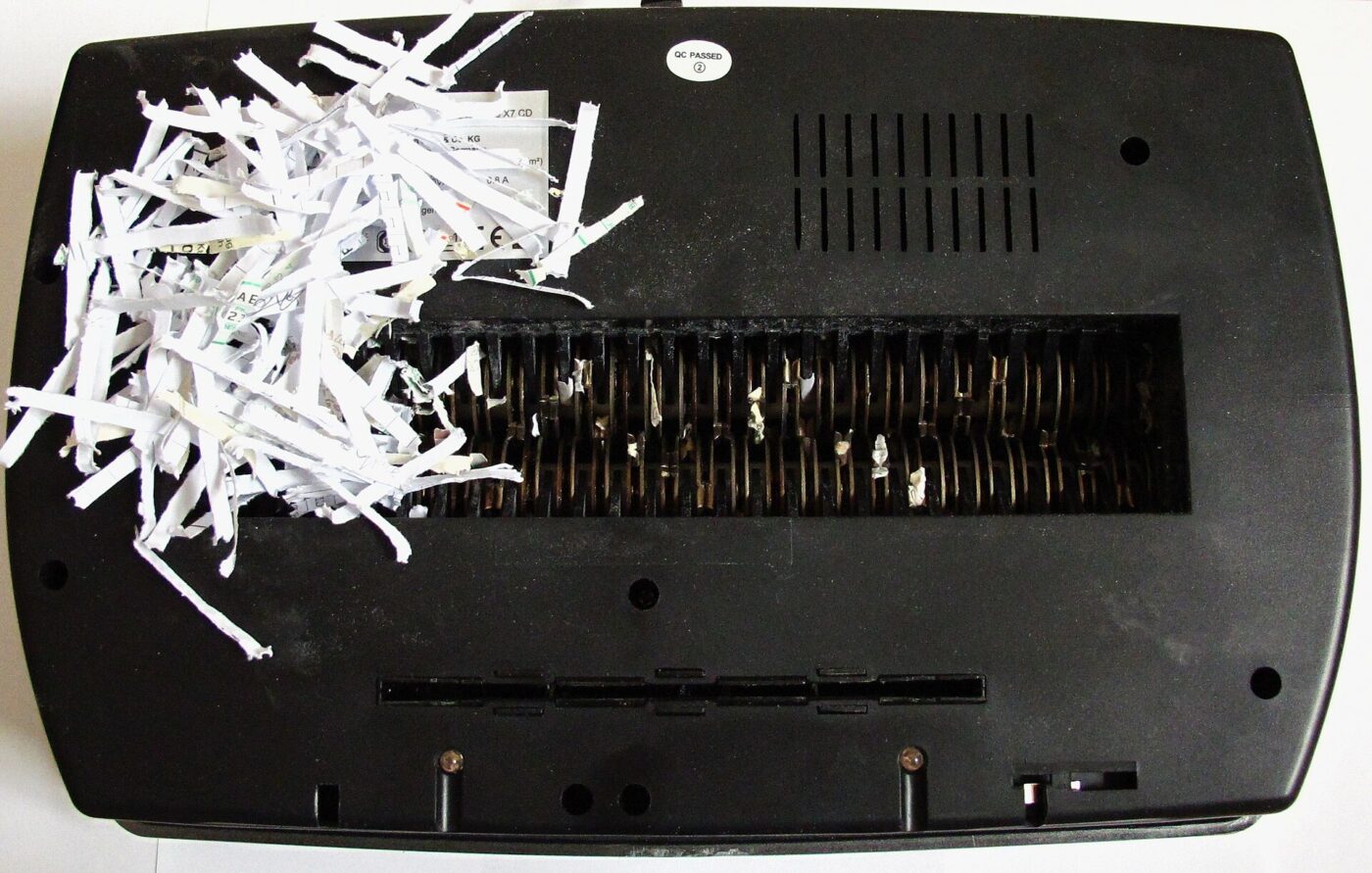
Shredders are compared on how many sheets they take at once. That number matters less than a figure usually printed small: how long the motor runs before it must stop.
Many home shredders run for a few minutes and then need a cool-down several times longer. Clearing a box of old statements becomes an evening of waiting.
Fear Index · Think twice
Capacity quoted per pass, not per session
A strip-cut shredder offers little real protection, and a cheap cross-cut one that overheats every few minutes turns clearing a filing cabinet into days.
Run time against cool-down
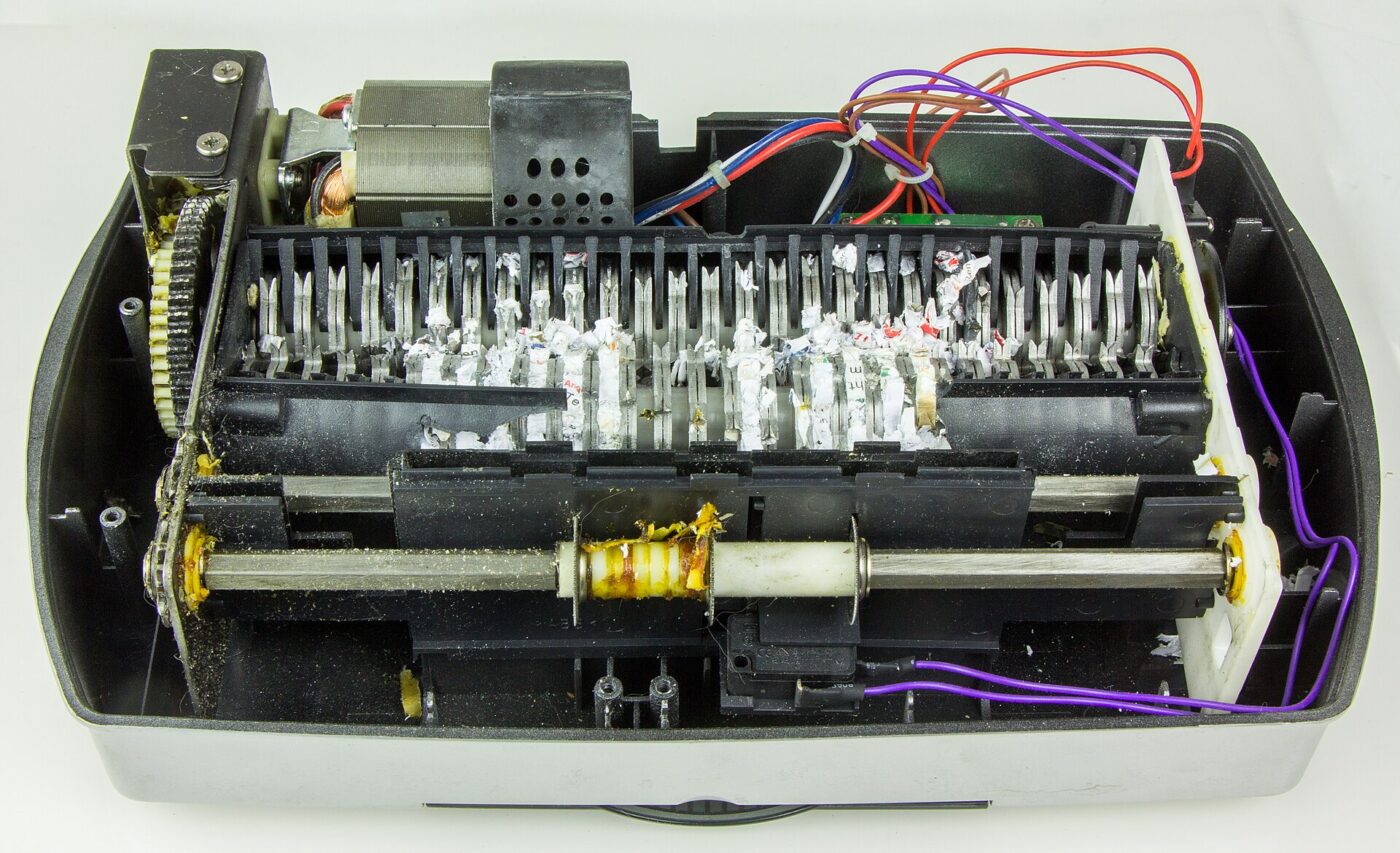
The duty cycle describes continuous running time followed by required rest. A thermal cut-out enforces it — the shredder simply stops when hot.
| Class | Typical run | Typical cool-down | Suits |
|---|---|---|---|
| Personal | 2–5 minutes | 30–60 minutes | Mail as it arrives |
| Home office | 10–20 minutes | 20–40 minutes | Regular paperwork |
| Small office | 30–60+ minutes | Short or continuous | Backlogs, shared use |
If you are buying to clear years of paperwork, buy for run time. Or use a shredding service once for the backlog and a small shredder for daily mail.
Security levels, and why strip-cut is not enough
The DIN 66399 standard, now also published internationally as ISO/IEC 21964, grades shredders from P-1 to P-7 by particle size.
Strip-cut shredders produce long ribbons that can be reassembled with patience. Cross-cut produces short confetti-like pieces. Micro-cut produces tiny particles.
For bank statements, tax documents and anything with account numbers, P-4 (cross-cut, small particles) is a sensible minimum. P-5 and above suits highly confidential material.
- Finer cuts mean smaller capacity and more frequent bin emptying.
- Credit cards and CDs need a shredder rated for them.
- Staples and paper clips are tolerated by many, but they blunt cutters.
Keeping it running
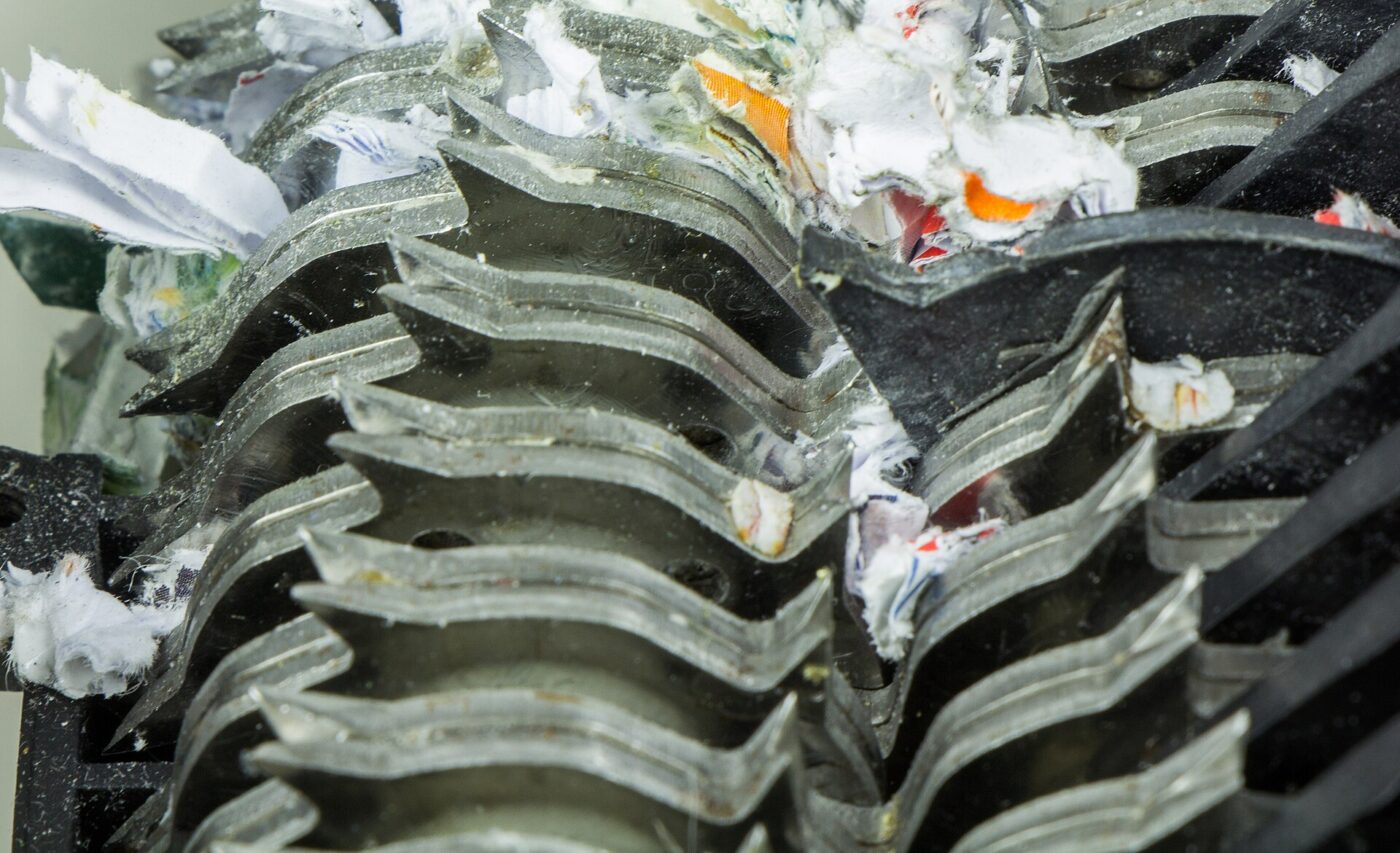
Cutters need lubrication. Without it, friction rises, the motor works harder, the thermal cut-out trips sooner and jams become frequent.
Shredder oil or lubricant sheets fed through every few bin-fulls restore performance noticeably. Use only products made for shredders — Fellowes warns that aerosol or petroleum-based lubricants such as WD-40 can create a fire hazard in a machine that already runs hot around paper dust.
Feed below the maximum sheet count too. Running at the limit is what trips thermal protection and causes jams.
What actually needs shredding
Not everything needs the shredder. The FTC’s guidance is to shred anything carrying an account number, Social Security number or signature once you no longer need the paper copy — bank and credit card statements, canceled checks after about two weeks, expired cards, and old tax records past the retention period.
Junk mail with just a name and address is a lower priority than mail with an account number, though many households shred both out of habit. The account-number test sorts a backlog faster than reading every page.
For a large one-time backlog, or anything from a business rather than a household, a bulk shredding service is often faster and cheaper than running a home shredder’s duty cycle for hours on end.
Sort into a “shred now” and “shred later” pile using the account-number test before turning the shredder on — that sort is what actually saves time, not a faster machine.
Noise, bin size and where it lives
Home shredders run loud enough to interrupt a phone call in the next room, and continuous-duty office models are louder still. Placing one in a closet or under a desk with the door shut is usually enough to make it tolerable.
Bin capacity and run time interact: a shredder that empties its bin exactly when it hits its cool-down point is more convenient than one that fills the bin halfway through a longer duty cycle, since you are not stopping mid-task to empty it anyway.
Check the bin capacity against the duty cycle, not just against sheet count — a bin that fills right as the motor needs a break wastes less of your time than one that does not.
The shortlist
Paid links: we earn a commission if you buy through the buttons below, at no extra cost to you. As an Amazon Associate I earn from qualifying purchases.
Compared on duty cycle and security
| Product type | Best for | Risk estimate | Where to buy |
|---|---|---|---|
| Micro-Cut Shredder (P-4) | Occasional home use | 26/100 | See listings on AmazonOpens Amazon search results, not one listing: check the model on the product page. |
| Continuous-Duty Office Shredder | Clearing large backlogs | 22/100 | See listings on AmazonOpens Amazon search results, not one listing: check the model on the product page. |
| Shredder Lubricant Sheets | Keeping it running | 8/100 | See listings on AmazonOpens Amazon search results, not one listing: check the model on the product page. |
Risk estimate is our editorial Fear Index for the product type (lower is safer), not a customer rating. How it is scored.
Micro-Cut Shredder (P-4)
The security level worth having at home. Compare duty cycles across models, since sheet capacity alone misleads.
- P-4 security suits financial documents
- Compact for a home office
- Handles daily mail easily
- Short run time on budget models
- Bin fills quickly
Shredder Lubricant Sheets
If your shredder jams or cuts out quickly, try this before replacing it.
- Reduces friction and jams
- Lets the motor run longer before cutting out
- Takes seconds
- Easy to forget
- Needs repeating regularly
More: Office and Study analyses and how the Fear Index is scored.
Questions people actually ask
Why does my shredder keep stopping?
The thermal cut-out has tripped because the motor exceeded its duty cycle. Many home shredders run only a few minutes before needing a long cool-down.
What shredder security level do I need at home?
P-4 (small cross-cut particles) is a sensible minimum for bank and tax documents. Strip-cut shredding can be reassembled.
Do shredders need oiling?
Yes. Lubricating the cutters with shredder oil or lubricant sheets every few bin-fulls reduces jams and lets the motor run longer.
Is cross-cut or micro-cut better?
Micro-cut produces smaller particles and more security, but lower capacity. Cross-cut at P-4 is a good balance for most households.