
The Temperature on a Sleeping Bag Is Not the Temperature You Sleep In
The number on a sleeping bag is usually the limit rating, where a standard man sleeps curled up. The comfort rating is often about 10°F warmer.

Sleeping bags are sold with a single temperature on the label. It looks like a promise about the coldest night the bag handles. It is not.
Under ISO 23537, which replaced the older EN 13537 in 2017, a bag is tested with a heated manikin and reported as three numbers — and the one shops print is rarely the one that describes sleeping comfortably.
Fear Index · High risk
A survival figure printed as a comfort promise
Getting this wrong is not an inconvenience. A cold night out is genuinely dangerous, and the error is built into how the product is labelled.
Two numbers, and shops quote the flattering one
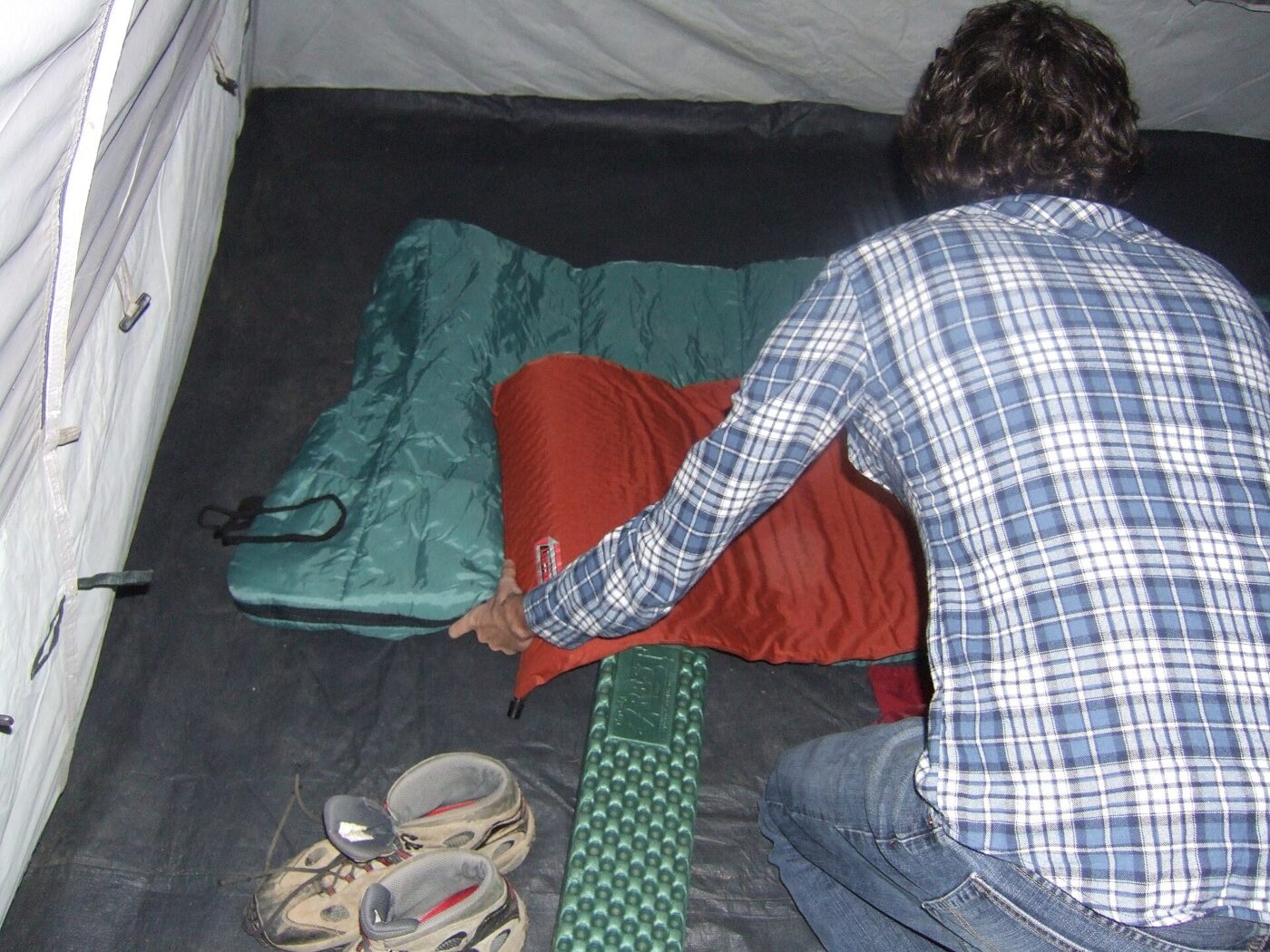
The standard produces a comfort rating, a limit rating and an extreme rating. Only the first two are useful, and the third should be treated as a survival figure rather than a specification.
| Rating | Means | Use it if |
|---|---|---|
| Comfort | A standard woman sleeps comfortably, relaxed | You are a cold sleeper, or female |
| Limit | A standard man sleeps curled up, just warm enough | You are a warm sleeper, and experienced |
| Extreme | Survival for six hours, with risk of hypothermia | Never — it is not a usable figure |
A bag sold as a “30°F” bag is usually quoting the limit. Its comfort rating is more like 40°F. If the forecast low is 35°F, that bag will be a cold night.
The pad matters as much as the bag
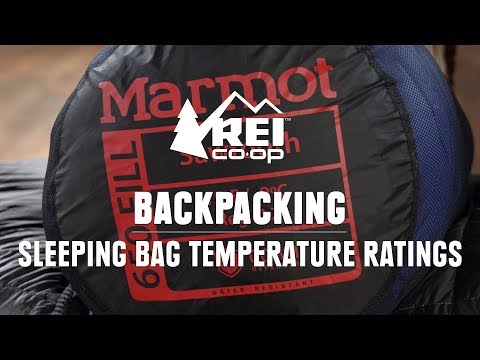
Insulation works by trapping air. Underneath you, your body weight crushes the bag’s fill flat, and crushed fill insulates almost nothing. Whatever is under you is doing that job instead.
Sleeping pads are rated by R-value: higher resists more heat flow. A summer foam mat at R 2 under a winter bag is the classic mismatch, and it is why people wake cold in a bag they paid a lot for.
- R 1–2: summer only, above about 50°F.
- R 3–4: three-season. The sensible default.
- R 5+: winter and freezing ground.
- R-values add. A foam mat under an inflatable is a cheap way to reach winter numbers.
Down or synthetic, decided by damp
Down gives more warmth per gram and packs far smaller. Wet, it collapses and insulates almost nothing, and it dries slowly.
Synthetic is heavier and bulkier for the same warmth, and keeps insulating when damp. In a wet climate, or in a tent that condenses, that reliability is often worth the extra weight.
Hydrophobic down sits between the two. It buys time in damp conditions rather than immunity.
Fill power — how many cubic inches an ounce of down loafts to — is a separate, independently tested number from the temperature rating. Two bags with the same comfort rating can use very different amounts of down depending on fill power; the temperature figure already accounts for that, so it is not a number you need to shop on separately unless you care about pack weight for a given warmth.
Reading the label correctly
ISO 23537 requires the three ratings to appear as a labeled bar or scale on the bag, with a stated warning below the extreme figure. If a listing shows only one number with no comfort/limit breakdown, treat it as the limit rating until proven otherwise — it is the one manufacturers print unlabeled most often.
- Look for “Comfort” and “Limit” printed separately, usually on a hang tag or sewn-in label, each in °F or °C.
- If only one number is given, assume it is the limit rating and subtract roughly 10°F for a realistic comfort estimate.
- Never plan around the extreme rating. It marks the point where hypothermia becomes a real risk, not a usable sleeping temperature.
The shortlist
Paid links: we earn a commission if you buy through the buttons below, at no extra cost to you. As an Amazon Associate I earn from qualifying purchases.
Compared on what temperature you will sleep at
| Product type | Best for | Risk estimate | Where to buy |
|---|---|---|---|
| Three-Season Sleeping Bag | Three-season backpacking | 38/100 | See listings on AmazonOpens Amazon search results, not one listing: check the model on the product page. |
| Rectangular Summer Sleeping Bag | Car camping in summer | 30/100 | See listings on AmazonOpens Amazon search results, not one listing: check the model on the product page. |
| Insulated Sleeping Pad, R-value 4 | The half nobody budgets for | 26/100 | See listings on AmazonOpens Amazon search results, not one listing: check the model on the product page. |
Risk estimate is our editorial Fear Index for the product type (lower is safer), not a customer rating. How it is scored.
Insulated Sleeping Pad, R-value 4
Buy the pad before upgrading the bag. Under your body the bag’s fill is crushed flat and doing almost nothing.
- Insulates where the bag cannot
- R-values stack with a foam mat
- Comfort improves sleep as much as warmth
- Inflatables can puncture
- Good ones cost as much as a bag
Three-Season Sleeping Bag
Read the comfort rating on the label and ignore the name of the bag. The gap between them is often around 10°F.
- Covers spring to fall in most climates
- Mummy shape traps heat efficiently
- Wide range of fills and prices
- Marketed on the limit rating
- Mummy shape is restrictive for some
More: Outdoors and Fitness analyses and how the Fear Index is scored.
Questions people actually ask
What does the temperature rating on a sleeping bag mean?
Usually the limit rating: the temperature at which a standard adult man sleeps curled up and just warm enough. The comfort rating, typically about 10°F higher, describes sleeping comfortably.
Should women use the comfort or limit rating?
The comfort rating. The standard defines it around a woman sleeping relaxed, and it is also the right figure for anyone who sleeps cold.
What R-value sleeping pad do I need?
R 3–4 for three-season use, R 5 or more for freezing ground, R 1–2 for summer only. Values add, so a foam mat under an inflatable is a cheap way to gain warmth.
Is down or synthetic better for a sleeping bag?
Down is warmer per gram and packs smaller but fails when wet. Synthetic keeps insulating damp. In a wet climate the weight penalty is usually worth it.
Is the extreme rating on a sleeping bag the same as the survival temperature?
Close to it. ISO 23537 defines the extreme rating as the point where hypothermia becomes a real risk, not a temperature to plan a night around. Buy and use a bag based on its comfort or limit rating instead.