
Test a Stroller Fold With a Bag in One Hand, Because That Is How You Will Do It
Showroom tests happen with two free hands and no child. Real folds happen in a parking lot while holding a baby. Buy for that moment.

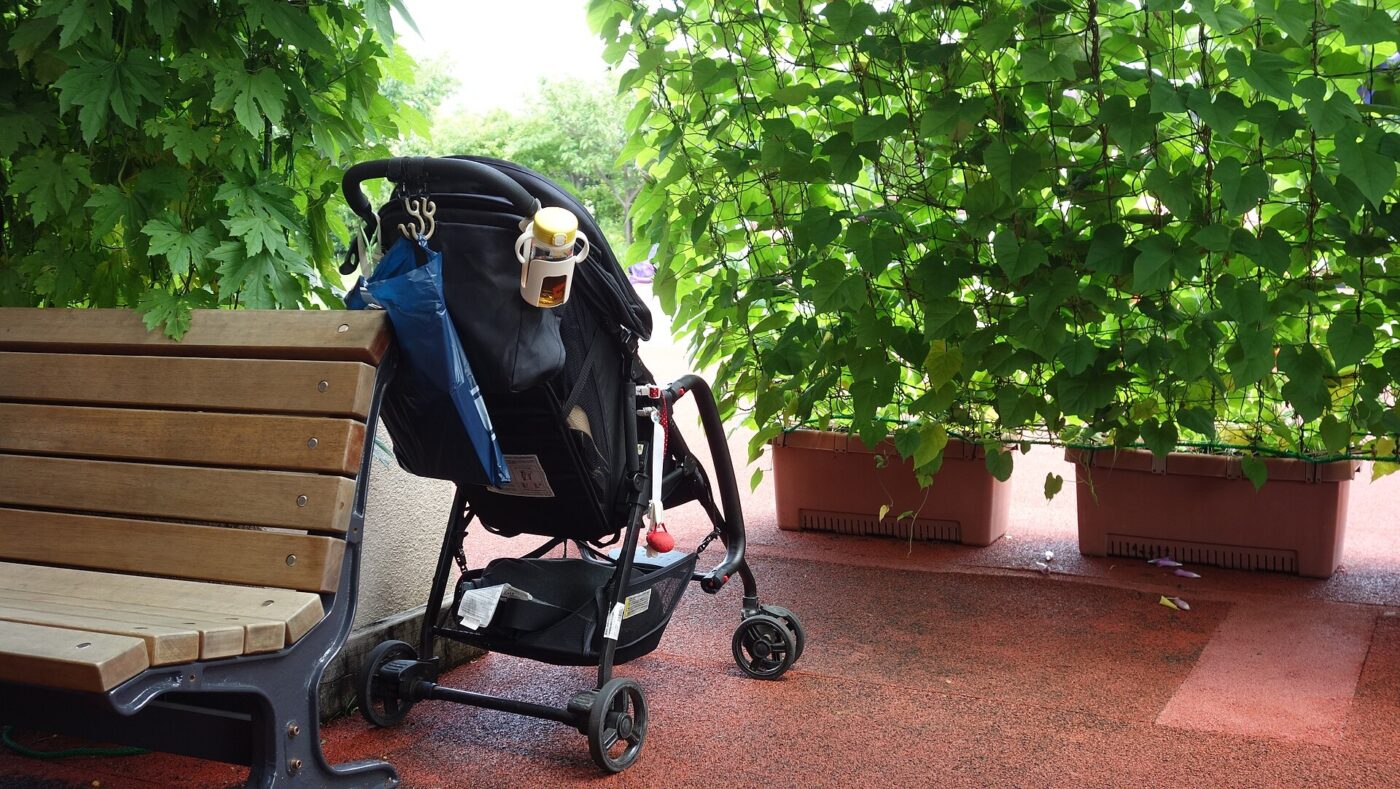
Strollers are tested in showrooms, on smooth floors, by parents with both hands free and no child. Almost none of that resembles using one.
The real test happens beside a car in the rain, with a baby on one arm, and it is the fold.
Fear Index · Think twice
Chosen for the shop floor, used in the parking lot
An expensive stroller that does not fit the trunk, or needs two hands to fold, is used grudgingly or replaced within a year.
The fold is the daily test
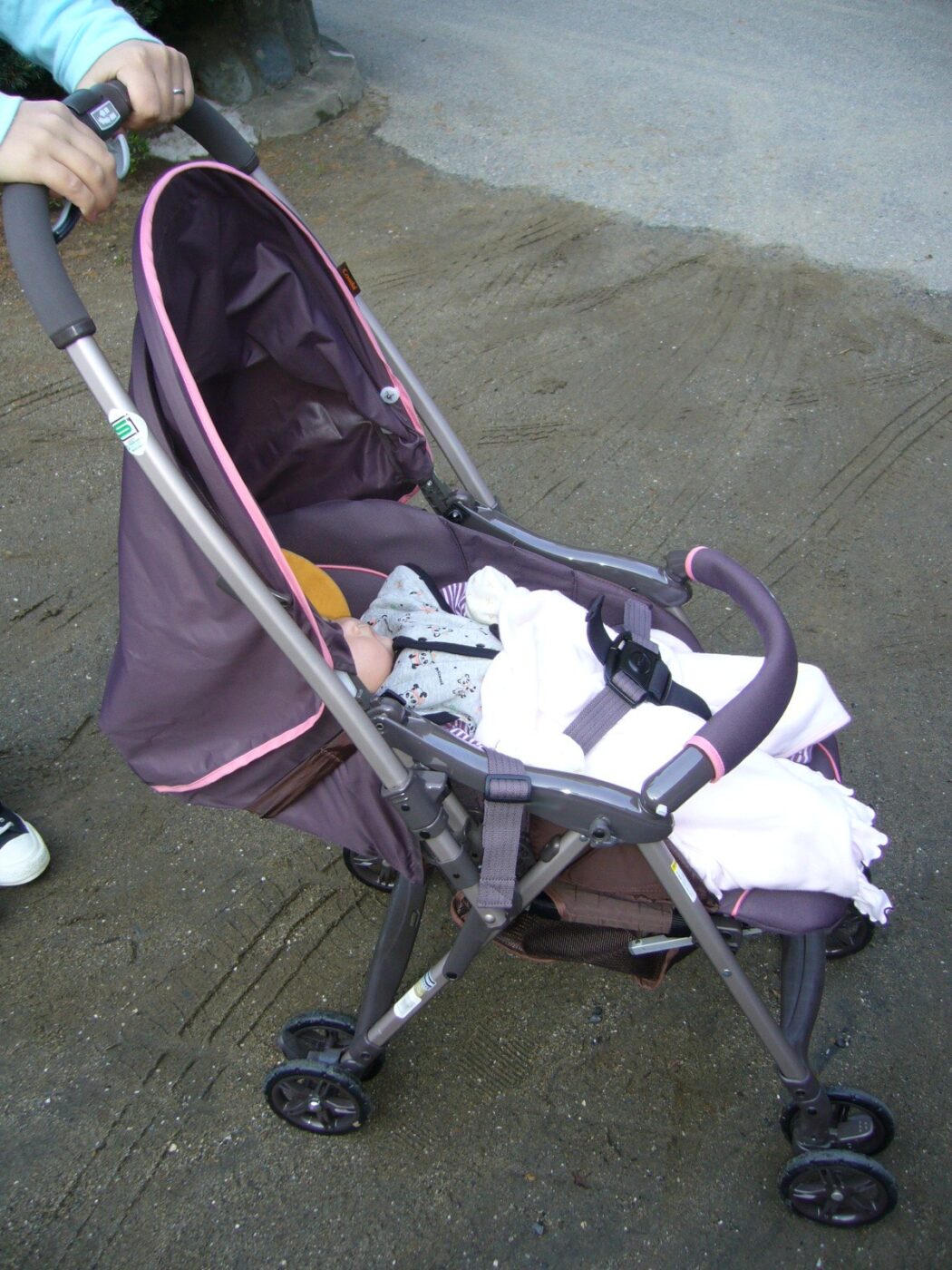
You will fold and unfold a stroller thousands of times. A fold that needs two hands, a kick and a second latch becomes a real irritation when the other arm is holding a child.
In the shop, hold something heavy — a bag, a coat full of books — against your hip and fold it with the other hand. Then unfold it the same way. If you cannot, that is the answer.
Check too whether it stands on its own when folded. A stroller that falls over in a hallway or an elevator is a constant nuisance.
Measure the trunk before going shopping, and take the measurement with you. Folded dimensions are the specification that rules out the most options.
Weight, wheels and where you walk
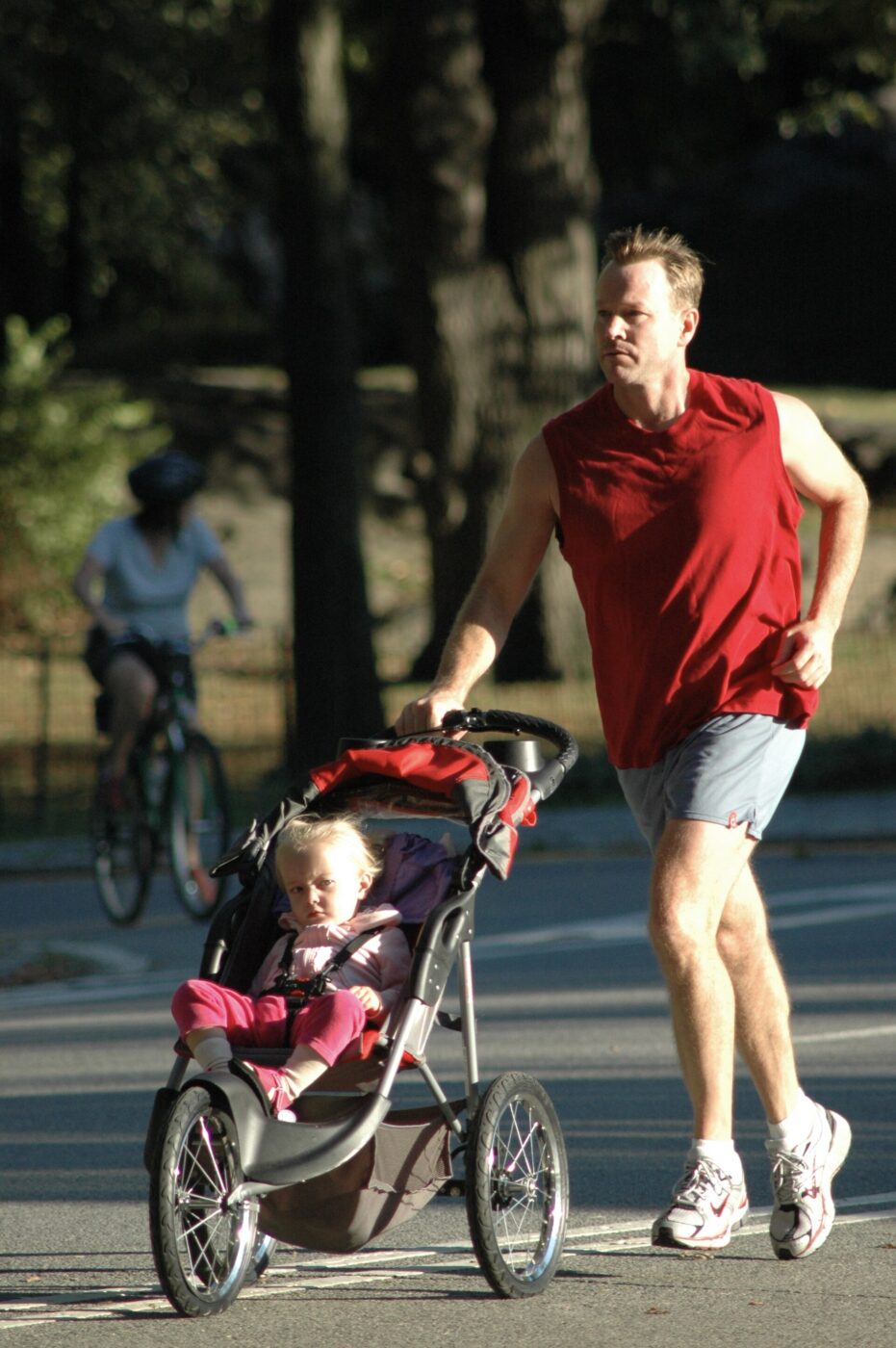
Big air-filled or foam wheels and proper suspension genuinely help on gravel, grass and broken pavements. They also add weight and bulk.
| Type | Typical weight | Suits |
|---|---|---|
| Full-size travel system | 22–31 lb | Suburbs, car-based, first months |
| All-terrain | 24–33 lb | Countryside, parks, rough paths |
| Compact / travel | 11–18 lb | Cities, public transport, flights |
Travel systems and the second stroller

A travel system pairs a stroller frame with an infant car seat that clicks on. For the first months it means moving a sleeping baby from car to frame without waking them, which is useful for short trips. The American Academy of Pediatrics advises against routine sleep in car seats and strollers; a baby who falls asleep in one should be moved to a firm, flat sleep surface as soon as it is safe and practical.
The pattern many families report is that the large system is outgrown in practice by about the first birthday, when a light compact stroller becomes the one they actually use.
If budget matters, a mid-range frame plus a later compact stroller often serves better than one premium system meant to do everything.
- Check handlebar height adjusts, particularly if parents differ in height.
- Check the basket is reachable when the seat is reclined.
- Check the brake operates with a sandal or bare foot.
- Lie-flat seat is widely recommended for young babies who cannot yet sit unsupported.
Safety standards and checking for recalls
US strollers must meet the CPSC’s mandatory standard, 16 CFR Part 1227, which incorporates ASTM F833. It sets requirements for the restraint system, stability and braking, wheel retention, and protection against head entrapment and finger pinch points on hinges and latches.
A Children’s Product Certificate showing compliance should ship with the stroller, and registering the product with the manufacturer means a recall notice reaches you directly rather than by chance months later.
Secondhand strollers and hand-me-downs are worth checking against open recalls before use. Latches, frame welds and the folding hinge are the parts most likely to fail with age, and a worn latch is exactly the kind of defect a recall exists to catch.
- Check the 5-point harness locks positively and cannot be undone by a wriggling toddler.
- Check wheels and swivels do not detach when pulled firmly by hand.
- Look for the permanent label naming the manufacturer, model and manufacture date — you need it to look up a recall.
Search the model name at cpsc.gov/Recalls before buying used, and register a new stroller so the manufacturer can reach you directly if a defect turns up later.
The shortlist
Paid links: we earn a commission if you buy through the buttons below, at no extra cost to you. As an Amazon Associate I earn from qualifying purchases.
Compared on daily usability
| Product type | Best for | Risk estimate | Where to buy |
|---|---|---|---|
| Compact Travel Stroller | City and public transport | 26/100 | See listings on AmazonOpens Amazon search results, not one listing: check the model on the product page. |
| Travel System with Infant Car Seat | Newborns and car-based families | 40/100 | See listings on AmazonOpens Amazon search results, not one listing: check the model on the product page. |
| All-Terrain Stroller | Gravel, grass and rough paths | 34/100 | See listings on AmazonOpens Amazon search results, not one listing: check the model on the product page. |
Risk estimate is our editorial Fear Index for the product type (lower is safer), not a customer rating. How it is scored.
Compact Travel Stroller
Test the fold with a bag in your hand. For city life this is often the stroller that ends up doing most of the miles.
- Genuine one-hand fold
- Fits small trunks and overhead bins
- Light enough to carry up stairs
- Small wheels struggle on rough ground
- Less suited to very young babies
Travel System with Infant Car Seat
Useful early on. Measure the trunk first, and expect to add a compact stroller later.
- Moves a sleeping baby from car to frame
- Lie-flat options for newborns
- Comfortable ride
- Heavy and bulky
- Folded size rules out small trunks
More: Baby & Kids analyses and how the Fear Index is scored.
Questions people actually ask
What should I look for when buying a stroller?
A fold you can do one-handed, folded dimensions that fit your car trunk, a weight you can lift, and wheels suited to where you walk. A lie-flat seat for young babies.
Is a travel system worth it?
For the first months, clicking a sleeping baby from car to frame is useful, though the AAP advises moving a sleeping baby to a flat surface when it is safe to do so. Many families switch to a compact stroller around the first birthday.
How heavy should a stroller be?
For city use and public transport, compact models at 11–18 lb are far easier. Full-size and all-terrain models at 22–33 lb suit car-based and countryside use.
Do I need an all-terrain stroller?
Only if you regularly use gravel, grass or rough paths. On pavements the extra weight and bulk rarely pay off.