
Electronic Drums Are Quiet in Your Headphones and Loud Through the Floor Below
An electronic kit silences the cymbals and snare, but kick and stick impacts still travel through the stand into the floor below. What actually cuts that noise.

On this page 6 sections
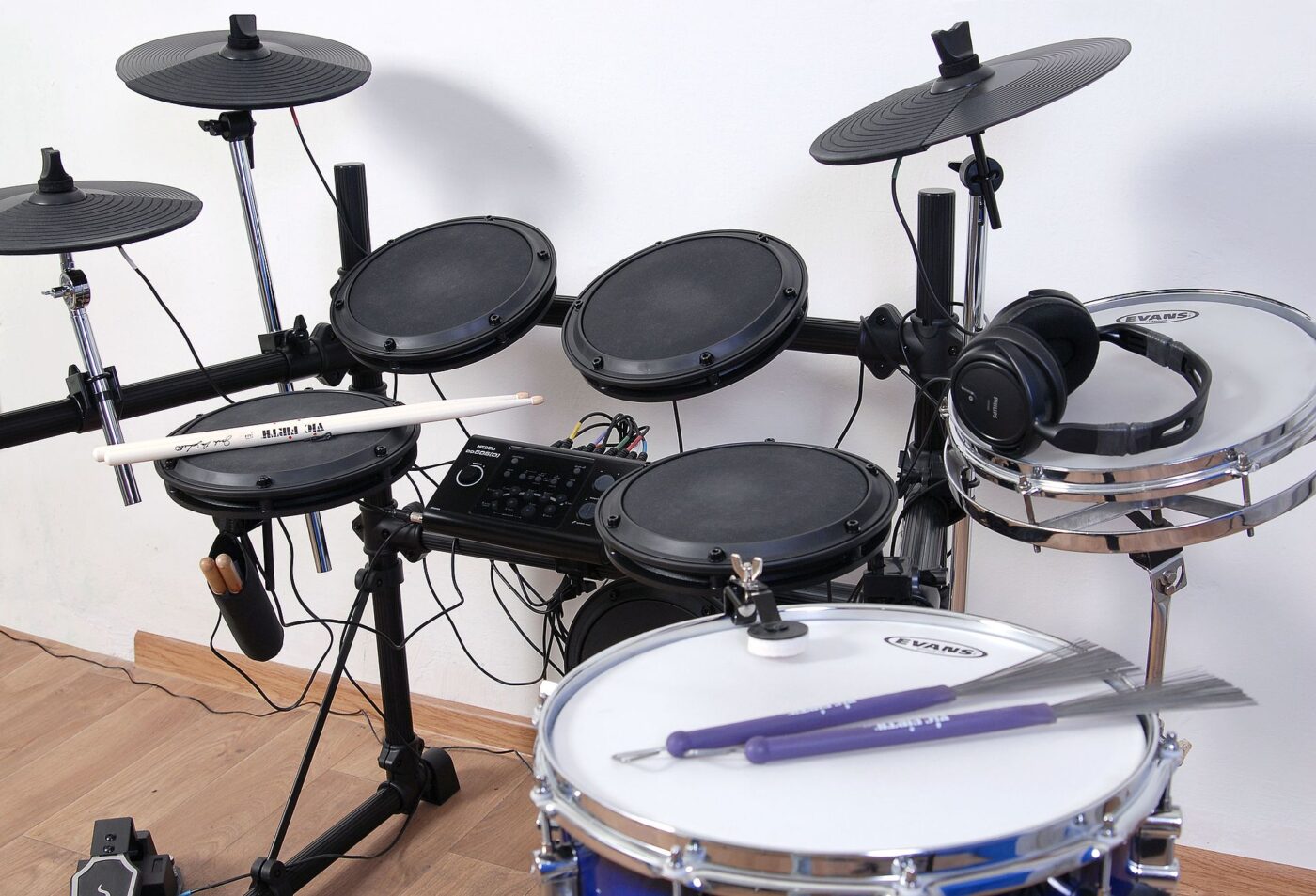
An electronic drum kit through headphones sounds almost silent to the person playing it. Downstairs, in the apartment below, it can still sound like someone dropping something rhythmically on the floor.
The mismatch is not a defect. Mesh heads and a headphone jack solve the airborne noise — the cymbal crash, the snare crack — that a neighbor across the hall would notice. They do almost nothing about the noise that never leaves the frame: the vibration a kick pedal and stick impact send straight down through the stand and into the floor.
Fear Index · Think twice
Quiet to the drummer, audible to everyone downstairs
Roland’s own test data credits its isolation pads and V-Drums Quiet Design kits with about a 75 percent cut in playing noise and floor-transmitted vibration — a reduction, not a guarantee of silence.
Airborne noise vs the noise that travels through the floor
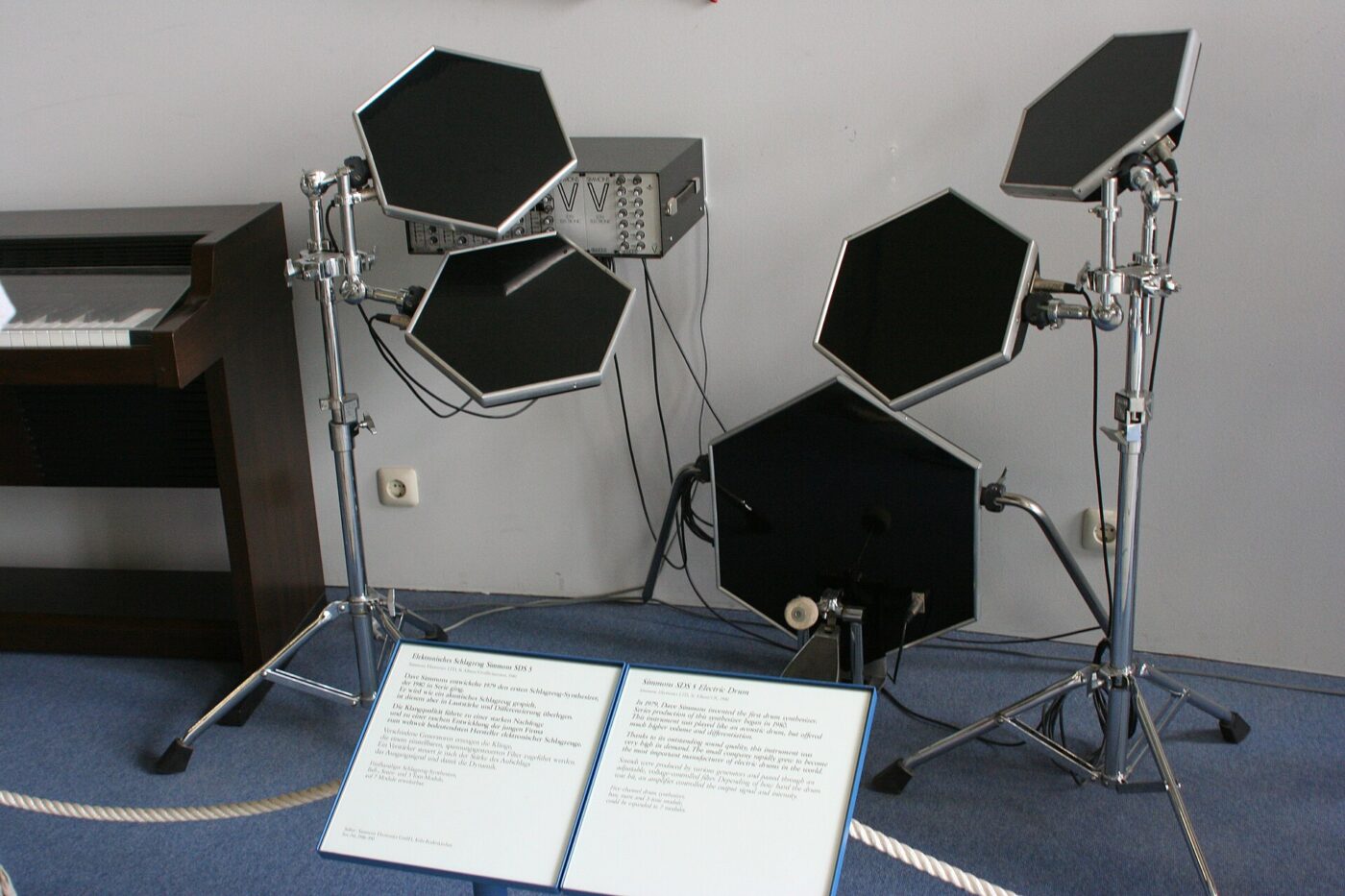
An electronic kit produces two separate kinds of noise. Airborne noise is the sound that travels through the air — a cymbal crash, a snare crack — and it is largely what mesh heads, rubber cymbal pads and a headphone jack are built to replace. Structure-borne noise is vibration that travels through a solid path: the stand’s legs and the kick pedal’s baseplate, straight into the floor, which then radiates as sound in the room below.
Roland builds its own isolation hardware around exactly that distinction, targeting the kick and hi-hat pedal bases specifically, because those two components make the most direct, repeated contact with the floor. That is also why a kit can feel completely quiet to the player and still generate complaints downstairs: the player only hears the airborne path, never the structure-borne one, and turning the module’s volume down does nothing for a noise that never traveled through the air in the first place.
Turning the module down does nothing for a noise that never traveled through the air in the first place.
Mesh heads, rubber pads and why the kick pedal is the loudest part

Mesh drum heads and rubber cymbal pads cut the airborne crack of a stick strike compared with older rubber-only pads. Roland’s Quiet Design pads go further, adding a noise-absorbing honeycomb rubber insert under the mesh with strategically placed vents to dissipate air pressure, and isolating the pad’s own plastic parts with rubber to cut internal vibration.
None of that addresses the kick pedal, the one part of an electronic kit that still involves a foot striking a beater against a surface, transmitted through a baseplate braced against the floor. Roland’s dedicated pedal bases, the NEQ-K and NEQ-H, exist specifically because a stand’s ordinary rubber feet were not enough on their own to contain that particular impact.
A quieter pad does not make a quieter kick pedal; they are different noise sources with different fixes.
Isolation risers and platforms: what they actually reduce
Roland’s NE-10 Noise Eater is a dedicated isolation board built for kick and hi-hat pedals, using dome-shaped rubber dampers. Roland states the product “reduces playing noise and vibration transfer through the floor to rooms below by approximately 75 percent, based on Roland test data,” when used under those pedals specifically.
Roland’s V-Drums Quiet Design kits build the same principle into the stand and pads from the start — hemispherical rubber feet on the stand, a floating-frame kick pad, and the same dedicated pedal bases — and the company credits the complete system with the same roughly 75 percent reduction in playing noise compared with a conventional V-Drums kit.
A generic foam or rubber riser under an entire kit works on the same decoupling principle, but a manufacturer’s own isolation hardware, built and tested for its specific kick and hi-hat bases, is the version with a stated, sourced reduction figure behind it.
Isolation gear reduces floor-transmitted noise; it is not marketed, even by Roland, as eliminating it.
Acoustic practice and the hearing-exposure limit electronic kits avoid
NIOSH’s recommended exposure limit for noise is 85 A-weighted decibels averaged over an eight-hour workday, with the safe exposure time cut in half for every additional 3 dBA above that limit. CDC lists everyday activities capable of causing noise-induced hearing loss over time or from a single exposure, including power tools, concerts and other close-range loud sound.
An acoustic kit, played up close during practice, belongs in that same conversation — loud enough, repeatedly, at close range, to be a hearing-exposure question in a way a mesh-head kit through headphones at a moderate volume is not. Switching to electronic pads removes that specific risk along with the floor-noise question, though headphone volume itself still needs the same moderation.
An electronic kit trades one risk for a more manageable one: a headphone volume knob instead of an acoustic kit’s exposure at the source.
Musician earplugs vs foam plugs
For anyone still practicing on an acoustic kit, or playing in a full band, hearing protection is the direct answer to NIOSH’s exposure limit. Musician earplugs are designed to lower overall volume without muffling the sound as unevenly as standard foam plugs, which cut high frequencies more than low ones and can make it harder to hear timing and pitch cues clearly.
Foam plugs are cheaper and still reduce exposure; the tradeoff is a duller, less balanced sound that some drummers find makes it harder to play with a band rather than alone. For a child’s headphone practice specifically, the safe-volume question is a different one from a drummer’s hearing exposure; our guide to safe headphone volume for kids covers that separately.
Either type of plug lowers exposure. Musician plugs are built to do it without changing what the music sounds like as much.
The shortlist
Paid links: we earn a commission if you buy through the buttons below, at no extra cost to you. As an Amazon Associate I earn from qualifying purchases.
Compared on what actually cuts floor noise
| Product type | Best for | Risk estimate | Where to buy |
|---|---|---|---|
| Electronic Drum Set With Mesh Heads | A kit built with mesh heads from the start | 24/100 | See listings on AmazonOpens Amazon search results, not one listing: check the model on the product page. |
| Drum Isolation Riser Platform | Isolating the kick and hi-hat under an existing kit | 15/100 | See listings on AmazonOpens Amazon search results, not one listing: check the model on the product page. |
| High-Fidelity Musician Earplugs | Hearing protection for acoustic practice sessions | 10/100 | See listings on AmazonOpens Amazon search results, not one listing: check the model on the product page. |
Risk estimate is our editorial Fear Index for the product type (lower is safer), not a customer rating. How it is scored.
Drum Isolation Riser Platform
Roland states its own isolation hardware cuts playing noise and floor vibration transfer by about 75 percent based on its own test data.
- Isolates the kick and hi-hat contact points
- Works under an existing kit, no rebuild needed
- Manufacturer hardware states a tested reduction
- Adds height and footprint under the kit
- Does not touch airborne cymbal or module sound
High-Fidelity Musician Earplugs
NIOSH’s recommended exposure limit is 85 dBA over an eight-hour day; acoustic practice at close range is exactly the kind of exposure that limit is meant to catch.
- Lowers volume without muffling pitch and timing cues
- Reusable, unlike disposable foam plugs
- Fits the moments an electronic kit does not replace
- Costs more than foam plugs
- Does not address floor noise at all
More: Music and Instruments analyses and how the Fear Index is scored.
Questions people actually ask
Why can neighbors still hear my electronic drums?
Mesh heads and headphones solve the airborne sound — the crack of a stick strike — but the kick pedal and stick impacts still transmit vibration through the stand into the floor, a separate noise path an isolation riser addresses.
Do drum isolation risers actually work?
Roland states its NE-10 isolation hardware, and the isolation built into its V-Drums Quiet Design kits, reduce playing noise and floor-transmitted vibration by about 75 percent based on its own test data — a real cut, not a guarantee of silence.
Is an electronic drum kit safer for my hearing than an acoustic one?
For the kit itself, yes: playing through headphones at a moderate volume avoids the close-range exposure an acoustic kit produces, which can exceed NIOSH’s 85-decibel recommended exposure limit during a normal practice session.
What is the difference between musician earplugs and foam earplugs?
Musician earplugs are designed to lower overall volume more evenly, while standard foam plugs cut high frequencies more than low ones, which can muffle timing and pitch cues more noticeably.
Does a drum riser fix cymbal and module noise too?
No. An isolation riser targets the kick pedal and hi-hat base specifically, where most floor-transmitted vibration originates; it does not change how loud the module or pads sound through the air.