
A Baritone Ukulele Is Tuned Like a Guitar, So Standard Ukulele Chord Charts Will Not Match
Soprano, concert and tenor ukuleles share one tuning, but a baritone is tuned like a guitar’s top four strings, so standard chord charts will not match it.

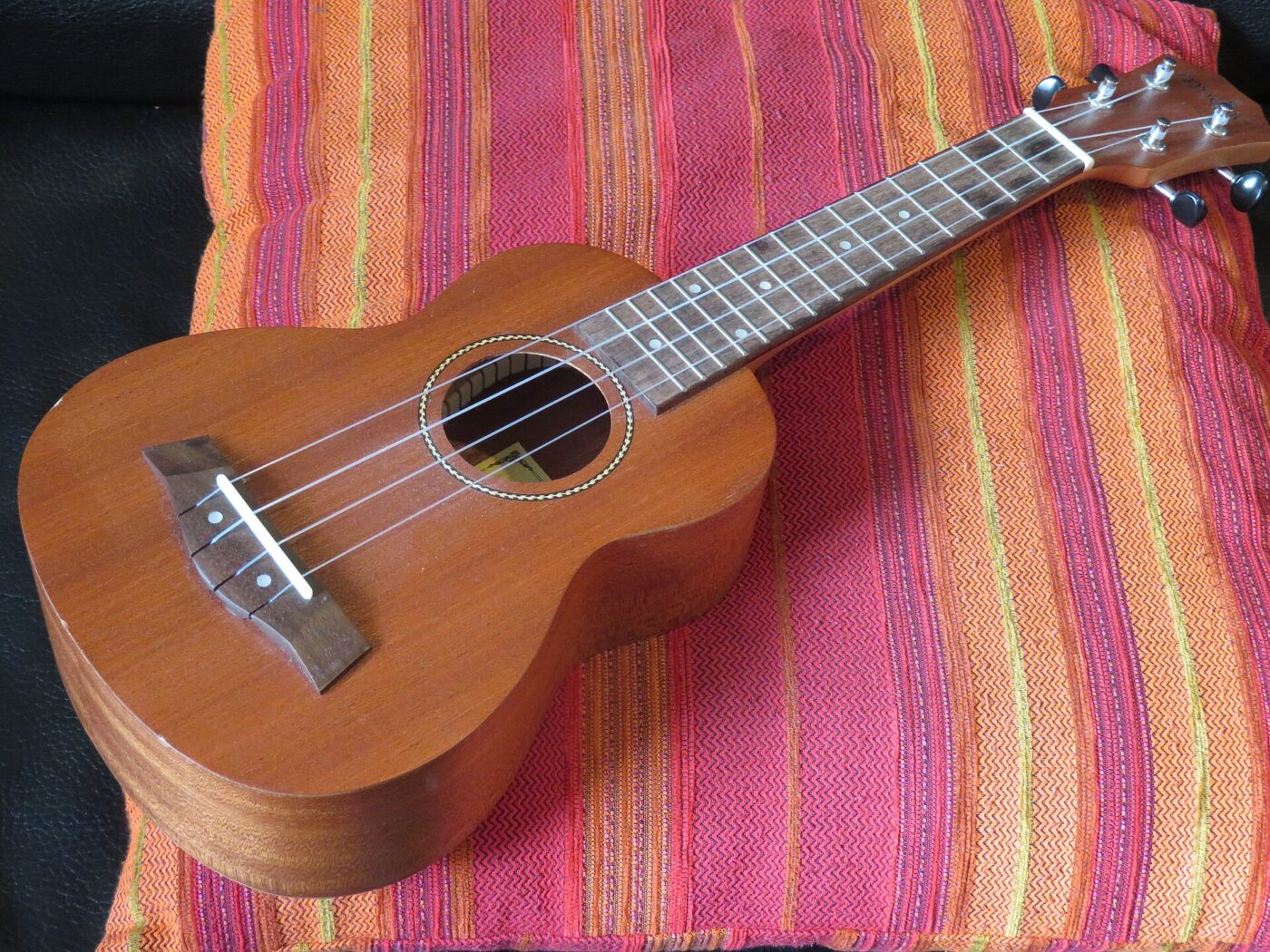
A ukulele shopping page lists four sizes side by side as if they were just steps up in volume, and for three of them that is close to true. Soprano, concert and tenor ukuleles share the same GCEA tuning and mostly differ in scale length, fret spacing and how loud they play.
The baritone breaks that pattern. It is tuned DGBE — the same notes as the top four strings of a guitar — so a chord chart, songbook or class handout written for a standard ukulele produces the wrong notes when played on a baritone exactly as written.
Fear Index · Low risk
A ukulele that plays different chords than the book says
Kala’s own tuning guide puts the gap at two and a half steps — about five frets — between standard GCEA tuning and a baritone’s DGBE, enough that a standard chord chart produces the wrong notes on a baritone.
The four sizes: scale length and fret spacing
Kala’s own size guide lays out the progression: soprano has the shortest scale length, concert runs about an inch longer, tenor is about two inches longer than concert, and baritone is the longest of the four, about three inches longer than tenor.
That longer scale mostly changes fret spacing and volume rather than tuning. A soprano’s tightly spaced frets suit small hands and a quieter, classic tone; a tenor’s wider spacing and larger body give more room for adult fingers and more projection, all while staying in the same GCEA tuning as a soprano.
Standard GCEA vs baritone DGBE tuning
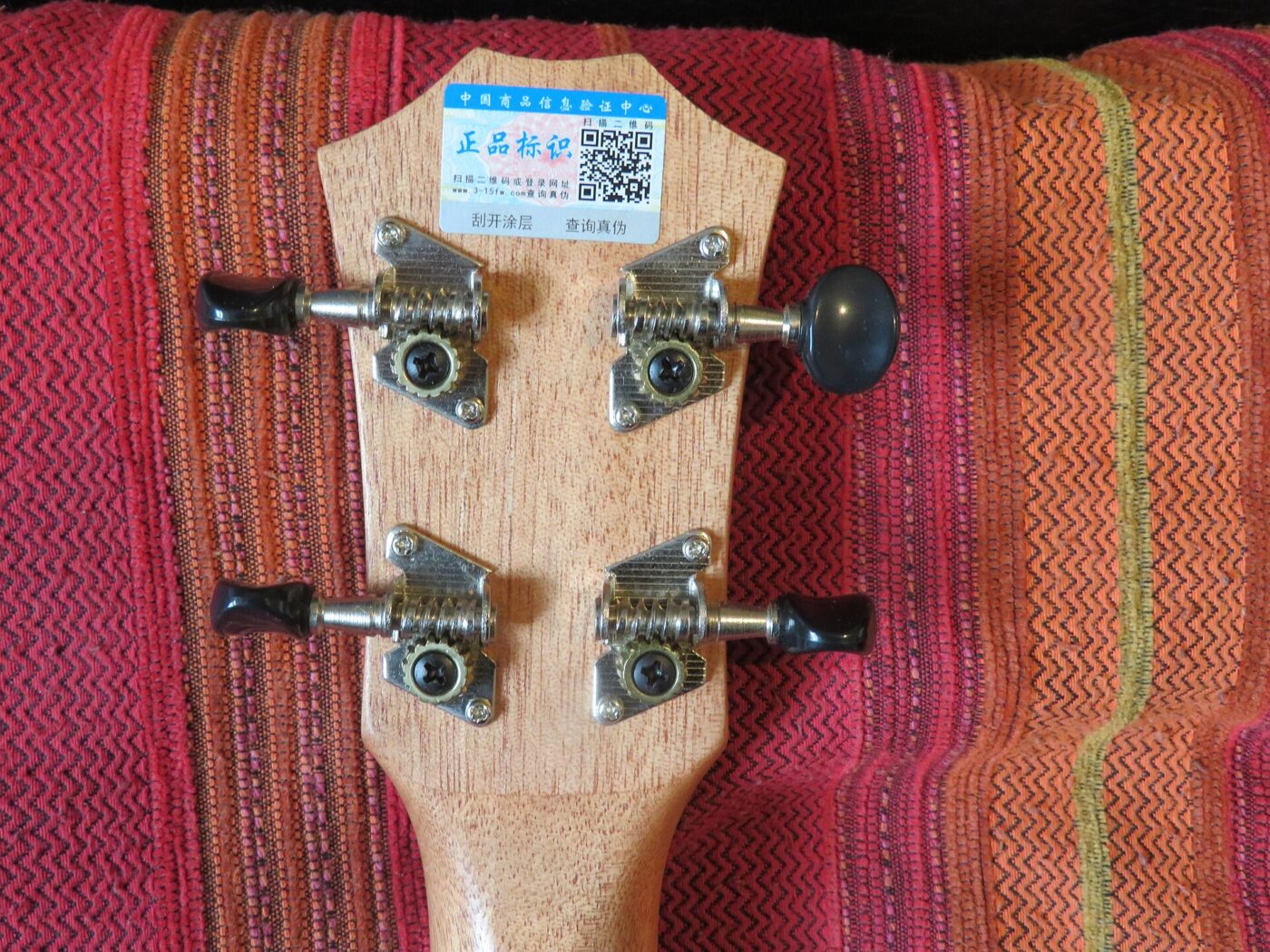
Soprano, concert and tenor ukuleles are all tuned G, C, E, A. D’Addario’s own product guidance describes the layout in playing position: the G string sits closest to the player’s face and the A string closest to the feet, with C and E in between.
A baritone is tuned D, G, B, E instead — Kala’s baritone guide describes it as the same notes as the four highest strings on a guitar, which is why a guitarist often finds a baritone easier to pick up than a standard-tuned ukulele. String manufacturer Aquila’s technical data confirms the split: soprano, concert and tenor models are strung for GCEA, and baritone models for DGBE.
Kala’s guide adds that the tuning gap is about two and a half steps, roughly five frets, and it offers two workarounds for playing from a standard chord chart on a baritone: a capo on the fifth fret, or manually barring chords five frets higher. Its longer-term recommendation is to learn the baritone’s own chord voicings rather than lean on either workaround indefinitely.
A capo on the fifth fret makes a baritone play like a standard-tuned ukulele on paper; without it, a standard chord chart is written for the wrong instrument.
Low-G, high-G and string choices

Low-G and high-G refer only to the fourth string, available on soprano, concert and tenor sizes. High-G uses a thin string tuned above the C string, the bright, re-entrant sound most people associate with a ukulele; low-G swaps in a thicker, wound string tuned an octave lower, extending the range downward instead.
Aquila’s own gauge and tension data shows the physical difference: on a concert-size set, the high-G fourth string measures 0.67mm at 4.15kg of tension, while the low-G version steps up to 0.70mm and 4.40kg — a heavier string needed to hold pitch at the lower note.
Neither option is right or wrong. High-G keeps the traditional jangly ukulele voice; low-G suits fingerstyle and melody playing that benefits from a lower range, and either can be restrung on the same soprano, concert or tenor instrument.
Laminate vs solid tops at beginner prices
Most beginner-priced ukuleles use a laminate top — thin layers of wood pressed together — which resists humidity and temperature swings better than a single solid piece of wood and keeps the price down. A solid top can offer richer resonance as it ages, but it also needs more care around humidity and typically costs more at any given size.
The tradeoff shows up in a different instrument, too: our guide to setting up a beginner guitar covers the same laminate-versus-solid question and the string-height problems that make a cheap instrument harder to play than it needs to be.
Checking action and intonation on arrival
A new ukulele is worth checking before assuming a problem is the player’s fault. Press each string down near the first few frets and again around the 12th fret; it should take modest pressure and produce a clean note, not a buzz or an unusually stiff press. That gap between the string and the fretboard is called action, and excess action is a common reason a cheap instrument feels harder to play than it should.
New strings, especially the fluorocarbon and nylon strings common on ukuleles, stretch during their first days of use and go out of tune repeatedly while they settle. That is a normal break-in period, not a defect, and it is worth retuning several times over the first week rather than assuming the instrument cannot hold a tuning.
A ukulele that will not hold a tuning in the first week is usually just breaking in new strings, not a defect — give it a few days of retuning before assuming otherwise.
The shortlist
Paid links: we earn a commission if you buy through the buttons below, at no extra cost to you. As an Amazon Associate I earn from qualifying purchases.
Compared on getting the size and tuning right
| Product type | Best for | Risk estimate | Where to buy |
|---|---|---|---|
| Concert Ukulele with Gig Bag | A standard first size | 10/100 | See listings on AmazonOpens Amazon search results, not one listing: check the model on the product page. |
| Tenor Ukulele with Solid Top | More room to grow into | 12/100 | See listings on AmazonOpens Amazon search results, not one listing: check the model on the product page. |
| Replacement Ukulele Strings (High-G or Low-G) | Matching strings to the tuning | 5/100 | See listings on AmazonOpens Amazon search results, not one listing: check the model on the product page. |
Risk estimate is our editorial Fear Index for the product type (lower is safer), not a customer rating. How it is scored.
Concert Ukulele with Gig Bag
Concert sits between soprano and tenor in scale length, without leaving the standard GCEA tuning most songbooks assume.
- Same GCEA tuning as soprano and tenor
- Wider fret spacing than a soprano
- Common size for classroom sets
- Less volume than a tenor
- Still needs setup checked on arrival
Tenor Ukulele with Solid Top
A tenor keeps the same GCEA tuning as a concert or soprano while adding scale length, which is the usual reason players size up rather than switch tunings.
- Longer scale length adds volume
- Wider fret spacing for bigger hands
- Solid top common at this size
- Costs more than a laminate soprano
- Bulkier to carry than a soprano
More: Music and Instruments analyses and how the Fear Index is scored.
Questions people actually ask
Are soprano, concert and tenor ukuleles tuned the same?
Yes. All three use standard GCEA tuning, per manufacturer size guides such as Kala’s; they differ mainly in scale length, fret spacing and volume, not tuning.
Why is a baritone ukulele different?
A baritone is tuned DGBE, the same notes as the top four strings of a guitar. Kala’s guide puts the gap at roughly five frets below standard tuning, so a standard ukulele chord chart does not produce the right notes on it.
What is the difference between low-G and high-G tuning?
It changes only the fourth string. High-G uses a thin string tuned above the C string, the traditional re-entrant ukulele sound; low-G uses a thicker, wound string tuned an octave lower, extending the range downward, per string manufacturer Aquila’s technical data.
Can I play standard ukulele songs on a baritone?
With a capo on the fifth fret, or by barring chords five frets higher, a baritone can approximate standard tuning, according to Kala’s baritone guide; long term, it recommends learning the baritone’s own chord voicings instead.
How do I check a new ukulele’s setup?
Press each string down near the first few frets and at the 12th fret to check it does not buzz or take excess effort, and expect new strings to need several days of retuning as they stretch in.