
IPX4 Covers Splashes, Not a Shower: What the IP Digits Promise for Earbuds and Speakers
Apple rates some AirPods IPX4 and says they are not for swimming or showering. What the IEC 60529 digits cover, and why warranties exclude liquid.

Part of the guide: Tech and Audio Buying Mistakes: What Fails and How to Check Before You Buy
IPX4 is the rating most gym earbuds carry, and the one most often read as a license to keep them in during a shower. The maker usually settles that directly. Apple’s support page for its IPX4 models says the earbuds are sweat and water resistant but “are not waterproof or sweatproof,” and “aren’t designed for use in water sports like swimming, or for showering.”
Behind the label is a classification standard about enclosures, not a promise about a routine. The IP Code gives a device two digits, one for solid objects and one for water, and the water digit stops behaving like a simple ladder above 6. Then a second document decides what a mistake costs: the rating describes a test, and the warranty describes who pays.
Fear Index · Think twice
A splash rating read as a swim rating
The failure is undramatic and uninsured: a rating earned against splashes gets treated as a shower rating, and Apple states that sweat, water and dust resistance are not permanent conditions and can diminish over time.
What the two IP digits actually describe
The standard behind every IP label is IEC 60529, “Degrees of protection provided by enclosures (IP Code).” The IEC catalog lists the consolidated version as IEC 60529:1989+A1:1999+A2:2013, edition 2.2, dated 2013-08-29, applying to the classification of degrees of protection provided by enclosures for electrical equipment.
NEMA’s published guide to enclosure types sets out the characters: “The first characteristic numeral indicates the degree of protection provided by the enclosure with respect to persons and solid foreign objects entering the enclosure. The second characteristic numeral indicates the degree of protection provided by the enclosure with respect to the harmful ingress of water.” On a label written IPX4 the first position is simply not stated, which is the difference between Apple’s IPX4 and IP54 ratings for different AirPods models.
The same guide is useful for what the standard does not do. IEC 60529, it notes, “does not specify degrees of protection against mechanical damage of equipment, risk of explosions, or conditions such as moisture (produced for example by condensation), corrosive vapors, fungus, or vermin.”
The first digit is solids, the second is water, and an X means that position was not stated. Neither digit covers corrosion, condensation or being dropped.
Why an immersion rating does not cover a shower

Ratings look cumulative, and up to a point they are. NEMA’s guide states that IEC 60529 requires an enclosure carrying a second characteristic numeral to comply with all lower degrees of protection up to and including numeral 6. Then the ladder breaks: “An enclosure designated with a second characteristic numeral 7 or 8 only is considered unsuitable for exposure to water jets (designated by second characteristic numeral 5 or 6) and need not comply with requirements for numeral 5 or 6 unless it is dual coded.”
That sentence explains the shower question. A device rated for immersion has been classified against still water, and unless it is dual coded it is not classified against pressurized spray at all. A shower head is spray, and Apple’s instruction for its own earbuds matches: do not place them under running water, such as a shower or faucet.
Pool and ocean water add a second gap, because the published figures are fresh-water figures. Apple rates its IP57 AirPods models to a maximum depth of 1 meter for up to 30 minutes. Sonos says the Roam “has an IP rating of IP67, meaning it can be submerged at a depth of up to 3 ft (1 m) for a short period of time,” and separately does not recommend exposing the speaker to salt water.
What the makers say about their own ratings
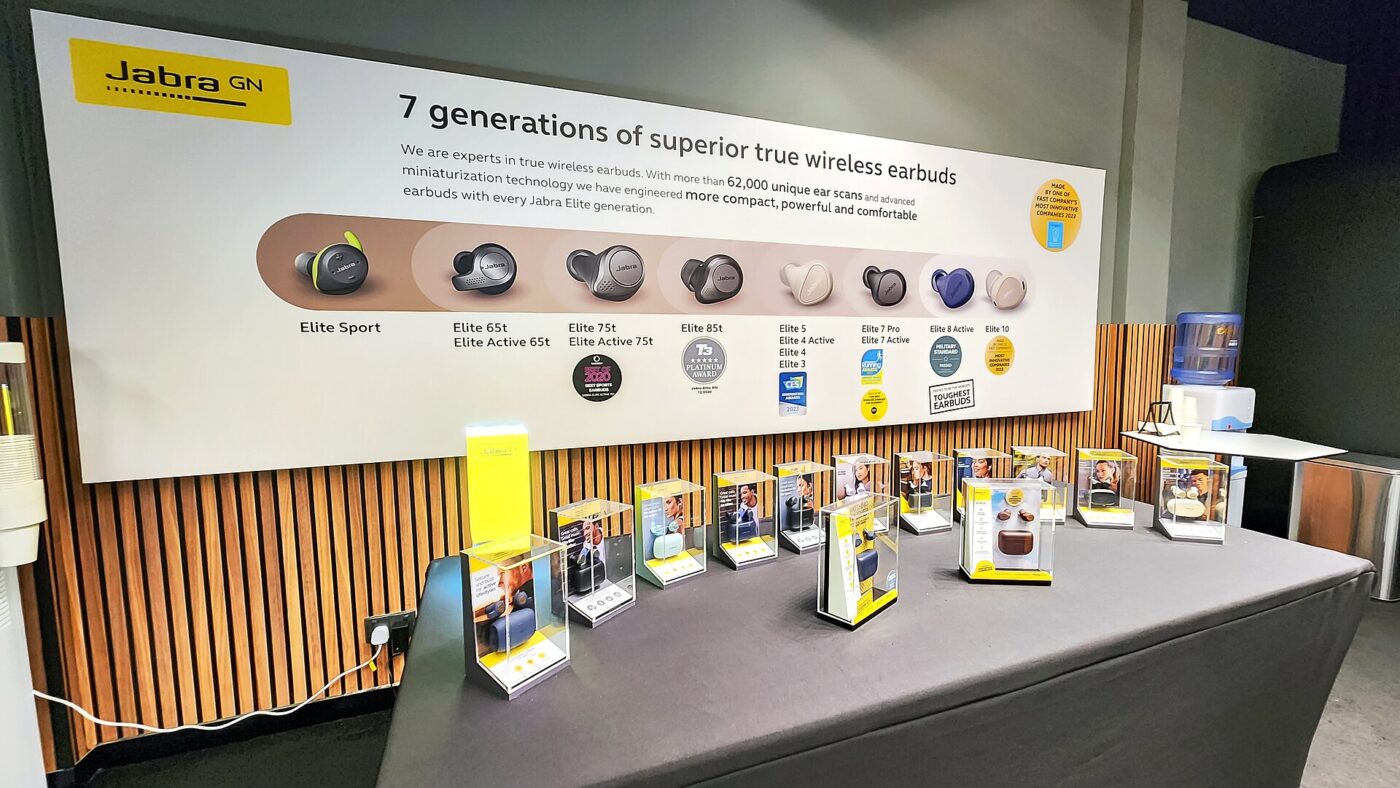
The useful detail sits on the maker’s own water-resistance page rather than the retail listing, and three themes repeat: the rating is per model, the case or charger often has a different rating, and the protection is described as something that fades.
Apple is explicit on the last point: “Sweat, water, and dust resistance aren’t permanent conditions and can diminish over time.” It tells owners who get them wet to wipe them with a dry, lint-free cloth and let them dry completely, for at least two hours, before use or before putting them in the charging case. For AirPods Pro 1 it notes that the MagSafe Charging Case and Wireless Charging Case “are not water resistant or sweat resistant” even though the earbuds are.
| Device | Published rating | What the maker says to avoid |
|---|---|---|
| AirPods Pro 1 and AirPods 3, Apple | IPX4 under IEC 60529 | Swimming, showering, running water from a shower or faucet |
| AirPods Pro 3 and AirPods 5, Apple | IP57, maximum depth 1 m up to 30 minutes | Resistance can diminish; dry at least two hours before use |
| Roam portable speaker, Sonos | IP67, submerged to about 1 m briefly | Salt water, long-term outdoor exposure, outdoor use of the charger |
| Apple Watch Series 2 and later, Apple | 50 meters under ISO 22810:2010 | Scuba diving and water skiing, plus soap, shampoo and sunscreen |
The warranty is a separate document
A rating classifies an enclosure design. A warranty is a contract about failures, and liquid is commonly named as an exclusion. Apple’s U.S. one-year limited warranty for its iOS hardware, in the version dated January 19, 2024 to present and checked on October 14, 2026, states that it does not apply “to damage caused by accident, abuse, misuse, fire, liquid contact, earthquake or other external cause.”
Read against the same company’s rating pages, that is consistent rather than contradictory: the rating says what a new, undamaged unit was classified to withstand, while the warranty declines to insure water ingress as a defect. Apple’s note that resistance can diminish over time is the bridge between the two.
Accessories deserve their own look. Sonos says the Roam’s USB-C charging cable and wireless charger “are not weather resistant and should only be used indoors.” For watches, the mapping between meters, ISO ratings and real activities is its own subject, covered in our piece on watch water resistance ratings.
Assume water ingress is on you, and price the gear as a consumable if it will live in a gym bag or near a pool.
What to check before buying for the gym or the pool
Five checks settle most of it, and all five are answerable from the maker’s own pages before anything is spent.
- Find the rating for the exact model and generation, since Apple lists IPX4, IP54 and IP57 across AirPods models that look alike.
- Check the case and charger separately: Apple rates two AirPods Pro 1 cases as not water resistant, and Sonos rates the Roam charger for indoor use only.
- Read the depth and time, not just the digits. Apple gives 1 meter for up to 30 minutes for IP57.
- Treat salt and soapy water as outside the rating; Sonos advises against salt water, and Apple warns that soap, shampoo, perfume and sunscreen can affect seals.
- For lap swimming, buy gear sold for swimming rather than a splash-rated set.
Match the rating to the wettest thing you will actually do, then add the drying rule: Apple says at least two hours before use or charging.
The shortlist
Paid links: we earn a commission if you buy through the buttons below, at no extra cost to you. As an Amazon Associate I earn from qualifying purchases.
Compared on published water ratings
| Product type | Best for | Risk estimate | Where to buy |
|---|---|---|---|
| Sport Earbuds Rated for Brief Immersion | Gym sessions and rain | 26/100 | See listings on Amazon |
| IP67 Portable Bluetooth Speaker | Patio and poolside | 24/100 | See listings on Amazon |
| Bone-Conduction Headphones Sold for Swimming | Lap swimming | 20/100 | See listings on Amazon |
Risk estimate is our editorial Fear Index for the product type (lower is safer), not a customer rating. How it is scored. The buttons open Amazon search results rather than one listing, so check the model on the product page.
Sport Earbuds Rated for Brief Immersion
A stated pair of digits beats an IPX label because the first position is answered rather than skipped. NEMA still notes that a 7 in the water position alone is considered unsuitable for water jets unless the device is dual coded.
- Water digit of 7 is an immersion classification
- Solids digit is stated rather than left as X
- Depth and time are published per model
- An immersion digit alone excludes water jets
- Apple says resistance can diminish over time
- Charging case may carry no rating at all
IP67 Portable Bluetooth Speaker
Sonos publishes the sort of detail worth copying as a checklist: IP67 for brief submersion to about 1 meter, no recommendation for salt water, and a charging cable that is not weather resistant.
- Sonos rates the Roam to about 1 m briefly
- Solids digit of 6 is stated on the label
- Can be used outdoors while in use
- Sonos advises against salt water exposure
- Charger and cable are indoor-only
- Not rated for long-term outdoor exposure
More: Tech and Audio analyses and how the Fear Index is scored.
Sources
- IEC 60529:1989+AMD1:1999+AMD2:2013 CSV, Degrees of protection provided by enclosures (IP Code) — IEC
- NEMA Enclosure Types — National Electrical Manufacturers Association
- About the sweat and water resistance of AirPods Pro, AirPods 3, AirPods 4, and AirPods 5 — Apple
- About Apple Watch water resistance — Apple
- Sonos Roam water and dust resistance — Sonos
- Apple One-Year Limited Warranty, iOS hardware, United States — Apple
Questions people actually ask
Are IPX4 earbuds OK for the shower?
The makers say no. Apple describes its IPX4 models as sweat and water resistant but not waterproof, says they are not designed for showering or swimming, and tells owners not to place them under running water such as a shower or faucet.
Can I swim in IP67 earbuds?
An IP67 rating is a still-water classification with a published depth and time, such as the 1 meter for up to 30 minutes Apple lists for its IP57 models. NEMA notes that a 7 in the water position alone is considered unsuitable for water jets unless the device is dual coded, so lap swimming wants gear sold for swimming.
Does an IP rating last for the life of the product?
Apple states that sweat, water and dust resistance are not permanent conditions and can diminish over time. NEMA also notes that IEC 60529 does not address mechanical damage or conditions such as condensation and corrosive vapors.
Is water damage covered by the warranty?
Usually not. Apple’s U.S. one-year limited warranty for its iOS hardware, in the version dated January 19, 2024 to present, says it does not apply to damage caused by accident, abuse, misuse, fire, liquid contact, earthquake or other external cause. Check the product’s own warranty, since terms differ by maker.
What does the X mean in IPX4?
That position is not stated. NEMA explains that the first characteristic numeral covers persons and solid foreign objects and the second covers harmful ingress of water, so IPX4 answers the water question and leaves the solids question blank.