
LEGO-Compatible Bricks Cost Less and Clutch Unevenly; Counterfeit Sets Skip Safety Paperwork
Compatible bricks can be a fair value, but every children’s product sold in the US must meet the same safety rules, whatever the brand or the price.


A bin of building bricks from three different makers can look identical from across the room and behave differently the moment two of them meet. Some snap together with real resistance; others separate under their own weight a few layers up.
That difference in fit is real, but it is not the risk that matters most. Every children’s product sold in the US, whatever the brand or the price, is supposed to carry the same certification and the same warning labels — and an unbranded or counterfeit listing is exactly where that paperwork tends to go missing first.
Fear Index · Think twice
A savings that shows up as a collapsed build or a missing warning
A bargain brick set says nothing about whether its maker filed the certification the Consumer Product Safety Commission requires for anything sold to a child.
Clutch power and why fit varies between makers
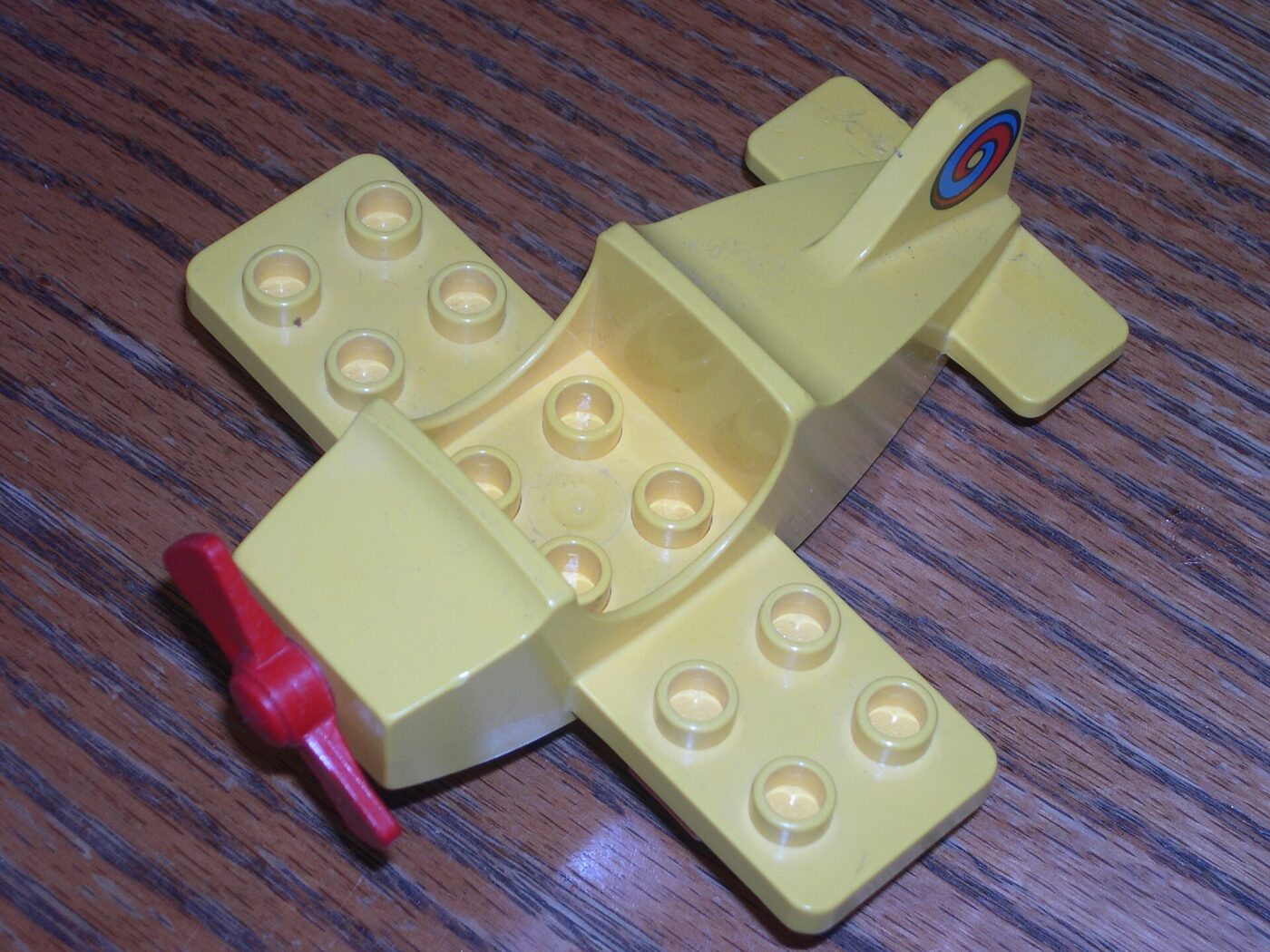
“Clutch power” is the grip between a stud and the tube it snaps into — friction from a tight mechanical tolerance, not glue or magnets. Every maker cuts its own injection molds to its own tolerances, so pieces from two different brands, even ones marketed as compatible, can fit more loosely or more tightly than pieces from either brand alone.
A loose fit is more than a minor annoyance. A tall build or a piece under structural load sheds parts exactly where the tolerance is loosest, and once bricks from several makers are mixed in one bin, there is no way to tell by looking which pieces are the loose ones until a build is already coming apart.
Compatible does not mean identical. Two bricks that both fit a standard stud can still grip it with very different force.
Established compatible brands vs unbranded listings
There is a real difference between a compatible-brick company that puts its own name on the box and stands behind its product, and a marketplace listing with no manufacturer name attached to it at all. The first has a reputation to protect; the second has nothing to lose if the set turns out to be unsafe or simply falls apart.
That distinction matters because the legal obligation does not bend for either one. Section 14(a)(2) of the Consumer Product Safety Act requires any manufacturer or importer of a regulated children’s product to certify compliance with a Children’s Product Certificate, per CPSC’s own business guidance — a requirement that applies to LEGO, to a named compatible-brick company, and to an unbranded listing alike. An unbranded set with no company name behind it has, in practice, no one accountable for that certificate ever existing.
What any brick set sold in the US must meet
ASTM F963, the industry’s toy-safety standard, stopped being voluntary in 2008. CPSC’s business guidance is explicit: “Section 106 of the Consumer Product Safety Improvement Act of 2008 (CPSIA)… made ASTM F963 a mandatory consumer product safety standard for children’s toys.” That covers sharp edges, sharp points and flammability, layered on top of a separate small-parts ban at 16 C.F.R. part 1501 for products meant for children under 3 — and CPSC says certificates for those products must list that part specifically.
Small parts aimed at slightly older children are handled differently: labeled, not banned. Federal regulation 16 CFR 1500.19 requires a cautionary statement on “any article that is a toy or game intended for use by children who are at least three years old but less than six years of age… if the toy or game includes a small part,” displayed prominently on the packaging. A minifigure accessory or a small connector piece is exactly the kind of part this rule targets.
None of this is brand-specific. A generic brick set and a licensed one are held to the identical federal standard.
Counterfeit sets and how to spot one before buying
A counterfeit set is a different problem from a generic compatible brick. A compatible-brick maker sells openly under its own name; a counterfeit copies another company’s box art, logo and set number to pass as something it isn’t. That misrepresentation is the risk, on top of whatever safety paperwork it also skipped.
CPSC’s own holiday safety guidance keeps its advice simple: “Know your seller. Purchase toys from stores and online retailers you know and trust,” and for anything with small parts, “look for a choking hazard warning statement on the firm’s advertising page.” A listing with no manufacturer name, no warning language where one should be, and a price far under every legitimate retailer’s price on an in-demand set has not shown its work on any of the questions above.
A listing checklist before you buy
None of the regulations above require memorizing a statute. They require checking a listing the way CPSC already recommends, before a set with unknown paperwork ends up in a bin a toddler can reach.
- Manufacturer name present: a listing with no company behind it has no one accountable for a certificate.
- Choking warning present on sets with small parts aimed at children 3 to 6, as the ad itself should state.
- Price sanity check: a price far under every legitimate retailer on an in-demand set is a signal, not a bargain.
- Recall check: look up a specific set at CPSC.gov/Recalls before buying secondhand or from an unfamiliar seller.
- Mixed-brand bins: sort loose pieces by size for the youngest child likely to be in the room, not just the child the set is for.
The safest bin in a mixed-age household is not the priciest one. It is the one a toddler can’t reach.
The shortlist
Paid links: we earn a commission if you buy through the buttons below, at no extra cost to you. As an Amazon Associate I earn from qualifying purchases.
Compared on fit, certification and small-parts warnings
| Product type | Best for | Risk estimate | Where to buy |
|---|---|---|---|
| LEGO Classic Creative Brick Box | LEGO’s own branded sets | 15/100 | See listings on AmazonOpens Amazon search results, not one listing: check the model on the product page. |
| Building Brick Storage and Sorting Case | A general brick and baseplate stash | 10/100 | See listings on AmazonOpens Amazon search results, not one listing: check the model on the product page. |
| Building Brick Baseplates (Pack) | Keeping loose pieces sorted by age | 12/100 | See listings on AmazonOpens Amazon search results, not one listing: check the model on the product page. |
Risk estimate is our editorial Fear Index for the product type (lower is safer), not a customer rating. How it is scored.
LEGO Classic Creative Brick Box
A branded set from an established maker is the version of this purchase with the least uncertainty about who stands behind the certification.
- Carries the CPSC-required certification
- Choking warning matches the true age range
- Consistent clutch power across sets
- Costs more per brick than compatible sets
- Smaller piece count than some bundles
Building Brick Storage and Sorting Case
Sorting a mixed-brand bin by size is the practical fix for the one problem certification alone can’t solve: pieces from a looser-fitting set ending up loose on the floor.
- Separates compartments by piece size
- Works across LEGO and compatible bricks
- Makes a loose-parts check faster
- Doesn’t fix a missing warning label
- Only as effective as the sorting habit
More: Toys and Games analyses and how the Fear Index is scored.
Sources
- Toy Safety Business Guidance — CPSC
- Happy Holidays Start with Safety: CPSC Urges Families to Cook, Decorate and Select Toys with Care This Season — CPSC
- 16 CFR 1500.19, Cautionary Labeling for Toys, Games and Balloons — Cornell Law School
- What Is a Trademark — USPTO
- Recalls & Product Safety Warnings — CPSC
Questions people actually ask
Are LEGO-compatible bricks safe?
An established compatible-brick maker is bound by the same federal certification and small-parts rules as any toy company. The real risk concentrates in unbranded or counterfeit listings that skip that paperwork, not in named compatible brands generally.
Does ASTM F963 apply to non-LEGO bricks?
Yes. CPSIA made ASTM F963 a mandatory federal standard in 2008 for children’s toys, regardless of brand.
How can I tell if a brick set listing is counterfeit?
CPSC advises knowing the seller and checking the listing for a choking-hazard warning statement. No manufacturer name, no warning language, and a price far under every legitimate retailer are the signals to weigh together.
Do all small-parts brick sets need a choking warning label?
Federal regulation 16 CFR 1500.19 requires a cautionary statement on toys or games with small parts intended for children ages 3 to 6, on the package itself.
How should I store bricks in a home with a younger sibling?
Sort loose pieces by size in a compartmented case, and store any set with small parts out of reach of the youngest child likely to be in the room.