
The Printer Is Not the Purchase. The Cost Per Page Is.
Many inkjet printers are sold below cost and recovered on cartridges. How to calculate cost per page, and why inkjets fail when used rarely.

Part of the guide: Tech and Audio Buying Mistakes: What Fails and How to Check Before You Buy
Many inkjet printers are sold at or below their manufacturing cost, and the money is made back on consumables. It is one of the clearest examples of that model in consumer electronics, and it is entirely legal and entirely open.
It still catches people, because the purchase decision happens at the shelf where only one number is visible.
Fear Index · Think twice
Sold at a loss, recovered on consumables
The model is openly operated and still catches people, because the recurring cost is invisible at the moment of purchase.
How to calculate it
Cartridge price divided by page yield. Yield is quoted to the ISO standard, which assumes 5% page coverage — roughly a normal text document, and far less than most real pages. A photo, a full-page graphic or a dense spreadsheet uses several times that coverage, so the real cost per page on that kind of document runs well above the number on the box.
Two cartridges with the same headline price can have very different yields. A $40 cartridge rated for 200 pages costs twice as much per page as a $40 cartridge rated for 400, so compare cost per page directly rather than shelf price.
| Type | Typical cost per page | Best for |
|---|---|---|
| Mono laser | 2–4 cents | Text, any volume |
| Color laser | 10–15 cents | Business color |
| Cartridge inkjet | 10–20 cents | Low volume, mixed |
| Ink tank inkjet | Under 1 cent | High volume color and photos |
Use high-yield (“XL”) cartridge prices in the calculation, not the starter cartridges. A starter cartridge in the box often holds a fraction of a full one.
Infrequent printing breaks inkjets

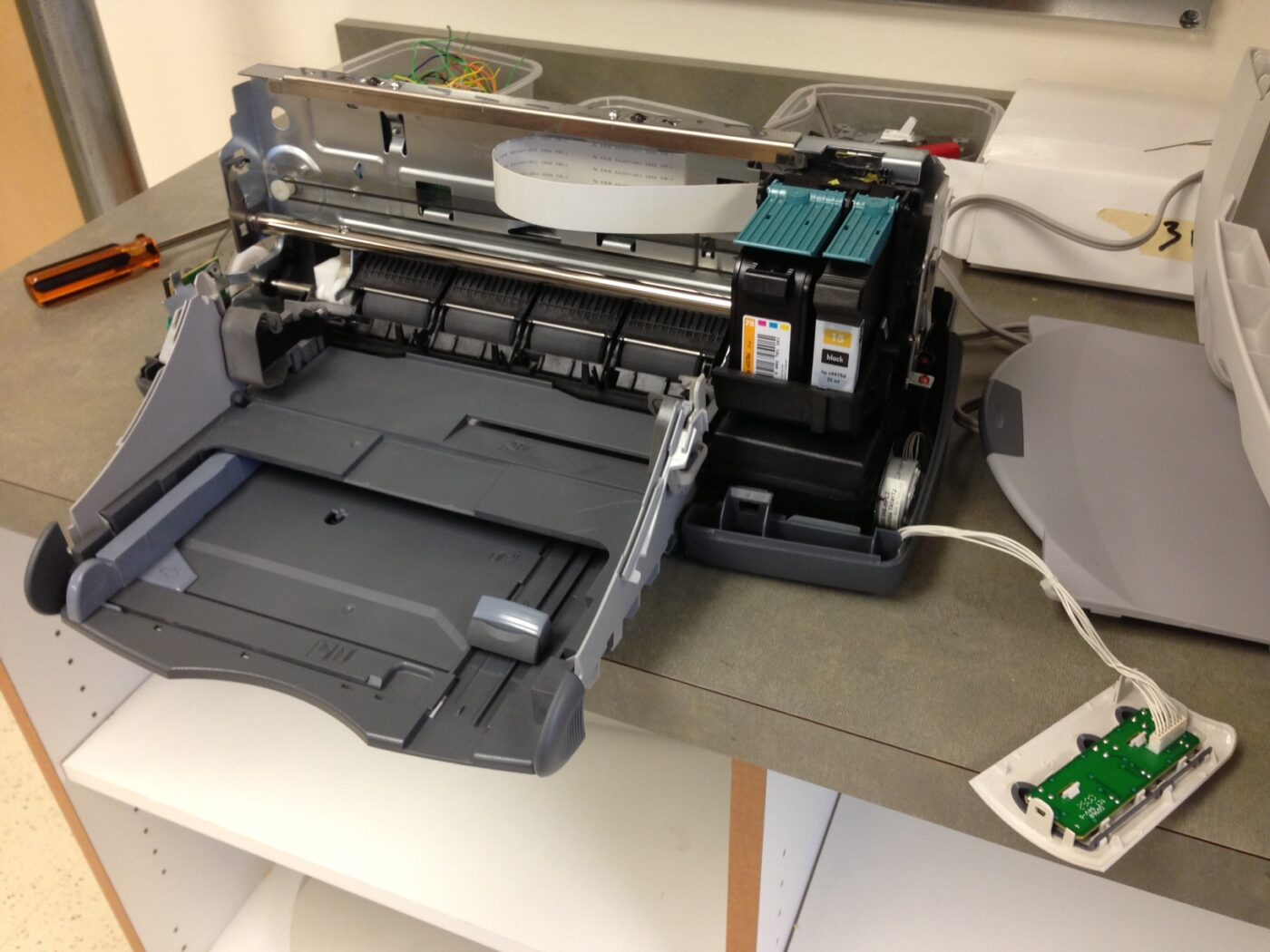
An inkjet fires ink through nozzles a few hundredths of a millimeter across. When the printer sits unused, ink dries in those nozzles and blocks them. The printer responds by running cleaning cycles, which flush ink through — consuming a meaningful fraction of a cartridge each time.
That is why people who print twice a year find the cartridges empty when they come back to it, having printed almost nothing. The ink was spent on unclogging.
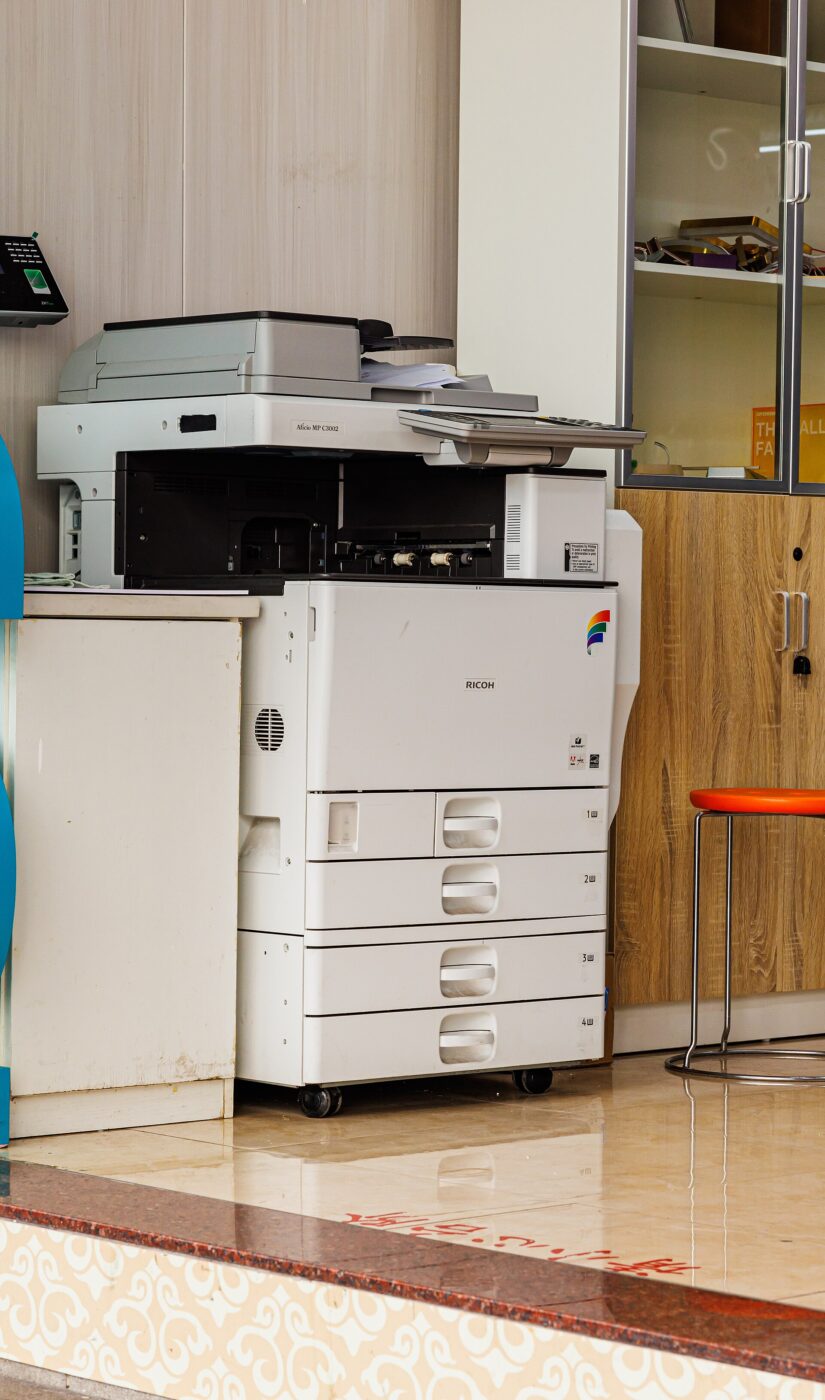
A laser printer has no liquid. Toner is a dry powder that does not dry out, clog or expire. For infrequent printing the difference is not marginal — it is the difference between a working printer and a frustrating one.
Ink tanks changed the arithmetic
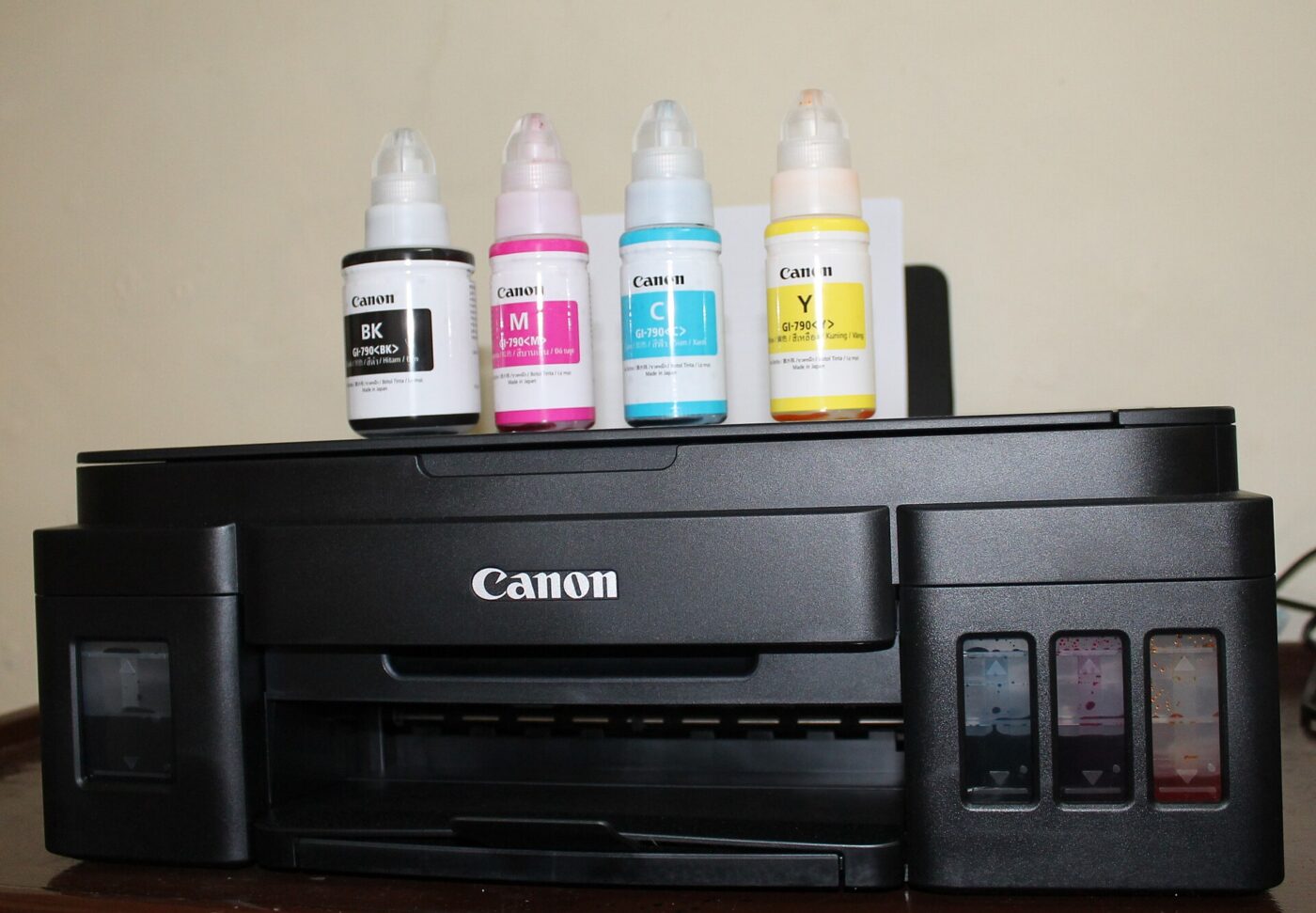
Refillable tank printers cost considerably more upfront and take bottles of ink rather than cartridges. Cost per page drops below a cent, including color. One major manufacturer advertises savings of up to $1,000 in ink over the bottles included with a tank printer, compared with buying enough standard cartridges to print the same number of pages.
They still clog if unused, so the drying problem remains. But for households that genuinely print — school work, photos, documents — they undercut color laser substantially and produce better photographs.
The break-even against a cheap cartridge inkjet depends on volume: at the per-page costs above, the higher upfront price usually takes a thousand pages or more to recover, sooner if the bundled ink lasts as long as the manufacturer claims.
- Print a page a week on any inkjet. It is cheaper than a cleaning cycle.
- Check third-party cartridge availability before buying — some printers reject them by firmware.
- Duplex printing halves paper cost and is standard on most laser printers.
- Ignore “pages per minute” unless you print long documents. Time to first page matters more.
What ENERGY STAR adds to the decision
Cost per page is about ink or toner. It says nothing about power, and a printer left on standby for years adds up. ENERGY STAR’s imaging-equipment criteria cap standby draw and, above a certain print speed, require duplex printing to be built in rather than sold as an add-on kit — worth checking directly if a listing does not say whether duplex is automatic or manual.
None of this changes which category — mono laser, color laser or ink tank — suits your printing pattern. It is a second, smaller number worth glancing at once you have picked the category on cost per page, especially for a printer that will sit powered on in an office for years.
The shortlist
Paid links: we earn a commission if you buy through the buttons below, at no extra cost to you. As an Amazon Associate I earn from qualifying purchases.
Compared on cost per page and usage pattern
| Product type | Best for | Risk estimate | Where to buy |
|---|---|---|---|
| Monochrome Laser Printer | Mostly text, any volume | 20/100 | See listings on AmazonOpens Amazon search results, not one listing: check the model on the product page. |
| Refillable Ink Tank Printer | High volume or photos | 30/100 | See listings on AmazonOpens Amazon search results, not one listing: check the model on the product page. |
| High-Yield Toner Cartridge | Match to your printer model | 24/100 | See listings on AmazonOpens Amazon search results, not one listing: check the model on the product page. |
Risk estimate is our editorial Fear Index for the product type (lower is safer), not a customer rating. How it is scored.
Monochrome Laser Printer
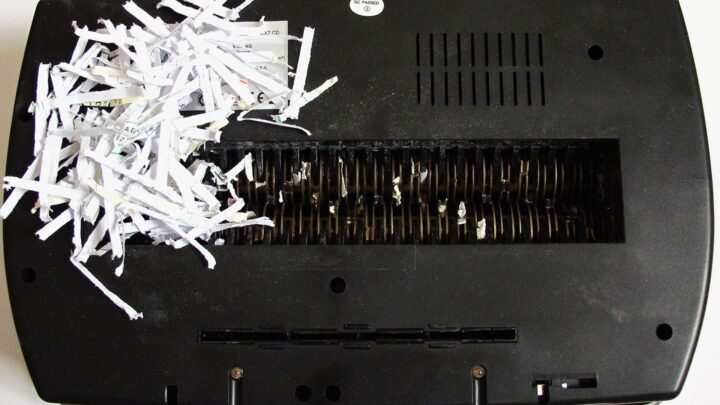
If you print rarely, this is the category. Nothing clogs, nothing evaporates, and it works when you come back to it.
- Toner never dries out
- 2–4 cents per page
- Works after six months unused
- No photo printing
- Bulkier than an inkjet
Refillable Ink Tank Printer
The right answer for a household that prints regularly in color. Print something weekly to keep the heads clear.
- Running cost under a cent a page
- Genuine photo quality
- Bottles last a very long time
- Higher upfront price
- Still clogs if left unused for months
More: Office & Study analyses and how the Fear Index is scored.
Questions people actually ask
Is laser cheaper than inkjet?
Per page, usually by a wide margin for text — 2–4 cents against 10–20. Refillable ink tank printers beat both, but cost more upfront.
Why does my inkjet use ink when I am not printing?
It runs cleaning cycles to clear nozzles that have dried. Each cycle flushes ink through, which is why infrequent users find cartridges empty having printed almost nothing.
What printer is best if I hardly ever print?
A mono laser. Toner is a dry powder that does not dry out or clog, so the printer works after months unused.
How do I work out cost per page?
Divide the price of a high-yield cartridge by its stated page yield. Use the XL cartridge price rather than the starter cartridge supplied in the box.